
You’re scrolling through your portfolio, looking for yield that doesn’t require locking up assets for months. You’ve heard about Pharaoh Exchange and its promise of next-generation efficiency on the Avalanche C-Chain. But is it actually worth your gas fees? Or is it just another decentralized exchange (DEX) chasing trends?
Here’s the reality: Pharaoh Exchange v1 isn’t trying to be everything to everyone. It’s a specialized tool built specifically for users who understand how capital works in DeFi. If you’re new to trading or hate complex interfaces, this might not be your first stop. But if you’re tired of losing money to slippage and inefficient liquidity pools, Pharaoh offers a compelling alternative.
What Exactly Is Pharaoh Exchange v1?
Pharaoh Exchange is a decentralized exchange operating on the Avalanche C-Chain network. Unlike older automated market makers (AMMs) that spread liquidity across infinite price ranges, Pharaoh uses concentrated liquidity. Think of it like this: traditional exchanges scatter water everywhere. Pharaoh lets you pour that water exactly where it’s needed most-around the current market price.
This design choice matters because it drastically improves capital efficiency. Instead of needing $1 million in liquidity to provide stable prices, you might only need $100,000 if you concentrate it correctly. The platform leverages the speed and low costs of the Avalanche C-Chain, which serves as the primary smart contract chain for the Avalanche blockchain.
The Core Technology: Why Concentrated Liquidity Wins
If you’ve used Uniswap V3, you’ll recognize the mechanics here. Pharaoh Exchange v1 implements a similar model but tailors it for the Avalanche ecosystem. In standard AMMs, liquidity providers (LPs) earn fees from trades happening anywhere within a broad price range. Most of those trades are irrelevant to the current price, meaning your capital sits idle.
With Pharaoh, you choose specific price ranges. If ETH is trading at $2,500, you don’t need liquidity sitting at $1,000 or $5,000. You put it between $2,400 and $2,600. This concentrates your buying and selling power right where traders are active. The result? Higher fee earnings per dollar invested.
However, this comes with a trade-off. If the price moves outside your chosen range, your position converts entirely into one asset, and you stop earning fees until you rebalance. This requires more active management than "set it and forget it" pools.
Tokenomics: The State of PHAR Token
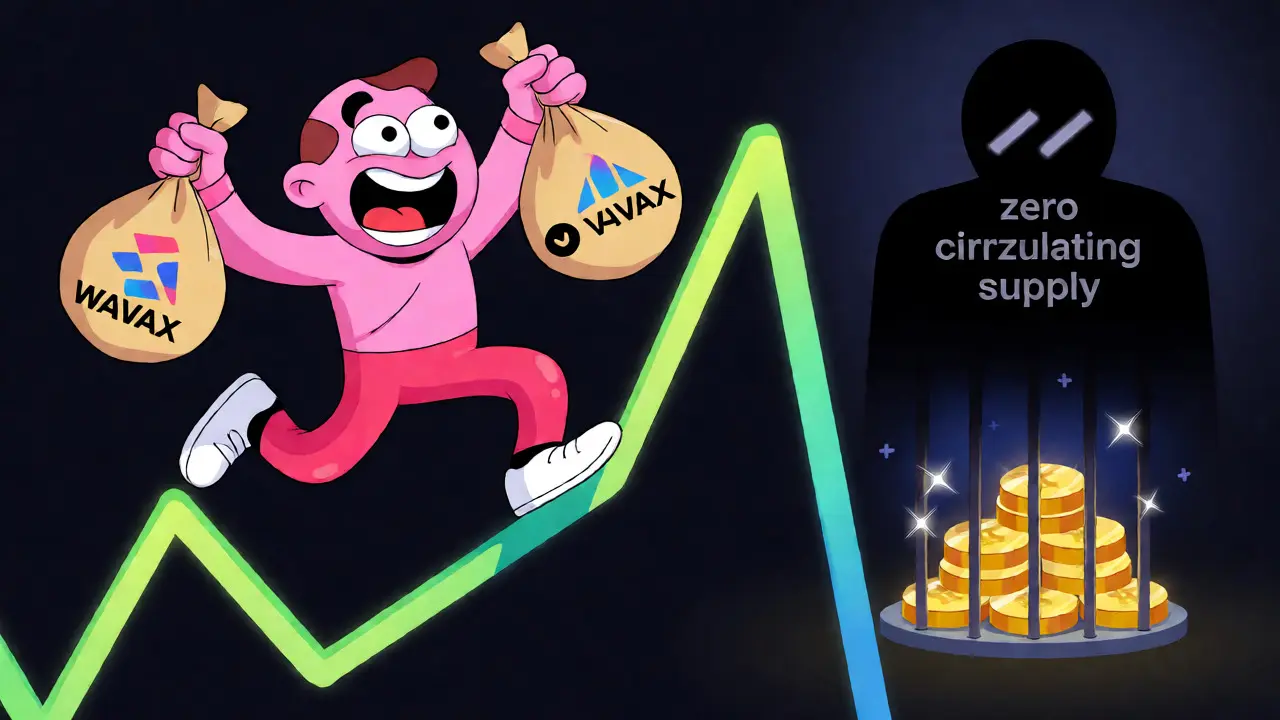
Let’s talk numbers, because they tell an interesting story. As of late September 2026, the native token, PHAR, has a total supply of approximately 95,225 tokens. Here’s the catch: zero tokens are currently in circulation.
Wait, zero? Yes. Despite having a recorded price of around $348.78 USD, the circulating supply metric suggests that either the token hasn’t fully launched into public hands yet, or the data reporting source is lagging behind actual on-chain activity. The price itself jumped nearly 10% in a single day, indicating speculative interest or thin order books.
You should treat this price with skepticism. When circulating supply is reported as zero but volume exists ($174k daily), you’re likely seeing pre-market speculation or very early-stage trading. Always verify on-chain data before making large buys.
Trading Activity and Market Depth
How much is actually happening on Pharaoh Exchange? Recent data shows a 24-hour trading volume of roughly $73,617. While this represents a significant 59% increase from the previous day, it’s still modest compared to giants like Trader Joe or Pangolin on Avalanche.
The most active pair is GUN/WAVAX. This tells us something important: the community is using Pharaoh for niche meme coin exposure paired with the native chain currency. If you’re looking for deep liquidity in major pairs like BTC/USDC or ETH/USDT, you might find the spreads wider here than on larger platforms.
| Metric | Value | Context |
|---|---|---|
| Total Supply (PHAR) | ~95,225 | Fixed cap; scarcity play |
| Circulating Supply | 0 (Reported) | Check on-chain status; likely early phase |
| Price (USD) | $348.78 | High volatility observed (+9.94% in 24h) |
| 24h Volume (Exchange) | $73,617 | Moderate activity; growing trend |
| Top Trading Pair | GUN/WAVAX | Niche/meme focus |
Pros and Cons: Who Should Use Pharaoh?
No platform is perfect. Here’s the honest breakdown based on current capabilities and limitations.
Pros:
- Capital Efficiency: Concentrated liquidity means you earn more fees with less capital if you manage your ranges well.
- Avalanche Speed: Transactions confirm quickly, and fees remain low compared to Ethereum mainnet.
- Low Barrier to Entry: Because it’s newer, there’s less competition for liquidity rewards in certain pools.
Cons:
- Limited Liquidity: With under $100k daily volume, large trades can suffer from high slippage.
- Token Uncertainty: The discrepancy between price and circulating supply raises red flags for conservative investors.
- Active Management Required: You can’t just deposit funds and walk away. Ranges need monitoring.

Security and Trust Factors
In DeFi, code is law. But who wrote the code? Public information regarding comprehensive security audits for Pharaoh Exchange v1 is sparse. Unlike established protocols that publish detailed audit reports from firms like CertiK or Hacken, Pharaoh operates with a leaner footprint.
Always check the official documentation for any published audit certificates. If none exist, assume higher risk. Additionally, look for bug bounty programs. These indicate that the team is confident enough in their code to invite white-hat hackers to break it.
Since it runs on the Avalanche C-Chain, you benefit from the underlying network’s consensus mechanism. Avalanche uses a unique protocol called Snowman, which finalizes transactions quickly. This reduces the window for re-org attacks, adding a layer of network-level security.
How to Start Trading on Pharaoh
Ready to test the waters? Here’s a quick step-by-step guide.
- Connect Your Wallet: Use MetaMask or Rabby. Ensure you’re on the Avalanche C-Chain network.
- Fund Your Account: Bridge some AVAX or stablecoins to Avalanche if you haven’t already.
- Select a Pool: Look for pairs with decent depth. GUN/WAVAX is popular, but check others for better spreads.
- Set Your Range: If providing liquidity, choose a tight range around the current price. If swapping, ensure the impact warning is acceptable.
- Execute Trade: Confirm the transaction in your wallet. Watch for confirmation on the block explorer.
Final Verdict: Is Pharaoh Worth Your Time?
Pharaoh Exchange v1 is a promising entry in the Avalanche DeFi landscape. Its use of concentrated liquidity puts it ahead of legacy AMMs in terms of potential returns for active LPs. However, the low trading volume and unclear token circulation status mean it’s not ready for whales or risk-averse investors.
Treat it as a high-risk, high-reward playground. Allocate a small portion of your portfolio to experiment with its features. Keep an eye on the PHAR token distribution updates. If liquidity grows and audits become public, Pharaoh could carve out a solid niche among Avalanche DEXs.
Is Pharaoh Exchange safe to use?
Safety depends on your risk tolerance. While it runs on the secure Avalanche network, detailed third-party security audits for the Pharaoh smart contracts are not widely publicized. Users should start with small amounts and monitor for any unusual contract interactions.
Why is the PHAR circulating supply listed as zero?
This often happens in early-stage projects where data aggregators haven't updated their metrics, or when tokens are locked in vesting contracts. Always verify the actual on-chain balance via a block explorer like Snowtrace rather than relying solely on aggregator sites.
What makes concentrated liquidity different?
Concentrated liquidity allows providers to specify exact price ranges where their funds are available for trading. This increases capital efficiency, meaning you earn more fees per dollar deposited compared to traditional AMMs that spread liquidity across all possible prices.
Which wallet works best with Pharaoh Exchange?
MetaMask is the most common choice due to its widespread compatibility with Avalanche C-Chain. Rabby Wallet is also a strong alternative, offering better multi-chain support and clearer transaction previews.
Can I lose money providing liquidity on Pharaoh?
Yes. Besides general market risk, concentrated liquidity exposes you to impermanent loss if the price moves significantly outside your chosen range. If the price exits your range, you hold only one asset and earn no fees until you rebalance.
Comments (12)
Diego Alamir
September 23, 2026 AT 05:42
Zero circulating supply but a $348 price tag? That is pure fiction. The whales are dumping on retail while the data lags behind reality. Wake up.
dillon wright
September 24, 2026 AT 12:34
I think it's pretty cool that they're trying something different with concentrated liquidity on Avalanche. It might be rough around the edges right now, but giving people more control over their capital efficiency is definitely a step in the right direction for DeFi.
Abby Walker
September 26, 2026 AT 02:48
This analysis is woefully inadequate and fails to address the glaring security risks inherent in unaudited smart contracts. One cannot simply ignore the potential for catastrophic loss when third-party verification is absent. It is frankly embarrassing to recommend such a platform without rigorous due diligence regarding the codebase integrity and audit history.
Tiffany Ngo
September 27, 2026 AT 02:44
Actually, you need to understand that 'unaudited' doesn't always mean unsafe if the code is simple enough, though I agree the risk is higher. But look at the GUN/WAVAX pair dominance-that shows real community engagement, not just bots. People are actually using this thing for meme coins which drives volume differently than major pairs. You're missing the cultural context of why small DEXs thrive on niche assets.
Joseph Brink
September 27, 2026 AT 23:21
The essence of finance is trust, and here we see a vacuum of it. When value exists without circulation, we are observing a phantom economy, a mirage in the desert of blockchain. To participate is to engage with uncertainty itself. One must ask: does the map precede the territory, or do we create the territory by believing in the map?
Matthew Alunni
September 29, 2026 AT 07:36
Precisely Matthew. The moral hazard here is ignored by most retail traders who chase yield without understanding the systemic fragility. We are building castles on sand and calling it innovation. If one does not respect the underlying mechanics, one deserves the liquidation. It is a test of character as much as capital.
Ervin Kery
September 29, 2026 AT 09:39
Oh my god, did you see the slippage on that last trade?! I tried to swap some WAVAX into PHAR and nearly got robbed!!! Like, seriously?? Where are the audits?? I feel like I'm gambling in a casino where the house hasn't even shown its cards yet!! This is insane!!!
Alexis Riggle
October 1, 2026 AT 08:15
Slippage is expected with low liquidity pools. Check your settings before blaming the platform. Use limit orders if possible to avoid market impact.
John Morgan
October 1, 2026 AT 22:23
Stop crying about slippage and start doing your research. Americans built this tech industry, and we should be leading the charge in adopting new protocols like Pharaoh instead of whining about minor inconveniences. Get off your knees and take advantage of the low fees before the rest of the world catches on.
Taylor Szalaiy
October 3, 2026 AT 05:40
I love the energy here! Even with the bugs, there's such a vibrant spirit in the Avalanche ecosystem right now. It feels like we're all building this colorful tapestry together, thread by thread. I'd say dive in headfirst, keep an eye on those ranges, and enjoy the ride because the potential for growth is absolutely sparkling!
Alan Farley
October 4, 2026 AT 22:24
Great points everyone. I think if you allocate just a tiny portion of your portfolio, maybe 1-2%, you can experiment safely. The optimistic view is that early adopters often get rewarded best once the kinks are worked out. Let's support each other through the learning curve!
Curtis Scott
October 6, 2026 AT 20:37
Wait for audits.