
For years, if you tried to buy Bitcoin in Pakistan, you were walking a tightrope. The rules were vague, banks blocked transactions, and the fear of being labeled a money launderer hung over every trade. That era ended on July 8, 2025. President Asif Ali Zardari signed the Virtual Assets Regulatory Authority Ordinance 2025 into law, creating the Pakistan Virtual Assets Regulatory Authority (PVARA), an independent federal body responsible for overseeing all virtual asset activities in Pakistan. This wasn't just a tweak to existing laws; it was a complete overhaul. PVARA is now the sole gatekeeper for the country's crypto industry, shifting Pakistan from a landscape of skepticism to one of structured, proactive regulation.
If you are an investor, a trader, or a fintech startup looking at South Asia, this change matters. It means the days of operating in the shadows are over. But what does this actually mean for how you can use crypto in Pakistan? Who gets to operate? And how strict are the new rules? Let’s break down the reality of PVARA’s oversight without the legal jargon.
What Exactly Is PVARA?
PVARA is not just another government department filing papers. It is an autonomous regulator with teeth. Established under the Virtual Assets Act 2025, its job is singular: regulate the virtual asset economy. Think of it like the Securities and Exchange Commission (SEC) in the US or the Financial Conduct Authority (FCA) in the UK, but tailored specifically for digital assets.
The authority has broad powers. It can license businesses, revoke those licenses if they misbehave, conduct audits, and impose heavy fines. Most importantly, it sets the technical standards for security and compliance. Before PVARA, different agencies like the State Bank of Pakistan (SBP) and the Securities and Exchange Commission of Pakistan (SECP) had overlapping, often confusing roles. Now, there is one clear line of authority. If you want to offer crypto services in Pakistan, you answer to PVARA.
This centralization is crucial for international trust. For years, Pakistan faced scrutiny from global bodies like the Financial Action Task Force (FATF) regarding potential loopholes in financial tracking. By creating a dedicated agency that enforces strict anti-money laundering (AML) and counter-terrorism financing (CTF) measures, Pakistan is signaling to the world that its digital finance sector is safe, transparent, and compliant.
The End of the Wild West: Licensing VASPs
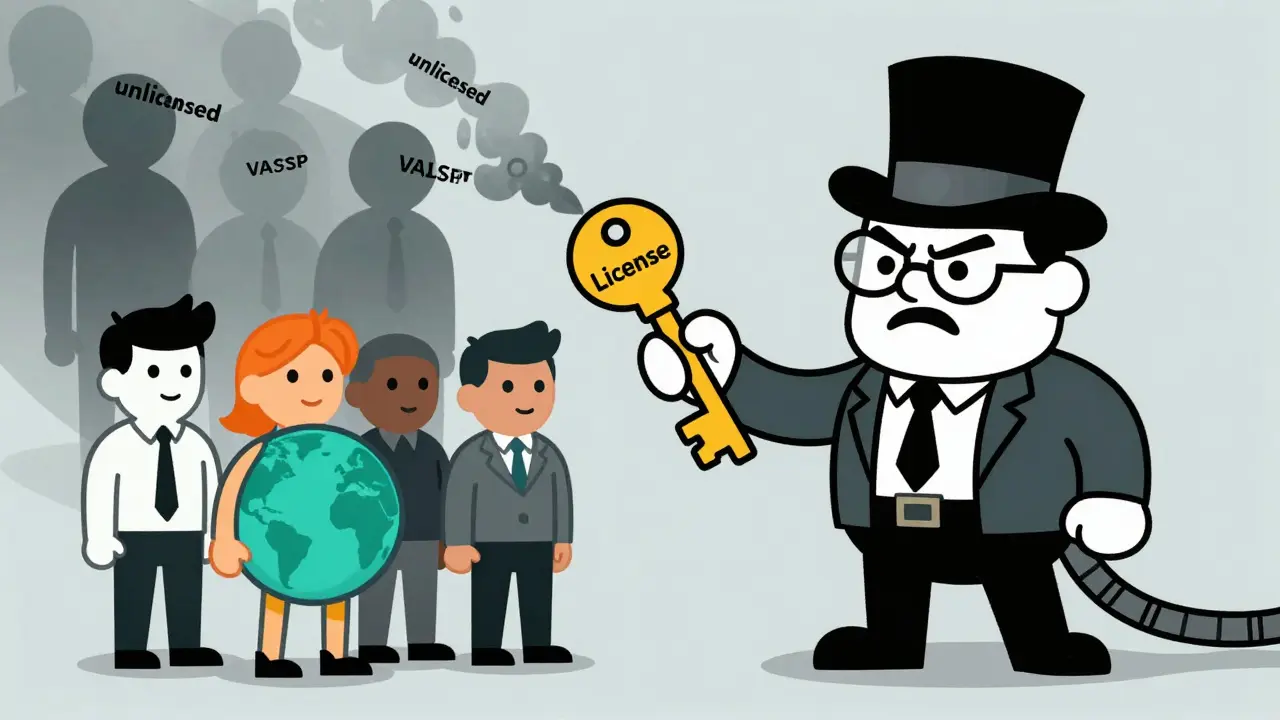
The biggest immediate impact of PVARA is on Virtual Asset Service Providers (VASPs). These are the exchanges, custodians, and payment processors that let you buy, sell, or store crypto. Under the new framework, no VASP can operate in Pakistan without explicit authorization from PVARA.
Here is how the licensing process works in practice:
- No More Unlicensed Exchanges: Any platform currently operating without a PVARA license must shut down or apply for one. Users trading on unregulated offshore sites do so at their own risk, as these platforms will have no legal standing or consumer protection within Pakistan.
- Strict Entry Criteria: PVARA isn't handing out licenses to everyone. The authority has called for Expressions of Interest (EoIs) from major global firms. To qualify, a company usually needs to be already licensed by a recognized international regulator. This filters out fly-by-night operations.
- Comprehensive Audits: Applicants must submit detailed profiles including their technology infrastructure, security protocols, revenue data, and compliance track records. PVARA will audit these claims before granting permission.
Bilal bin Saqib, who serves as the chair of PVARA and Minister of State for Crypto and Blockchain, framed this strategy clearly. He described the EoI process as an "invitation to the world's leading VASPs to partner in building a transparent and inclusive digital financial future." In plain English, Pakistan wants big, reputable players-like Binance, Coinbase, or Kraken-if they meet the bar. They don't want risky startups that might vanish with user funds.
Why FATF Compliance Matters to You
You might wonder why anti-money laundering rules affect your personal crypto wallet. The answer is simple: access. Without strict AML/CFT compliance aligned with FATF standards, Pakistan risks being blacklisted again. A blacklist means higher costs for remittances, reduced foreign investment, and tighter restrictions on banking.
PVARA ensures that every transaction flowing through licensed VASPs is traceable. This doesn't mean the government is watching your private keys on a decentralized wallet. It means that when you convert Pakistani Rupees (PKR) to USDT on a licensed exchange, that exchange must verify your identity (KYC) and report suspicious activity. This transparency protects the broader financial system and makes it easier for legitimate businesses to accept crypto payments without fearing regulatory crackdowns.
Looking Beyond Crypto: CBDCs and Sandboxes
PVARA’s role extends beyond just policing Bitcoin traders. The regulatory framework is designed to foster innovation while managing risk. Two key areas highlight this dual approach:
1. Central Bank Digital Currency (CBDC): While PVARA regulates private crypto, the State Bank of Pakistan (SBP) is working on its own digital currency. Governor Jameel Ahmad confirmed at the Reuters NEXT Asia summit that Pakistan is building capacity for a CBDC pilot. This state-backed digital rupee would run alongside private cryptocurrencies, offering a faster, cheaper way to move money domestically. PVARA’s existence provides the stable regulatory environment needed for such a complex rollout.
2. Regulatory Sandboxes: Not all innovation fits neatly into old boxes. PVARA plans to use regulatory sandboxes to test new ideas, particularly Shariah-compliant crypto products. Islamic finance principles prohibit interest (riba) and excessive uncertainty (gharar). By allowing startups to test tokenized assets or blockchain-based supply chain finance in a controlled sandbox, PVARA can ensure these products meet both technological and religious standards before going mainstream. This could open up a massive market in the Middle East and Southeast Asia.
How PVARA Compares Globally
To understand where Pakistan stands, it helps to look at its neighbors and global peers. Pakistan’s approach mirrors the comprehensive models seen in the UAE and Singapore rather than the fragmented systems in some other regions.
| Jurisdiction | Regulatory Body | Approach | Key Feature |
|---|---|---|---|
| Pakistan | PVARA | Centralized, Strict Licensing | Focus on FATF compliance & international VASP entry |
| UAE | VARA (Dubai) | Innovation-Friendly | Dedicated free zones, rapid licensing for startups |
| Singapore | MAS | Risk-Based | Strong KYC/AML, focus on institutional adoption |
| European Union | Multiple (MiCA) | Harmonized | Single passport for all EU member states |
Pakistan’s model is distinct because it combines strict entry barriers for operators with a welcoming stance toward foreign capital. Unlike countries that banned crypto entirely (like China previously did), or those with vague guidelines (like many parts of Africa), Pakistan has chosen clarity. This positions it competitively for remittance solutions and fintech development, especially given the large diaspora sending money home.

What This Means for Traders and Investors
If you are holding crypto in Pakistan, here is your action plan:
- Move to Licensed Platforms: Check if your current exchange is on PVARA’s approved list. If not, consider transferring your assets to a compliant provider. Unlicensed platforms may face sudden shutdowns or inability to process PKR withdrawals.
- Expect Higher Fees: Compliance costs money. Licensed VASPs will incur costs for audits, legal fees, and technology upgrades. Some of these costs may be passed on to users in the form of slightly higher trading fees. However, this is the price for security and legal recourse.
- Tax Reporting: With formal regulation comes formal tax reporting. PVARA’s coordination with the Federal Board of Revenue (FBR) means your gains may become taxable. Keep records of your transactions. Consult a local tax advisor to understand your obligations under the new Virtual Assets Act.
- Watch for CBDC News: Keep an eye on announcements from the State Bank of Pakistan regarding the digital rupee pilot. Early adopters of CBDCs may benefit from lower transaction fees for domestic transfers.
The Road Ahead: Challenges and Opportunities
Implementing a regulatory framework from scratch is never easy. PVARA faces significant challenges. First, there is the technical hurdle of monitoring blockchain transactions in real-time. Second, there is the cultural shift required among traditional bankers and investors who still view crypto as speculative gambling. Third, enforcement will be tested. Will PVARA have enough staff and expertise to audit hundreds of complex smart contracts and custody solutions?
However, the opportunities are substantial. By providing legal certainty, Pakistan can attract venture capital for local blockchain startups. We may see a boom in fintech apps that integrate crypto payments for everyday purchases, from groceries to utility bills. The regulatory sandbox could produce innovative Islamic finance products that appeal to conservative Muslim investors globally.
The establishment of supporting bodies like the Pakistan Digital Assets Authority (PDAA) and the Pakistan Crypto Council (PCC) shows the government is thinking long-term. This isn’t a knee-jerk reaction to a market crash; it’s a strategic pivot to capture value from the digital economy.
As we move further into 2026, the true test for PVARA will be execution. Can they balance strict oversight with the flexibility needed for innovation? Can they protect retail investors without stifling growth? The answers to these questions will determine whether Pakistan becomes a regional hub for digital assets or just another jurisdiction trying to catch up.
For now, the message is clear: the wild west is closed. The regulated era has begun. Whether you are a developer, a trader, or a business owner, adapting to PVARA’s rules is no longer optional-it’s essential for staying in the game.
Is cryptocurrency legal in Pakistan now?
Yes, cryptocurrency is legal and regulated in Pakistan as of 2025. The establishment of PVARA and the passing of the Virtual Assets Act 2025 created a formal legal framework. However, you can only legally trade through Virtual Asset Service Providers (VASPs) that are licensed by PVARA. Trading on unlicensed platforms remains risky and potentially non-compliant.
Who leads PVARA?
Bilal bin Saqib serves as the Chair of PVARA. He also holds the position of Minister of State for Crypto and Blockchain. He oversees the authority's strategic initiatives, including the licensing of international firms and international outreach efforts.
Can I still use offshore crypto exchanges?
Technically, you might still be able to access them, but it is not recommended. PVARA mandates that all VASPs operating in Pakistan must be licensed. Using unlicensed offshore exchanges means you lack consumer protection, legal recourse in case of fraud, and may violate local compliance rules regarding anti-money laundering. PVARA is actively encouraging users to move to licensed, compliant platforms.
What is the role of the State Bank of Pakistan (SBP) in crypto?
While PVARA regulates private virtual assets and service providers, the State Bank of Pakistan (SBP) focuses on monetary policy and the development of the Central Bank Digital Currency (CBDC). The SBP Governor, Jameel Ahmad, has confirmed that Pakistan is preparing a pilot program for a digital rupee. The two bodies coordinate to ensure the overall stability of the financial system.
Are there tax implications for crypto trades under PVARA?
Yes, likely. With the introduction of formal regulation and mandatory KYC/AML procedures, licensed VASPs will be required to report transaction data to relevant authorities, including the Federal Board of Revenue (FBR). This makes crypto gains visible for tax purposes. You should consult with a qualified tax professional in Pakistan to understand your specific liability under the new laws.
What is a regulatory sandbox in the context of PVARA?
A regulatory sandbox is a controlled environment where fintech startups can test innovative products, such as Shariah-compliant crypto tokens, without facing the full burden of standard regulations initially. PVARA uses this to foster innovation while ensuring that new products meet safety and ethical standards before being launched to the general public.
How does PVARA ensure anti-money laundering (AML) compliance?
PVARA enforces strict AML and Counter-Terrorism Financing (CTF) measures aligned with global standards set by the Financial Action Task Force (FATF). Licensed VASPs must implement robust Know Your Customer (KYC) checks, monitor transactions for suspicious activity, and report irregularities to PVARA. Failure to comply can result in heavy fines or revocation of licenses.
Comments (13)
nancy jarecki
June 25, 2026 AT 22:53
It is profoundly amusing to observe the collective delusion surrounding this so-called 'regulatory breakthrough.' The establishment of PVARA does not signify a maturation of the financial ecosystem; rather, it represents a bureaucratic apparatus designed to extract rent from innovation under the guise of compliance. The jargon-heavy prose suggests a sophisticated framework, yet one must question whether this is merely performative governance aimed at appeasing international watchdogs like the FATF while stifling genuine decentralized utility. The centralization of authority in a single body creates a singular point of failure and censorship, which is antithetical to the foundational ethos of virtual assets. Furthermore, the reliance on 'licensed VASPs' effectively reverts the landscape to traditional banking monopolies, stripping away the permissionless nature that made crypto attractive in the first place. This is not progress; it is institutional capture dressed up as modernization.
Robert Hundley
June 26, 2026 AT 22:24
Hey everyone! :D I think this is actually super cool news for Pakistan! It's great to see them getting organized and trying to keep things safe. I know some people are worried about the rules, but having clear guidelines helps everyone feel more secure, right? Plus, if big companies like Binance or Coinbase come in, that could bring a lot of jobs and tech growth to the area. Let's give them a chance to prove it works! ❤️✨
Melissa L
June 28, 2026 AT 18:15
i dont really get all teh legal stuff but i guess its good they are making rules now. before it was just scary and you never knew if your money would be gone. so yeah maybe its better now even if it means more paperwork lol. hope it doesnt make trading too expensive tho cause thats always annoying.
Rob Morton
June 29, 2026 AT 23:39
The philosophical implication here is fascinating. We are witnessing a shift from anarchy to order, but at what cost to individual sovereignty? If we accept that regulation brings safety, we must also accept that it brings surveillance. The question is not whether PVARA will succeed in its technical goals, but whether the society it serves values transparency over privacy. I wonder if the citizens of Pakistan are prepared for the trade-off between financial inclusion and digital anonymity. It is a complex ethical landscape.
Routh Middaugh
July 1, 2026 AT 04:35
I suppose, on one hand, there is merit to the idea of structure; however, one must consider the historical context of such interventions. Often, these regulatory bodies begin with noble intentions-stability, security, trust-but gradually expand their scope. Is it possible that PVARA will become another layer of bureaucracy that slows down innovation? Perhaps. But then again, without any rules, the market can become predatory. So, where do we draw the line? That is the real question, isn't it?
Ryan Peters
July 1, 2026 AT 11:28
Typical developing nation pandering to Western financial hegemony. They think adopting SEC-style regulations will magically fix their economic woes? Delusional. The US built its dominance through military might and industrial capacity, not by creating cute little regulatory sandboxes for crypto startups. Pakistan should focus on energy independence and manufacturing, not chasing the tail of Silicon Valley trends. This PVARA thing is just a way for local elites to launder money through 'compliant' channels while the rest of the population suffers. Classic colonial mindset.
ross harris
July 1, 2026 AT 15:17
Oh, look at us, playing house with grown-up toys. PVARA is essentially a velvet glove hiding an iron fist, designed to strangle the very spirit of decentralization it claims to protect. The 'sandbox' is a cage, gilded with promises of Shariah-compliance and FATF nods. It’s a theater of control, where the audience thinks they’re watching a revolution, but they’re really just watching a coup against privacy. The 'innovation' they seek is merely the commodification of dissent, packaged nicely for institutional investors who wouldn’t know a private key from a public toilet paper roll.
Carl Belgrave
July 2, 2026 AT 10:45
This is exactly why countries fail to compete globally. Instead of building robust industries, they chase shiny objects like crypto regulation. Look at America-we have freedom, we have strength, and we don't need a special authority to tell us how to manage our digital lives. Pakistan needs to stop looking to Dubai and Singapore for validation and start focusing on self-reliance. This PVARA nonsense is a distraction from real issues like corruption and infrastructure decay. Wake up!
Carl Hanzel
July 2, 2026 AT 16:40
You all seem so excited about being monitored. How quaint. I suppose when you have nothing to hide, you welcome the leash. But let’s be honest, this isn’t about safety. It’s about control. Every transaction tracked, every wallet verified, every move reported. It’s a panopticon for the digital age. And you call it progress. Disgusting.
Daniel J. Cox
July 4, 2026 AT 04:40
As someone who has lived in both South Asia and the West, I see this as a necessary step for cultural integration into the global economy. It’s not just about money; it’s about trust. When Pakistan aligns with international standards, it opens doors for remittances and foreign investment that were previously closed due to fear of illicit flows. It’s a bridge, not a wall. ✨
Emma Rémond
July 5, 2026 AT 13:26
The semantic drift in this article is staggering. To equate 'regulation' with 'innovation' is a category error of the highest order. The pretension of calling this a 'game changer' ignores the fundamental reality that centralized oversight inherently contradicts the distributed ledger technology’s value proposition. It is a Frankensteinian monstrosity of state power and corporate greed, masquerading as consumer protection. One must possess a certain intellectual laziness to applaud this.
ELNORA JEFFERSON
July 7, 2026 AT 07:04
I am so tired of reading these optimistic takes. Nothing ever changes. They promise safety, they deliver restrictions. My bank already blocks my transactions half the time, now they have a fancy new name for it. Ugh. Just ignore it and use cash. Or don't. Whatever. It's all going downhill anyway.
Carol @minaszilda
July 8, 2026 AT 04:08
Let us embrace this change with open hearts. Regulation can foster community trust. It allows newcomers to enter the space safely. We should support those who strive to build compliant systems. Together, we can create a more inclusive financial future. Be kind to each other during this transition.