
You’ve probably seen the buzz around SecretSky.finance, often abbreviated as SSF. Promises of anonymous messaging and massive staking yields have made it a hot topic in certain crypto circles. But when it comes to the actual airdrop details, the picture is murky. Are there real tokens waiting for you, or is this just another project with flashy numbers and empty promises? Let’s cut through the noise and look at what we actually know about SSF, its token distribution, and whether participating in their campaign is worth your time.
What Is SecretSky.finance?
SecretSky.finance is a decentralized communication platform built on the BNB Smart Chain that allows users to send messages using only BEP-20 addresses without verifying phone numbers or emails. The core product is called SSF:Chat, which focuses on stealth messaging. Unlike traditional apps like WhatsApp or Telegram, SSF doesn’t require personal identifiers. You can control who sees your messages by whitelisting specific wallet addresses. It also features anti-screenshot modes and message destruction capabilities, appealing to privacy-focused users.
The project operates on the BNB Smart Chain (formerly Binance Smart Chain). Its native token, SSF, is a BEP-20 token. The smart contract address is publicly listed as 0x6836...ab7ffa. However, despite the tech-sounding description, the platform’s applications were noted as "not yet available" in recent checks, directing users to a product timeline instead of a live service. This gap between marketing and reality is a critical detail to keep in mind.
The Tokenomics: What Does the Data Say?
To understand the airdrop potential, we need to look at the supply structure. SecretSky.finance has set a total supply of 1 billion SSF tokens. According to their official distribution plan:
- 30% is allocated for presale via Unicrypt.
- 20% is designated for the initial liquidity pool.
- The remaining 50% is split among team, ecosystem, and other incentives.
Here’s where things get tricky. CoinMarketCap data shows the current circulating supply as 0 SSF. This suggests that either the token hasn’t fully launched into circulation yet, or the data isn’t being updated correctly. If the circulating supply is truly zero, how can an airdrop be distributed? Typically, airdrops come from reserved pools or newly minted tokens. Without a clear snapshot date or eligibility criteria published by the team, the "airdrop" might just be a theoretical allocation rather than an active campaign.
The Staking Red Flag: 405,555% APY?
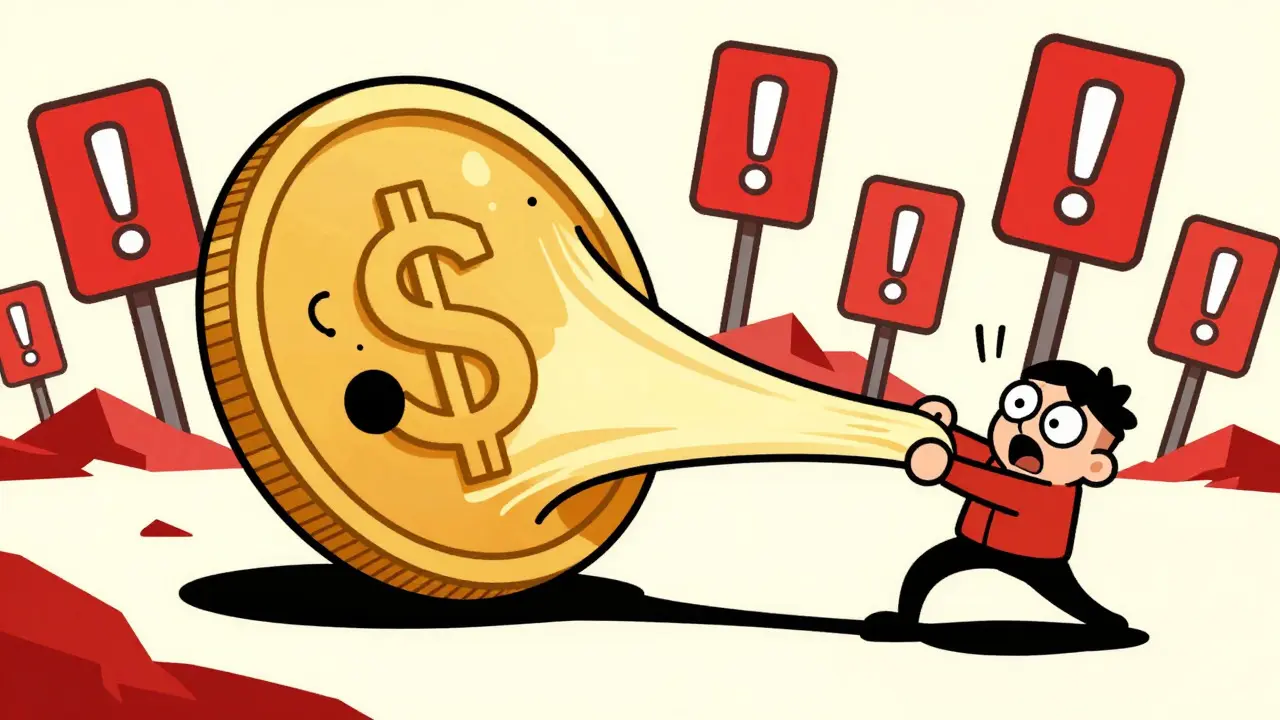
This is the part that should make any cautious investor pause. SecretSky.finance advertises staking rewards with an Annual Percentage Yield (APY) of 405,555.56% and a Daily Percentage Yield (DPY) of 1,111.11%. In the world of finance, these numbers are mathematically unsustainable unless the token value drops to near zero very quickly.
High-yield investment programs (HYIPs) often use these kinds of figures to attract early adopters. For a yield this high to remain stable, the project would need exponential growth in user base and revenue, or continuous inflation of new tokens to pay out rewards. If the token price stays flat, the reward rate will plummet rapidly. If the token price rises, the reward rate becomes even more impossible to sustain. This is a classic warning sign of questionable tokenomics. Before locking up your funds for an "airdrop" or staking reward, ask yourself: where is this money coming from?
Is There Actually an Airdrop Campaign?
As of August 2026, there is no widely verified, large-scale airdrop campaign officially announced by SecretSky.finance with clear dates and amounts. Most references to "SSF airdrop" online come from community speculation, YouTube tutorials focusing on general "hidden crypto airdrops," or promotional posts from influencers.
A legitimate airdrop usually includes:
- An official announcement on X (Twitter) or Telegram.
- A specific snapshot date (when your wallet balance is recorded).
- Clear eligibility criteria (e.g., holding X amount of SSF for Y days).
- A vesting schedule (how long you must hold the airdropped tokens).
SecretSky.finance lacks most of these documented details in public sources. The absence of a whitepaper with audited contracts and a verified team history adds to the uncertainty. While the project exists on-chain, the "campaign" aspect feels more like a marketing hook than a structured distribution event.
Risks vs. Rewards: Should You Participate?
If you’re considering interacting with SSF, here is a realistic breakdown of the risks:
| Risk Factor | Detail | Severity |
|---|---|---|
| Zero Circulating Supply | CoinMarketCap shows 0 SSF in circulation, making trading or valuation difficult. | High |
| Unsustainable Yields | 405,555% APY is not viable long-term without massive inflation or price collapse. | Very High |
| Lack of Documentation | No detailed whitepaper, audit reports, or verified team info found in primary sources. | Medium-High |
| Unverified Airdrop Claims | No official snapshot dates or eligibility rules published by the core team. | Medium |
| Smart Contract Risk | Contracts on BSC can be upgraded or paused if not renounced; check for admin keys. | Medium |
The potential reward is speculative at best. If the project succeeds, early holders might benefit. But if it fails, your capital could be locked in a token with no liquidity. Always check the contract on BscScan to see if ownership is renounced. If the team still holds admin rights, they can change tax rates or freeze wallets at any time.

How to Verify Legitimacy Yourself
Don’t take my word for it-do your own due diligence. Here’s a quick checklist:
- Check BscScan: Look at the SSF contract. Is ownership renounced? Are there high buy/sell taxes? Who holds the top 10 wallets? If one wallet holds 50% of the supply, that’s a centralization risk.
- Follow Official Channels: Only trust announcements from the verified X account or official Telegram. Ignore random Discord servers or influencer claims unless they link back to official docs.
- Look for Audits: Has a reputable firm like CertiK, HackQuest, or SolidProof audited the contract? If not, assume higher risk.
- Monitor Liquidity: Check Uniswap or PancakeSwap pools. If liquidity is low, selling your tokens later will crash the price.
Frequently Asked Questions
Is the SecretSky.finance airdrop real?
As of mid-2026, there is no officially confirmed, large-scale airdrop with published dates and amounts. Most talk of an airdrop is based on token distribution plans (like the 30% presale pool) rather than a separate giveaway campaign. Treat any "airdrop" claims with skepticism until the team publishes a formal announcement with snapshot details.
Why is the SSF staking APY so high (405,555%)?
Such high yields are typical of early-stage projects with small market caps or unsustainable tokenomics. To maintain this rate, the project must either inflate the token supply significantly or see exponential growth in usage. It is a major red flag for long-term stability and suggests the yield will drop rapidly once more people join or the token price stabilizes.
Where can I buy SSF tokens?
SSF is a BEP-20 token on the BNB Smart Chain. You can potentially find it on decentralized exchanges like PancakeSwap or Uniswap. However, since the circulating supply is reported as 0 on some trackers, liquidity may be very low or non-existent. Always check the pair volume before buying to avoid getting stuck with illiquid assets.
Does SecretSky.finance require KYC?
No, the platform is designed for anonymity. Users interact via BEP-20 wallet addresses without needing to verify email or phone numbers. This is a key feature for privacy but also means there is less accountability if the project disappears or rug-pulls.
What is the smart contract address for SSF?
The commonly cited contract address is 0x6836...ab7ffa. Always verify this address on the official SecretSky.finance website or social media channels before sending tokens, as fake contracts are common in crypto scams.
Comments (16)
michelle aguilar
August 25, 2026 AT 03:59
Oh, how delightful it is to see someone finally articulate the obvious with such... precision. It’s almost refreshing, isn’t it? One expects a certain level of scrutiny when dealing with 'decentralized' platforms that smell faintly of desperation. The fact that they haven't even launched their app yet is simply charming, don't you think? It speaks volumes about their commitment to 'stealth,' if not stealth from accountability. I do hope this thread remains as civilized as my analysis suggests.
Lance Konig
August 26, 2026 AT 07:27
The math doesn't lie. If you are getting 405k% APY, you are either the first in line or the last one out. The liquidity pool is likely dusted. I checked BscScan last week and the top holder owns 60% of the supply. That's not a project; that's a trapdoor waiting for the right foot to slip through.
Dina Lazarova
August 28, 2026 AT 00:04
One must consider the broader implications of such reckless financial instruments. While the author presents a compelling case, the underlying narrative of 'privacy' often serves as a smokescreen for regulatory evasion. It is, after all, quite convenient to hide behind a wallet address when the audit trail is conveniently absent. A truly sophisticated investor would recognize this pattern immediately, wouldn't they?
Walker Perry
August 28, 2026 AT 18:44
these guys are definitely working with the deep state to drain our wallets its all part of the global reset plan look at the contract address its hex code for something sinister they want us to stop trusting banks but only trust them because they control the chain i saw a video on youtube that proves it but no one listens anymore just like with the vaccines
Alexander Scheel
August 29, 2026 AT 04:59
It is a moral failing of the modern age that we allow such blatant speculation to masquerade as innovation. We stand at the precipice of ethical decay, where greed is dressed up in technical jargon. One might ask: does the pursuit of anonymous messaging truly justify the risk of total capital loss? Perhaps we have lost our way, valuing speed over substance, and anonymity over integrity.
manish jha
August 31, 2026 AT 03:45
Listen. In India we have seen many such projects. They come with big promises and vanish. Do not be greedy. Check the team. If you cannot find their faces, it is a red flag. Wait for the real product. Patience is key in crypto.
Ashley Snyder
September 1, 2026 AT 02:27
I actually tried the testnet version of SSF chat a few months ago. It was buggy as hell but the concept was cool. No phone number needed is huge for privacy nerds. But yeah, the token side is sketchy. I'd stick to the tech side if it ever launches properly and ignore the staking hype for now.
alex fordy
September 1, 2026 AT 15:15
Great breakdown! 🧐 It really highlights the gap between marketing and reality. I always check the circulating supply before diving in. Zero supply is a massive warning sign. Thanks for sharing this info! 😊
Sonia Gomez Gomez
September 3, 2026 AT 06:19
So basically if you buy this you're donating to some guy in a hoodie? (¬_¬) Just saying. My cousin bought into a similar thing last year and never heard from him again. Don't let your FOMO make decisions for you!
Daniel Brown
September 3, 2026 AT 21:58
I looked at the PancakeSwap pair. Volume is less than $5k a day. You won't get out if you try to sell more than $100. The slippage will eat you alive. Stick to major caps if you want liquidity.
Marco Maldonado
September 4, 2026 AT 07:16
Why are we even talking about this? Its a scam. Look at the APY. 400k percent? Only idiots believe that. Real investors know better. Stop chasing pennies under the bus and buy ETH or BTC. That's the only way to win. Everyone else is losing.
Dianne Ritter
September 4, 2026 AT 23:47
Interesting points. I think the lack of a whitepaper is the biggest issue here. Without clear documentation, it's hard to verify anything. But maybe they'll release it soon? Hard to say.
Calliope Clio
September 5, 2026 AT 18:47
Ugh, another one of these 'anonymous' chains. 💅 Always the same story. Flashy website, zero utility, and a rug pull waiting to happen. Who has time to read these long threads anyway? Just skip it and move on to the next shiny object. ✨
OLIVER CHRISTIAN
September 7, 2026 AT 07:40
Good catch on the admin keys. I always remind people to check if ownership is renounced. If the team can change the tax rate, they can squeeze you dry anytime. Here's a quick tip: use TokenSniffer to scan the contract before you buy. It saves so much headache! Let me know if you need help setting up your wallet alerts.
Kelsey Anne
September 9, 2026 AT 07:38
What if the high APY is just a launch incentive? Like how early miners got tons of coins? Maybe it drops later. Or maybe not. It's wild how much guesswork is involved in this space sometimes. Could be the next big thing or could be zero. The uncertainty is what makes it exciting though, right? Or terrifying. Depends on your risk tolerance I guess.
michelle aguilar
September 10, 2026 AT 07:14
How very naive. One assumes that 'incentives' are not merely mechanisms for dilution. The history of such schemes is littered with the bones of the optimistic. One should perhaps temper one's expectations with a dose of historical realism. After all, the market punishes those who fail to do their homework, does it not?