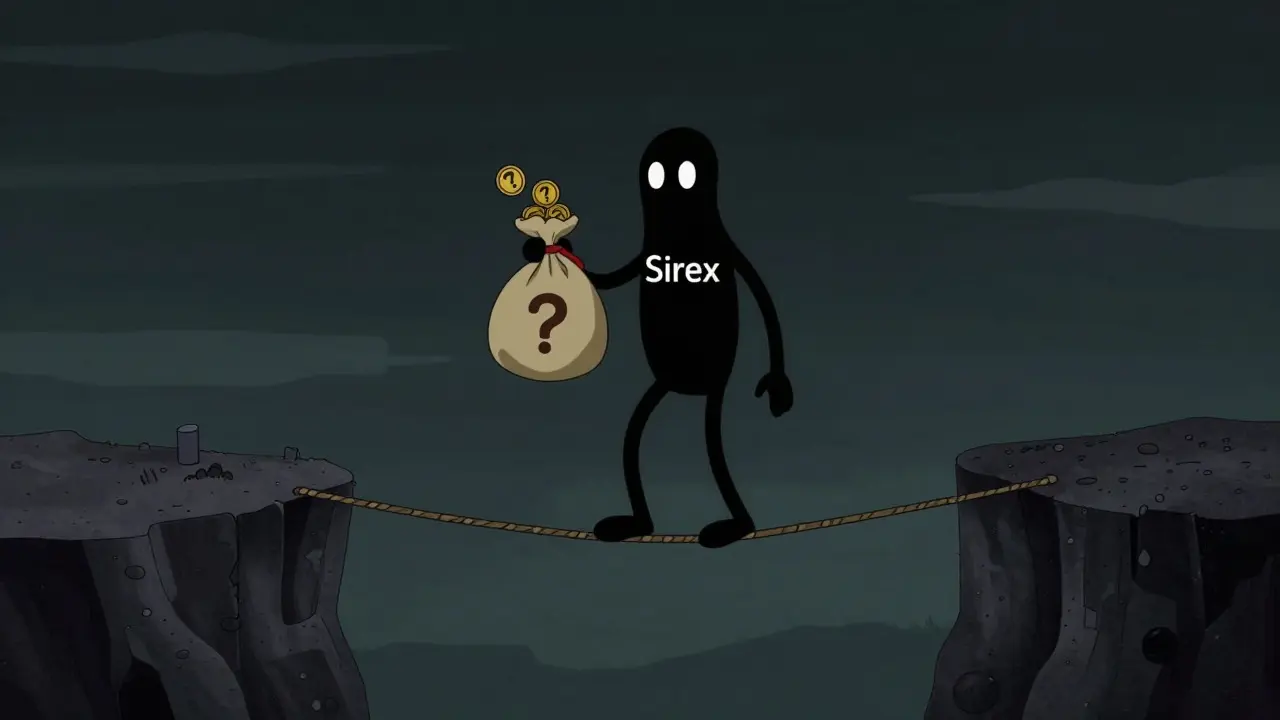
Imagine finding a cryptocurrency exchange that promises direct access to startup investments and Initial Exchange Offerings (IEOs). Sounds exciting, right? But what happens when you try to find out how much it costs to trade, who regulates the platform, or if your funds are actually safe? That is exactly where Sirex is a centralized cryptocurrency exchange founded in September 2019, based in Vietnam, focusing on connecting investors with startups through token trading and IEOs stands today. Founded in 2019 and operating out of Vietnam, Sirex has carved out a niche by bridging the gap between early-stage tech companies and retail investors. However, in the high-stakes world of digital assets, obscurity can be a red flag. This review cuts through the silence to help you decide whether this platform deserves a spot in your portfolio.
The Basics: What Is Sirex?
To understand if Sirex fits your needs, we first need to define what it actually is. Unlike massive global giants like Binance or Coinbase, which operate as public utilities for millions, Sirex positions itself as a specialized gateway. Its primary value proposition revolves around two things: standard token trading and access to IEOs. An Initial Exchange Offering (IEO) is a fundraising method where a cryptocurrency exchange sells new tokens on behalf of a project, providing vetting and liquidity from day one. For many traders, IEOs represent a chance to buy into projects before they hit major markets, potentially offering higher returns. Sirex claims to break down barriers between investors and these startups. The platform is a Centralized Exchange (CEX) is a platform managed by a single entity that controls order matching, custody of funds, and user accounts, unlike decentralized exchanges where users hold their own keys. This means you trust Sirex to hold your money and execute your trades. While convenient, this model introduces counterparty risk-if the exchange fails, your access to funds may vanish.
The Transparency Problem: A Major Red Flag
In the crypto industry, transparency isn't just a nice-to-have; it's a survival mechanism. When researching Sirex, the most striking feature is what is missing. There is a profound lack of publicly available data regarding critical operational metrics. Most reputable exchanges publish monthly proof-of-reserves, detailed fee schedules, and regulatory compliance documents. Sirex offers very little of this. As of 2026, finding concrete information on supported currency pairs beyond general listings, exact trading fees, or recent security audit results requires digging through fragmented sources. This opacity raises immediate questions. Are the low volumes hidden because there is no activity, or is the data simply not published? For a platform handling other people's money, silence is often louder than noise. If you cannot verify who holds your assets or how the platform makes its revenue, you are trading blind.
Security and Regulatory Status
Security in crypto involves two layers: technical safeguards and legal oversight. On the technical side, Sirex does not prominently advertise third-party security audits from firms like CertiK or Hacken, which are standard for newer or mid-tier exchanges. Without these public audits, users must assume the platform's internal security measures are sufficient, a risky gamble in an era of sophisticated smart contract exploits and hot wallet hacks. Regarding regulation, Sirex is headquartered in Vietnam. Vietnam has had a fluctuating relationship with cryptocurrency, moving between strict bans and attempts to regulate blockchain technology. The current status of Sirex's specific licenses is unclear. Does it hold a Virtual Asset Service Provider (VASP) license? Is it registered with the State Bank of Vietnam? The absence of clear regulatory badges means users have limited legal recourse if something goes wrong. In contrast, exchanges operating in jurisdictions like Singapore, Japan, or the EU are required to disclose compliance details regularly.
| Feature | Sirex | Binance / Coinbase | KuCoin / Gate.io |
|---|---|---|---|
| Founded | 2019 | 2017 / 2012 | 2017 / 2013 |
| Regulatory Clarity | Low / Unclear | High (Global Licenses) | Moderate (Varies by Region) |
| Proof of Reserves | Not Publicly Verified | Regular Audits | Regular Audits |
| Primary Focus | IEOs & Startup Access | Spot & Futures Trading | Altcoin Diversity |
| User Trust Signals | Limited Reviews | Millions of Users | Large Active Community |
Trading Experience and Fees
Without transparent fee structures, calculating potential profits becomes a guessing game. Standard exchanges typically charge between 0.1% and 0.5% per trade, with discounts for holding native tokens or high volume. Sirex’s fee schedule is not easily accessible or standardized in public documentation. This ambiguity can lead to unexpected costs, especially for active traders. Furthermore, the liquidity on Sirex appears limited compared to tier-1 exchanges. Low liquidity means wider bid-ask spreads, so you might buy a token at a significantly higher price than its market value elsewhere. For IEO participants, the main draw is access, but if the secondary market for those tokens is illiquid on Sirex, you may struggle to sell your holdings without crashing the price. Always check if the tokens launched via Sirex IEOs are listed on larger platforms like Binance or Uniswap, which would provide better exit opportunities.
Who Should Use Sirex?
Sirex is not for everyone. It is likely too risky for beginners who need hand-holding, robust customer support, and insured deposits. It is also probably not ideal for high-volume day traders who require deep liquidity and predictable fees. However, it might appeal to a specific type of investor: the venture capital enthusiast. If you are specifically hunting for early-stage projects that haven't made it to major exchanges yet, Sirex’s IEO focus could offer unique entry points. These users should be prepared to do extensive due diligence on each individual project, rather than relying on the exchange’s vetting process. They should also treat any capital deposited on Sirex as high-risk venture capital, meaning you should only invest what you can afford to lose entirely.
Alternatives to Consider
If Sirex’s lack of transparency concerns you, consider these alternatives that offer similar features with greater visibility:
- Binance Launchpad: Offers IEO-style launches with rigorous vetting and massive liquidity. Ideal for users wanting exposure to new tokens with lower counterparty risk.
- KuCoin: Known as the "People's Exchange," it lists hundreds of altcoins and early-stage projects. It provides clearer fee structures and a more active community.
- Gate.io: Similar to KuCoin, Gate.io focuses on listing new and obscure tokens quickly. It has a dedicated startup launch platform and regular security audits.
- Uniswap (DEX): For true decentralization, using a Decentralized Exchange allows you to trade directly from your wallet. You retain control of your funds, eliminating exchange bankruptcy risk, though you face smart contract risks instead.
Final Verdict: Proceed with Caution
Sirex occupies a precarious position in the 2026 crypto landscape. Its founding date of 2019 gives it some longevity, but its continued obscurity and lack of public data are concerning. In an industry where trust is built through verification, Sirex asks for faith without providing evidence. If you are determined to use it for specific IEO access, keep your exposure minimal. Never store long-term holdings on the platform; withdraw to a hardware wallet immediately after trading. For most users, the risks associated with poor transparency and uncertain regulatory status outweigh the benefits of accessing niche startup tokens. Stick to exchanges that publish proof-of-reserves and have clear legal standings unless you have a specific, high-risk strategy that requires Sirex’s unique offerings.
Is Sirex crypto exchange legit?
Sirex appears to be a legitimate business entity founded in 2019, but "legit" does not mean "safe." The lack of public proof-of-reserves, unclear regulatory licensing, and limited user reviews make it a high-risk platform. Legitimacy implies it exists and operates, but safety requires transparency, which Sirex currently lacks.
What is the minimum deposit on Sirex?
Public documentation regarding specific minimum deposit amounts for fiat or crypto on Sirex is scarce. Typically, Vietnamese-based exchanges may have local bank transfer options with varying minimums. You must check the current deposit page on their official website for real-time limits, as these change frequently.
Does Sirex support USDT?
Yes, most centralized exchanges, including Sirex, support Tether (USDT) as a primary trading pair. However, ensure you know which network (TRC20, ERC20, BEP20) is supported to avoid lost funds during deposits. Always send a small test transaction first.
How do I withdraw from Sirex?
Withdrawals typically involve navigating to the wallet section, selecting the asset, and entering your external wallet address. Due to limited public info on withdrawal times, expect potential delays. Always enable Two-Factor Authentication (2FA) before initiating any withdrawals to prevent unauthorized access.
Is Sirex regulated in the US or Europe?
There is no public evidence suggesting Sirex holds licenses in the United States (SEC/CFTC) or European Union (MiCA compliant). Being based in Vietnam, it likely operates under local guidelines, which may not offer the same consumer protections as Western regulators. US and EU users should exercise extreme caution.
What are the trading fees on Sirex?
Specific fee tiers are not clearly published in mainstream sources. Generally, smaller exchanges charge between 0.1% and 0.2% per trade. Hidden fees may exist in spread pricing or withdrawal costs. Compare these estimates against known competitors like Binance (0.1%) to gauge competitiveness.
Can I stake coins on Sirex?
While Sirex focuses on IEOs and trading, many such platforms offer staking or savings products for stablecoins. Check their "Earn" or "Finance" section. Be wary of unusually high APYs, as they often indicate higher risk or unsustainable models.
Is my identity verified on Sirex?
Most centralized exchanges require KYC (Know Your Customer) verification, involving ID uploads and selfie checks. Sirex likely enforces this for fiat transactions and large crypto withdrawals. Privacy-conscious users may find this intrusive, but it is standard for anti-money laundering compliance.