
You’ve probably seen the buzz. Maybe it was a Telegram group, a Twitter thread, or a Discord channel promising free SteakBank Finance tokens. The idea is tempting: stake your assets on Binance Smart Chain, get a liquid derivative, and then-wait for it-get an airdrop of the native SBF token for free. It sounds like the holy grail of DeFi yields. But here’s the cold water splash: there is no confirmed, official airdrop program for SteakBank Finance right now.
In fact, digging into the data reveals something even more concerning. As of mid-2026, the SBF token shows zero circulation. The platform exists in a gray area between early development and potential vaporware. If you’re looking for a guide on how to claim these tokens, I have bad news: there’s nothing to claim yet. What I *can* give you is the truth about what SteakBank Finance actually is, why people are talking about it, and how to protect your wallet from scams pretending to be the real deal.
What Is SteakBank Finance Actually?
Let’s strip away the hype and look at the mechanics. SteakBank Finance is a liquid staking protocol built on the Binance Smart Chain (BSC). In simple terms, it tries to solve a specific problem in crypto: when you stake coins to secure a network, those coins usually get locked up. You can’t trade them, lend them, or use them elsewhere while they’re earning rewards.
Liquid staking fixes this by giving you a receipt-a derivative token-for your staked asset. Think of it like getting a parking ticket when you leave your car at a garage. You still own the car (and it’s safe), but the ticket lets you move around town without it. With SteakBank, you deposit assets, get a liquid token back, and can use that token in other DeFi protocols to earn extra yield. That’s the theory.
The platform operates via smart contracts on BSC, with its primary contract address often cited as starting with 0xBb53.... The native governance and utility token is called SBF. According to their whitepaper and tokenomics model, the maximum supply is capped at 10 billion tokens. However, current blockchain explorers show zero active circulation. This means the token hasn’t launched publicly, or if it has, it hasn’t been distributed to users in any meaningful way.
The "Airdrop" Myth vs. Reality
So, where did the airdrop rumor come from? In the crypto world, especially on high-throughput chains like BSC, rumors spread faster than facts. Here is the breakdown of the current situation regarding SBF distributions:
- No Official Announcement: There is no verified announcement from the SteakBank Finance team detailing an airdrop schedule, eligibility criteria, or snapshot dates.
- Zero Circulation: With zero tokens in circulation, there is literally nothing to airdrop. You cannot distribute what does not exist in the public market.
- Farming Confusion: Some users confuse "staking" with "airdropping." When you stake assets on the platform, you might earn rewards. But unless the team explicitly states that stakers will receive SBF tokens retroactively, it’s just speculation.
If you see a website claiming you can "claim your SBF airdrop now," it is almost certainly a phishing scam. These sites mimic legitimate interfaces to steal your private keys or drain your wallet. Always check the official SteakBank Finance social channels (Twitter/X, Discord) for verified links. If it’s not there, it’s not real.
How Liquid Staking Works on BSC
To understand whether SteakBank is worth your attention, you need to understand the mechanism it uses. Liquid staking is a competitive space. On Ethereum, you have Lido and Rocket Pool. On BSC, the landscape is different because the chain itself doesn’t require staking in the same way Proof-of-Stake networks do. Instead, BSC projects often focus on yield generation through liquidity pools and validator delegation across multi-chain ecosystems.
Here is how a typical liquid staking flow works, which SteakBank claims to replicate:
- Deposit: You send your crypto asset (e.g., BNB or a stablecoin) to the SteakBank smart contract.
- Minting: The contract locks your asset and mints a corresponding amount of a derivative token (let’s call it stSBF or similar).
- Utility: You now hold this derivative token. You can swap it on decentralized exchanges (DEXs), use it as collateral in lending protocols, or provide liquidity in Automated Market Makers (AMMs).
- Rewards: Meanwhile, the underlying asset is working for you-either generating block rewards, transaction fees, or yield farming profits.
- Redemption: At any time, you can burn the derivative token to get your original asset back, plus any accrued rewards.
The value proposition is "capital efficiency." Your money isn’t sitting idle; it’s working two jobs at once. But this only works if the platform is secure, audited, and transparent. Currently, SteakBank lacks widespread third-party audits and a proven track record, which raises red flags.

SteakBank Finance vs. Established Competitors
You don’t have to gamble on an unproven project to get liquid staking benefits. The BSC ecosystem has mature players that offer similar services with better security records and actual circulating tokens. Let’s compare SteakBank Finance to some established alternatives.
| Feature | SteakBank Finance (SBF) | Ankr Staking | pSTAKE Finance |
|---|---|---|---|
| Token Status | Zero circulation / Unverified | Active (ANKR token) | Active (PSTAKE token) |
| Audits | Not publicly confirmed | Multiple major audits | Multiple major audits |
| TVL (Total Value Locked) | Negligible / Unknown | High (Multi-chain) | High (Multi-chain) |
| Airdrop History | None confirmed | Past campaigns documented | Past campaigns documented |
| Risk Level | d>Very High | Low-Medium | Low-Medium |
As you can see, SteakBank is playing catch-up. Ankr and pSTAKE have years of operational history, verified audits, and millions of dollars in TVL. They also have clear tokenomics and past airdrop precedents that were communicated transparently. SteakBank offers none of these assurances yet.
Red Flags: Why You Should Be Cautious
I’m not saying SteakBank is definitely a scam, but I am saying it exhibits several characteristics of high-risk projects. In crypto, "not a scam" doesn’t mean "safe." Here are the specific risks associated with SBF right now:
1. The Zero-Circulation Trap
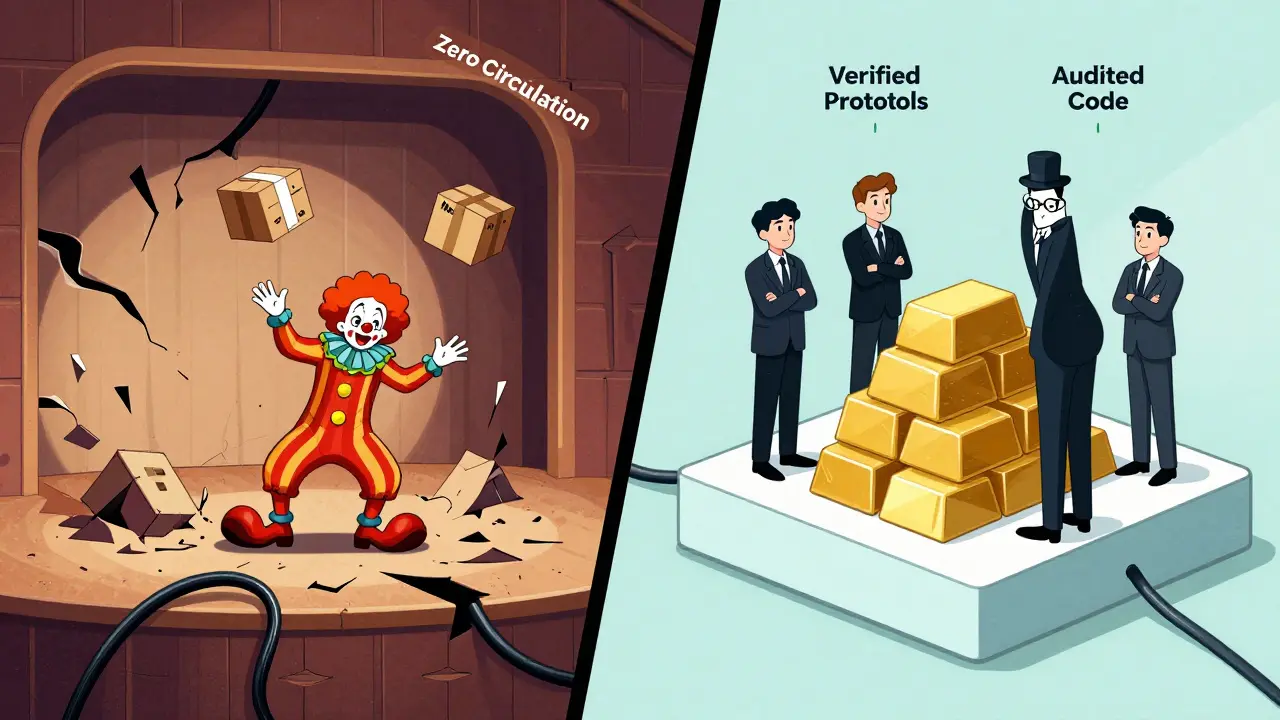
When a token has zero circulation, it means no one owns it except possibly the team. This gives the developers total control over distribution. They could dump millions of tokens onto the market tomorrow, crashing the price instantly. Without a vesting schedule or fair launch mechanism, retail users are at a massive disadvantage.
2. Lack of Audits
Smart contracts are code, and code has bugs. Major platforms hire firms like CertiK, Hacken, or PeckShield to audit their code. If SteakBank hasn’t published an audit report, you are trusting your funds to unaudited code. One vulnerability could lead to a rug pull or exploit.
3. Vague Roadmap
Legitimate projects publish detailed roadmaps with milestones. SteakBank’s online presence is sparse. There are no recent developer updates, no community calls, and no clear timeline for when the SBF token will actually launch. Silence is rarely a good sign in DeFi.
4. Phishing Attempts
Because the name "SteakBank" sounds similar to established banks or other finance brands, scammers create fake websites. They use SEO tricks to appear at the top of search results for "SteakBank airdrop." If you connect your wallet to these sites, they can drain your assets. Always verify URLs manually.
How to Verify Legitimacy Yourself
Don’t take my word for it. Do your own due diligence (DYOR). Here is a checklist to determine if SteakBank Finance is becoming legitimate or if you should avoid it entirely:
- Check CoinMarketCap/CoinGecko: Look for the SBF token. If it’s not listed, or if the volume is near zero, be wary. Check the "All Time High" and "Circulating Supply" metrics.
- Verify Social Channels: Go to Twitter/X. Look for the blue checkmark (or equivalent verification). Read the replies. Are real people asking questions, or is it just bots posting "To the moon!"?
- Find the Audit Report: Search for "SteakBank Finance audit PDF." If you can’t find a link to a reputable auditor’s site, assume the code is unaudited.
- Check Contract Ownership: Use BscScan to look at the main contract. Is ownership renounced? If the team still has admin privileges, they can pause withdrawals or change fees at any time.
What Should You Do Instead?
If your goal is to earn yield on BSC or participate in airdrops, there are safer, more transparent paths. Instead of chasing a ghost airdrop, consider these strategies:
Focus on Proven Protocols:
Use platforms like PancakeSwap, Venus Protocol, or Alchemix. These have deep liquidity, regular audits, and clear reward structures. You won’t get a "free" airdrop overnight, but you’ll earn sustainable yield without risking your principal on unaudited code.
Hunt for Verified Airdrops:
Look for airdrops from projects that have already raised venture capital and have public teams. Examples in recent years have included Arbitrum, Starknet, and zkSync. These projects announce snapshots clearly and distribute tokens fairly. Keep an eye on new Layer 2 solutions or major DeFi upgrades, as they are more likely to have legitimate airdrop budgets.
Secure Your Wallet:
Regardless of what you choose, never connect your main wallet to unknown dApps. Use a burner wallet for testing new protocols. Enable hardware wallet support if possible. And never share your seed phrase-not even with customer support who claims to be from SteakBank.
Final Thoughts on the SBF Hype
The crypto market is filled with noise. Projects like SteakBank Finance thrive on ambiguity. By not confirming an airdrop, they keep hope alive, which keeps users engaged. But engagement isn’t revenue, and hope isn’t yield. Until SBF has a circulating supply, verified audits, and a transparent team, it remains a speculative experiment rather than a financial tool.
Stay skeptical. Verify everything. And remember: if it sounds too good to be true-like a free token drop from a project with zero track record-it probably is.
Is there an official SteakBank Finance (SBF) airdrop in 2026?
No. As of June 2026, there is no confirmed or official airdrop program for SteakBank Finance. The SBF token has zero circulation, and the team has not released any details regarding distribution schedules or eligibility criteria. Any website claiming otherwise is likely a scam.
What is the contract address for SteakBank Finance?
The primary contract address often associated with SteakBank Finance starts with 0xBb53... on the Binance Smart Chain. However, due to the lack of official verification and audits, users should exercise extreme caution before interacting with this contract. Always double-check addresses on official social media channels.
Is SteakBank Finance a scam?
While not definitively labeled a scam by authorities, SteakBank Finance exhibits many high-risk characteristics: zero token circulation, lack of public audits, vague roadmap, and absence of transparent team information. These factors make it highly speculative and potentially unsafe for investment.
How does liquid staking work on Binance Smart Chain?
Liquid staking allows you to deposit assets into a protocol and receive a derivative token in return. This derivative represents your stake and can be used in other DeFi applications (like lending or trading) while you continue to earn rewards from the underlying asset. On BSC, this is often used to maximize yield through multiple revenue streams.
What are safer alternatives to SteakBank Finance on BSC?
Safer alternatives include established protocols like Ankr Staking, pSTAKE Finance, PancakeSwap, and Venus Protocol. These platforms have verified audits, significant Total Value Locked (TVL), active communities, and transparent tokenomics, making them more reliable for yield generation and staking.
Comments (14)
Mark Corpuz
June 5, 2026 AT 08:46
I really appreciate the thorough breakdown here. It is easy to get swept up in the hype when everyone on Twitter is screaming about free tokens, but this article cuts through the noise with actual data. The point about zero circulation is particularly damning because it means there is literally nothing to distribute yet. I have seen too many projects use the promise of an airdrop as a carrot to keep users engaged while they build something that might never launch properly. Thank you for reminding us to check CoinGecko and look for audits before connecting any wallets. It saves so much headache later.
Lee Paige
June 5, 2026 AT 21:05
Don't trust these DeFi platforms at all. They are all part of a larger scheme to track your financial movements and eventually seize assets under the guise of 'security updates' or 'regulatory compliance'. The fact that SteakBank has no audit is proof that they are hiding malicious code designed to drain wallets once the user base grows large enough. Wake up people. This is how they control the money supply.
Yogendra Dwivedi
June 5, 2026 AT 22:40
I was wondering why I couldn't find any official documentation for the SBF token. This clears it up nicely. It seems like a classic case of marketing outpacing development. I will stick to Ankr for now since they have a proven track record.
Alexis Abster
June 6, 2026 AT 13:03
Oh my goodness, I almost clicked on one of those fake links yesterday! 😱 I saw a tweet saying "Claim your SBF now" and my heart was racing thinking I missed the boat. Reading this just saved me from potentially losing everything in my wallet. It is terrifying how sophisticated these phishing sites look. You guys need to be so careful out there!
Brad Ranks
June 7, 2026 AT 03:02
Total vaporware. Zero TVL. Zero audits. Zero chance. If you are still holding out hope for this project you are either new to crypto or just desperate for a quick buck. Move along.
Caitlin Donahue
June 7, 2026 AT 07:37
thx for the info. i was confused abt the whole liquid staking thing on bsc. makes sense now why i should avoid it if its not verified. gonna stick to pancake swap instead lol
Karthikeyan S
June 8, 2026 AT 09:57
Why are you all so scared? 🤔 Maybe the team is just being stealthy. I heard rumors they are working with some big VCs behind closed doors. You guys are missing out on the early bird advantage because you are too busy reading articles instead of taking risks. Life is short, take the L if you have to but don't complain later. 😂📉
Dinesh Pattigilli
June 8, 2026 AT 10:02
The comparison table is excellent. It clearly shows that SteakBank is playing in the kiddie pool compared to pSTAKE and Ankr. Most retail investors lack the technical knowledge to verify smart contracts themselves, which is why they fall for these scams. It is pathetic really. Do your own research or stay away from DeFi entirely.
Madhu Menon
June 8, 2026 AT 22:02
Is it possible that the silence is intentional to test the community's loyalty? Sometimes projects do this to filter out speculators who only care about short-term gains. However, without transparency, it is hard to distinguish between a strategic pause and a rug pull. We must remain vigilant observers of the blockchain activity. 🧐
Narendra Kulkarni
June 10, 2026 AT 13:39
Nice post mate. Really helpful stuff. I always forget to check if the contract ownership is renounced. That is a good tip to add to my checklist. Thanks for sharing this.
verna kennedy
June 12, 2026 AT 08:40
This is exactly what I tell my clients. Never invest in unaudited protocols. The risk/reward ratio is completely skewed against the retail investor in these scenarios. Stick to established names.
Kelly Tenney
June 13, 2026 AT 23:21
I love how this article empowers readers to do their own due diligence. Instead of just saying "it's a scam," it gives concrete steps to verify legitimacy. That is so much more valuable. Let's all support each other in staying safe in this wild west of crypto!
Caralee Robertson
June 15, 2026 AT 02:24
i tried to find the twitter account but couldnt find the blue checkmark anywhere. maybe its a new verification system? anyway thanks for the warning. dont want to lose my savings
Greg Lewis
June 15, 2026 AT 17:23
why do we even need audits when the code is open source anyone can read it right? stop letting gatekeepers decide what is safe. the real conspiracy is the auditing firms getting paid to say yes. steakbank might be fine just because they dont pay bribes to certik