Imagine finding a brand-new decentralized exchange that promises low fees, advanced features like perpetual futures, and zero know-your-customer (KYC) hurdles. It sounds too good to be true, right? That is exactly the vibe SwapBased is a decentralized cryptocurrency exchange operating exclusively on the Base blockchain, offering spot swaps, concentrated liquidity, and beta perpetual futures. Launched in 2023 as an early mover on Coinbase’s Layer 2 network, SwapBased has carved out a niche for itself by combining simple token swaps with more complex DeFi tools. But here is the catch: while the tech stack looks impressive on paper, the reality of using it involves navigating shallow liquidity, limited token options, and significant security unknowns.
If you are thinking about moving your funds to SwapBased, you need to look past the marketing hype. This isn’t just another copy-paste Uniswap clone; it’s a specialized tool with specific strengths and glaring weaknesses. In this review, we break down whether SwapBased is worth your time, money, or risk tolerance in the current crypto landscape.
The Core Problem: Liquidity and Token Selection
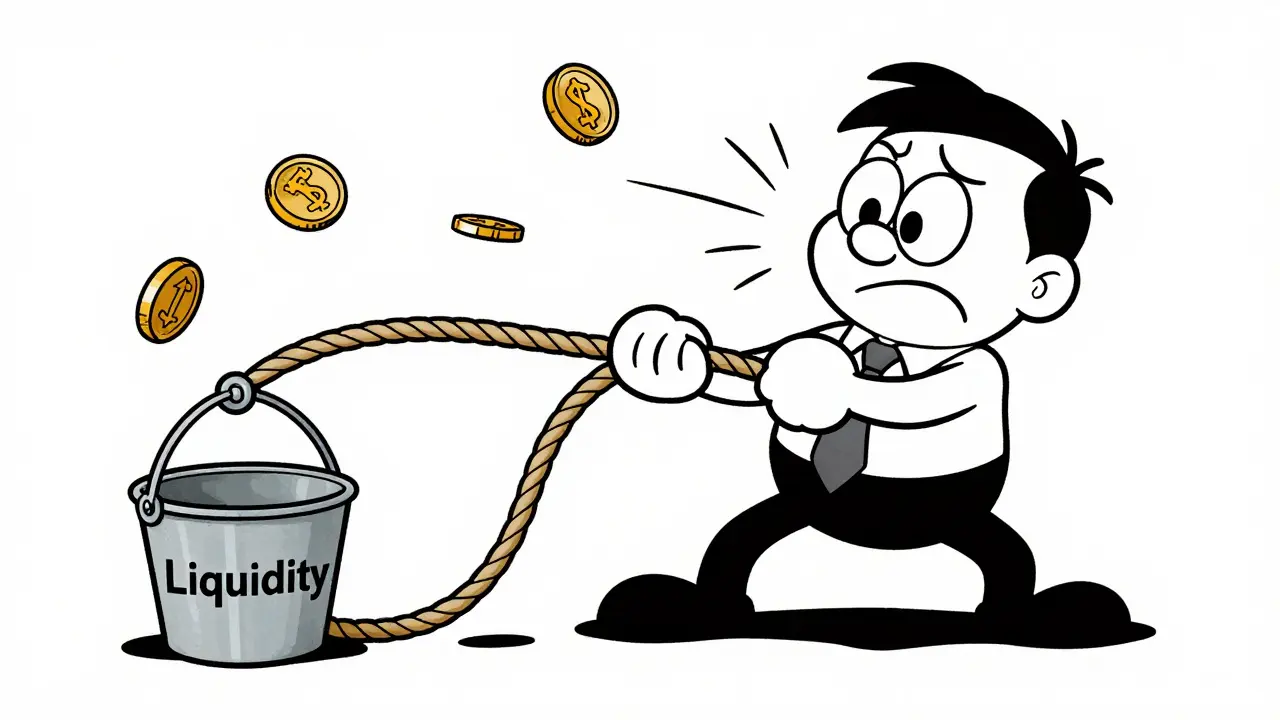
When you walk into a physical store, you expect shelves stocked with products. In the world of decentralized exchanges (DEXs), those shelves are called liquidity pools. If they are empty, you can’t buy what you want, or you pay a premium to do so. This is SwapBased’s biggest hurdle.
As of late 2024 data which still reflects its operational scale heading into 2026, SwapBased supports only six cryptocurrencies across seven trading pairs. Compare that to giants like Uniswap, which handles over 1,500 tokens across multiple chains. On SwapBased, your main options revolve around stablecoins like USDC and major assets like WETH (Wrapped Ether). If you are looking to trade obscure meme coins or newer altcoins, you won’t find them here.
This limited selection leads directly to the issue of slippage. Slippage is the difference between the price you expect for a trade and the price you actually get. Because SwapBased has relatively thin order books-meaning there aren’t many large orders waiting to buy or sell-larger trades cause the price to move against you significantly. For example, user tests indicated that trades over $1,000 could experience slippage of around 2.5%. That means if you try to swap $1,000 worth of USDC for WETH, you might only receive $975 worth of WETH due to the lack of depth in the pool. For small trades under $500, the impact is manageable, but serious traders will find this environment frustrating.
| Feature | SwapBased | Aerodrome Finance | Uniswap (on Base) |
|---|---|---|---|
| Supported Tokens | 6 | 100+ | 1,500+ |
| Total Value Locked (TVL) | Low (<$1M) | $1.1 Billion | High |
| Perpetual Futures | Beta (Limited) | No | No |
| Security Audits | None Publicly Available | Multiple (CertiK, etc.) | Multiple (Trail of Bits, etc.) |
| Best For | Small experimental trades | Yield farming & high volume | General swapping |
Features That Stand Out: Perps and Concentrated Liquidity
Despite the liquidity issues, SwapBased isn’t entirely devoid of innovation. Its claim to fame is being one of the first protocols on Base to offer perpetual futures trading is a derivative financial contract that allows traders to speculate on the future price of an asset without expiration dates. While this feature is currently in beta and suffers from low liquidity, it opens doors for users who want to hedge positions or leverage their holdings without leaving the Base ecosystem. Most other Base-native DEXs focus solely on spot trading.
Another key feature is concentrated liquidity, similar to Uniswap V3. This mechanism allows liquidity providers (LPs) to allocate their capital within specific price ranges rather than spreading it out across all possible prices. This increases capital efficiency, meaning LPs can earn higher fees for the same amount of deposited assets. However, this comes with a learning curve. You need to understand how to set price bounds and monitor your position to avoid impermanent loss-a situation where holding tokens in a liquidity pool results in less value than simply holding them in a wallet.
The platform also offers staking mechanisms for its native governance token, SWAPBASED. Holders can stake these tokens to share in the protocol’s fees. While the exact reward rates have been opaque in the past, the concept aligns with standard DeFi incentive models. The goal is to create a community-driven economy where active participants are rewarded for providing liquidity and securing the network.
The Elephant in the Room: Security Risks
Let’s talk about the most critical aspect of any crypto platform: security. Here is the hard truth about SwapBased-as of our latest checks, the platform lacks independent security audits from reputable firms like CertiK, PeckShield, or Trail of Bits. In the DeFi world, an audit is like a building inspection before you move in. Without it, you are walking into a structure that hasn’t been checked for structural flaws.
The development team claims to use non-upgradeable smart contracts, which is generally seen as a positive security measure because it prevents developers from changing the code after deployment (a common vector for rug pulls). However, immutability doesn’t mean invincibility. Bugs can still exist in the initial code. Security researcher Elena Rodriguez noted at the Blockchain Security Summit that projects on new chains like Base without audits present elevated risk profiles, especially when implementing complex features like perpetual futures.
Furthermore, phishing attacks are rampant. Cybersecurity firm PC Risk issued warnings in 2024 about fake SwapBased websites designed to drain wallets. Always double-check the URL. The legitimate site should be verified through official channels like the Base Discord or Twitter account. Never click links from random DMs or unverified forums. If you connect your wallet to a malicious site, attackers can execute automated transactions to siphon your funds instantly.
User Experience and Costs
How does it feel to actually use SwapBased? If you are a seasoned DeFi user, you’ll likely find the interface functional but cluttered. Combining spot trading, liquidity provision, and derivatives into one dashboard creates complexity. New users reported taking 15-30 minutes just to figure out how to make their first swap. The documentation is described as “adequate but sparse,” meaning you’ll often rely on community tutorials rather than official guides.
On the bright side, transaction costs are incredibly low. Since SwapBased runs on Base, a Layer 2 solution, gas fees average around $0.035 per swap. This is a fraction of what you’d pay on Ethereum mainnet. For frequent traders making small bets, this cost efficiency is a major draw. You can execute dozens of trades for less than it would cost to send a single email.
However, the low gas fees don’t offset the potential losses from slippage if you aren’t careful. The platform defaults to a 1% slippage tolerance for most spot trades, which works for small amounts. For larger moves, you might need to adjust this setting, but doing so increases the risk of getting a bad price if the pool is thin.

Who Should Use SwapBased?
Not every trader needs SwapBased. In fact, for most people, it is better to stick with established platforms like Aerodrome Finance or Uniswap. So, who is this platform actually for?
- Experimental DeFi Users: If you enjoy testing new protocols and are comfortable losing small amounts of money in the process, SwapBased offers a unique playground. Try it with $50-$100 to see how the concentrated liquidity mechanics work.
- Base Ecosystem Believers: If you are heavily invested in the Base blockchain and want to support early-stage projects, SwapBased provides a way to participate in its growth via staking and liquidity provision.
- Derivatives Enthusiasts: If you specifically want to trade perpetual futures on Base and don’t mind the beta limitations, SwapBased is one of the few options available. Just be aware that exiting positions quickly might be difficult during volatile market moves due to low liquidity.
Conversely, SwapBased is not suitable for beginners who don’t understand slippage or impermanent loss. It is also not ideal for institutional traders or anyone moving significant capital, as the shallow pools will eat into your profits through price impact.
Final Verdict: Proceed with Caution
SwapBased is a promising but unfinished product. It brings innovative features like perpetual futures to the Base blockchain and offers ultra-low transaction costs. However, these benefits come with substantial risks: limited token variety, shallow liquidity leading to high slippage, and a complete lack of public security audits.
Think of SwapBased as a beta test rather than a primary trading venue. Use it for small, experimental trades. Keep your main portfolio on audited, liquid platforms. Always verify URLs to avoid phishing scams, and never invest more than you can afford to lose. As the Base ecosystem matures, SwapBased may improve its liquidity and security posture, but until then, treat it as a high-risk, high-reward experiment.
Is SwapBased safe to use in 2026?
SwapBased carries higher-than-average risk because it lacks independent security audits. While its non-upgradeable smart contracts offer some protection against developer manipulation, untested code can still contain bugs. Always use extreme caution, verify URLs to avoid phishing, and only trade small amounts you are willing to lose.
What is the minimum trade size on SwapBased?
There is no strict minimum, but due to low liquidity, trades under $100 are recommended to minimize slippage. Trades over $500 may experience significant price impact (slippage of 2-3%), making them inefficient compared to larger DEXs.
Does SwapBased require KYC (Know Your Customer)?
No, SwapBased is a non-custodial decentralized exchange. You connect via a Web3 wallet like MetaMask or Coinbase Wallet. No personal information, ID, or email is required to trade.
Can I trade Bitcoin or Ethereum directly on SwapBased?
You cannot trade native Bitcoin (BTC) or Ethereum (ETH) directly. Instead, you trade wrapped versions like WETH (Wrapped Ether) and potentially WBTC if supported in future updates. Currently, the platform primarily supports USDC and WETH pairs.
How do I avoid phishing sites when using SwapBased?
Always bookmark the official website and navigate directly from there. Do not click links from social media DMs or unverified emails. Check the URL carefully for typos (e.g., 'swapbase.finance' instead of the correct domain). Use browser extensions that warn about known malicious sites.
Comments (19)
Filbert Reeves
June 24, 2026 AT 22:18
yo u guys really think base is safe? its just coinbases sidechain for their own profit. the whole 'decentralized' thing is a lie they sell to normies who dont read whitepapers. swapbased is probably front-running everyone because the liquidity is so thin you cant even move the market without getting wrecked. i tried it last week and lost 40 bucks on slippage alone. typical rug pull setup waiting to happen.
Nick Rice
June 26, 2026 AT 14:16
Look, while I understand the skepticism regarding newer DEXs, we must approach this with a structured mindset rather than pure cynicism. The article highlights valid concerns about liquidity depth, specifically noting that trades over $1,000 can incur significant slippage. This is not merely a minor inconvenience; it is a fundamental economic barrier for serious traders. If you are looking to execute large volume transactions, SwapBased is currently ill-equipped to handle them efficiently compared to established giants like Uniswap or Aerodrome. However, for small-scale spot swaps of stablecoins, it might serve as a functional, albeit limited, utility tool. We should evaluate tools based on their specific use cases rather than dismissing them entirely due to lack of scale.
Amit Thakur
June 27, 2026 AT 01:17
The TVL metrics are absolutely abysmal when you compare the risk-adjusted returns versus the impermanent loss exposure. You are essentially providing liquidity to a pool that has zero institutional backing and minimal organic volume. The smart contract audit status is also murky. In the current macro environment, alpha is generated through yield optimization strategies on high-liquidity protocols, not by gambling on beta features of obscure L2 derivatives platforms. Stick to blue-chip DeFi primitives if you want capital preservation.
Eric Scheinberg
June 28, 2026 AT 08:11
It is imperative to consider the security implications of interacting with less audited protocols. The absence of comprehensive third-party audits increases the attack surface significantly. Users should exercise extreme caution and limit exposure to amounts they can afford to lose entirely. The potential for exploit is non-trivial in such environments.
pankaj chawla
June 30, 2026 AT 04:07
I agree with the assessment on liquidity. It's tough for new projects to compete with the network effects of Uniswap. But maybe there's an opportunity for early adopters if they add more pairs soon. Worth watching but definitely not for main portfolio allocation right now.
Jessica Lane
July 1, 2026 AT 07:37
This review raises some critical points that deserve deeper investigation. The limitation to only six cryptocurrencies severely restricts utility for most retail investors who seek diversification. Furthermore, the mention of 'beta perpetual futures' introduces a layer of complexity and risk that many users may not fully comprehend. Are these futures hedged properly? What is the oracle mechanism? Without transparent answers to these questions, participating in such instruments feels akin to speculation rather than trading. I would advise readers to prioritize platforms with proven track records and robust community governance before allocating funds here.
Charles Pawlikowski
July 2, 2026 AT 18:00
another woke tech bro platform trying to steal our money :/ why do we even need crypto when we have dollars? this base chain stuff is just another way for elites to tax us. stay away from all this garbage people. real value is in gold and land not digital monkeys
Andrea Burd
July 4, 2026 AT 06:29
boring. i already know its trash. why write a whole essay about how bad it is? just say its bad and move on. waste of my time reading this clickbait title.
Akeem Whittaker
July 5, 2026 AT 12:28
Let’s break down the mechanics here. The slippage issue isn’t just a nuisance; it’s a direct result of low order book depth. When you place a trade, you’re eating through the available liquidity at the best price until you hit worse prices. On SwapBased, that ‘worse price’ hits very quickly. For anyone interested in learning how DEXs work, this is a textbook example of why liquidity matters. Don’t let the fancy UI fool you into thinking it’s sophisticated. It’s a shallow pool.
Manish Prajapat
July 7, 2026 AT 09:49
One must ponder the philosophical underpinnings of trust in decentralized systems. If the code is open but the liquidity is closed, where does the freedom lie? Perhaps the true decentralization is in the ability to choose not to participate. I find solace in observing these experiments from afar, understanding that each failure teaches the ecosystem valuable lessons about resilience and design.
John Doe
July 7, 2026 AT 20:32
My heart sinks every time I see another review hyping up a platform with such glaring flaws. It’s tragic that so many people are willing to ignore basic financial prudence for the sake of novelty. The pain of losing hard-earned savings to a poorly designed protocol is a burden no one should have to bear. Please, protect yourselves and your families from these predatory schemes.
Mekz Wheoki
July 8, 2026 AT 09:43
Oh look, another Base DEX review. How original. Did you know that water is wet? Groundbreaking stuff. If you’re dumb enough to trade on a platform with 6 tokens, you deserve whatever happens to you. Go touch grass.
Skm Shubham
July 9, 2026 AT 19:49
The analysis provided is superficial at best. Anyone with half a brain can see that SwapBased is a honeypot waiting to spring. The developers are likely insiders pumping their own bags while retail gets rekt on the exit liquidity. Don’t be a sucker. Read the code or stay out.
Rob Aronson
July 10, 2026 AT 06:20
From a technical standpoint, the integration with Base is seamless, but that doesn’t excuse the poor UX around slippage tolerance settings 📉. Traders need granular control. Also, the MEV protection seems lacking. If you’re running bots, expect to get sandwiched. Not recommended for pro traders 🚫🤖.
Kwon Bill
July 11, 2026 AT 16:38
In the global DeFi landscape, regional adoption varies wildly. While US users might shy away due to regulatory fears, other markets might embrace the anonymity. However, the lack of token variety limits cross-border utility. It’s a niche product for a niche audience, mostly speculators looking for quick flips on stablecoin pairs.
Danna Charris
July 13, 2026 AT 09:03
Precisely. The elitism of expecting high liquidity on a new platform is misplaced. Quality over quantity.
Fede Faith
July 15, 2026 AT 04:50
Hey everyone, let’s keep this constructive. Yes, the liquidity is low, but that’s normal for early-stage projects. If you’re just testing small amounts, it’s a good way to learn how Base works. Just don’t put your life savings in there. Use it as a learning tool, not a bank. Stay safe out there!
Josh Dodson
July 15, 2026 AT 18:02
hey guys! i tried it too and yeah slippage is crazy. but hey its free gas fees sometimes lol. just be careful ok? dont lose ur money fam. its cool for tiny trades tho.
Nick Rice
July 17, 2026 AT 18:01
@Josh Dodson While the low gas fees are a benefit of the Base network, equating that to overall platform viability is a logical fallacy. Slippage costs often outweigh gas savings on larger trades. It is crucial to calculate the total cost of ownership for each transaction, including hidden costs like price impact. Education is key here.