BitLicense: What It Is, Who Needs It, and How It Shapes Crypto in the US
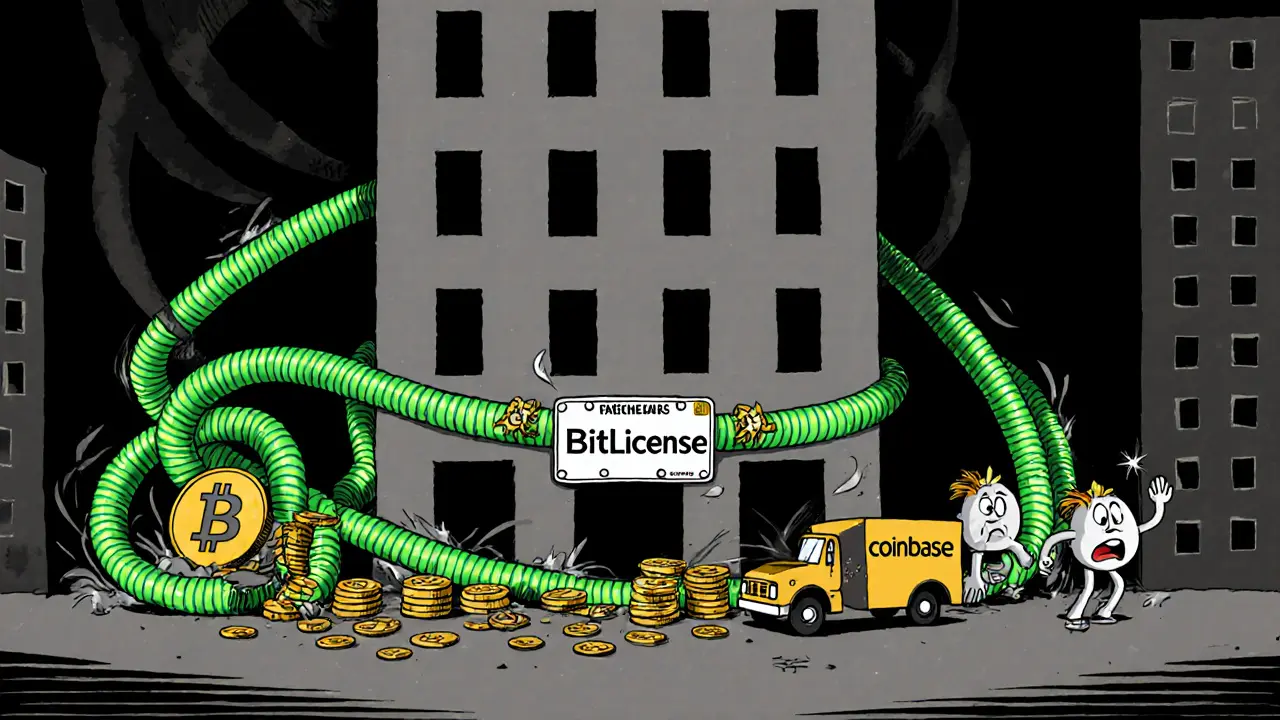
When you hear BitLicense, a regulatory license issued by New York’s Department of Financial Services (NYDFS) that controls who can offer cryptocurrency services in the state. It’s not just a permit—it’s a gatekeeper that reshaped the entire U.S. crypto landscape. Before BitLicense, crypto firms could operate freely across state lines. After 2015, if you wanted to serve even one New York resident with a wallet, exchange, or custody service, you had to get approved by a state agency that treated crypto like a high-risk bank activity. That’s why so many exchanges pulled out of New York—and why the ones that stayed, like Coinbase and Gemini, now operate under a much tighter leash.
BitLicense isn’t just about paperwork. It demands KYC, Know Your Customer rules that require every user to submit government ID, proof of address, and sometimes even bank statements, AML, Anti-Money Laundering systems that monitor every transaction for signs of fraud or illicit flow, and full financial audits every year. It’s the reason you can’t use a random DeFi app from New York without jumping through layers of compliance. And it’s why startups either avoid New York entirely or spend millions just to apply. The cost to get one? Often over $500,000 in legal fees alone. That’s not a fee—it’s a barrier to entry.
BitLicense also forces companies to hold reserves in specific ways, report every customer withdrawal, and keep detailed logs of every trade. It’s designed to make crypto feel like a bank—but without the same federal protections. That’s why New York has fewer crypto exchanges than Texas or Florida. It’s not that people there don’t want crypto. It’s that the rules make it too expensive to offer.
But here’s the twist: BitLicense didn’t kill crypto in New York. It just pushed it underground. Many users now use non-BitLicense platforms via VPNs, peer-to-peer trades, or foreign exchanges. Others rely on Bitcoin ATMs or local traders who don’t ask questions. The state thought it was controlling risk. Instead, it created a two-tier system: compliant giants with deep pockets, and everyone else operating in the gray.
And now, as other states consider similar rules, BitLicense is being copied—slowly, cautiously. California? No. Texas? No. But places like Hawaii and Washington are watching closely. The question isn’t whether other states will follow. It’s whether they’ll copy the worst parts: the cost, the delay, the bureaucracy. Or if they’ll find a smarter way to protect users without pushing innovation out the door.
What you’ll find below are real stories from the front lines. Posts that break down how BitLicense affected exchanges, how it changed user behavior, and how companies are working around it. Some are technical. Some are legal. All of them are grounded in what’s actually happening—not what regulators say should be happening.
As of 2025, 47 U.S. states have their own crypto regulations - from New York's strict BitLicense to Wyoming's crypto-friendly banking laws. This guide breaks down what each state requires, how they impact users and businesses, and what the federal GENIUS Act means for the future.