Crypto Sanctions: How Governments Block Crypto and What It Means for You
When governments impose crypto sanctions, official restrictions on cryptocurrency use to block financial flows to targeted entities or nations. Also known as cryptocurrency sanctions, these are no longer theoretical—they’re actively shutting down wallets, freezing exchange accounts, and cutting off access to stablecoins like DAI and USDT. This isn’t just about stopping criminals. It’s about controlling money flows in a world where banks can’t always track what’s happening on the blockchain.
Take Russia, a nation building underground crypto networks to bypass Western financial bans. Also known as Russia crypto sanctions, it’s using obscure tokens like A7A5 and exchanges like Grinex to move billions, avoiding traditional banking systems entirely. Meanwhile, OFSI, the UK’s Office of Financial Sanctions Implementation. Also known as OFSI compliance, it’s now requiring crypto firms to monitor transactions in real time or face million-dollar fines. These aren’t isolated cases. From Iran’s state-controlled mining to Colombia’s unregulated crypto market, governments are reacting to crypto the same way they reacted to cash in the 90s—by trying to control it, track it, or ban it.
What does this mean for you? If you’re using crypto in a sanctioned country, you’re not just trading—you’re surviving. If you’re in the UK, US, or EU, your exchange might freeze your assets without warning if it flags a transaction linked to a sanctioned address. Even holding a token that once had legitimate use can become risky if regulators decide it’s being used for evasion. The line between privacy and violation is thinner than ever.
Below, you’ll find real-world breakdowns of how sanctions are enforced, how people bypass them, and what happens when governments catch up. You’ll see exactly how Russia moves money, how UK firms are forced to comply, and why scams like fake airdrops are rising as legitimate channels get shut down. This isn’t theory. It’s happening now—and your next transaction could be part of it.
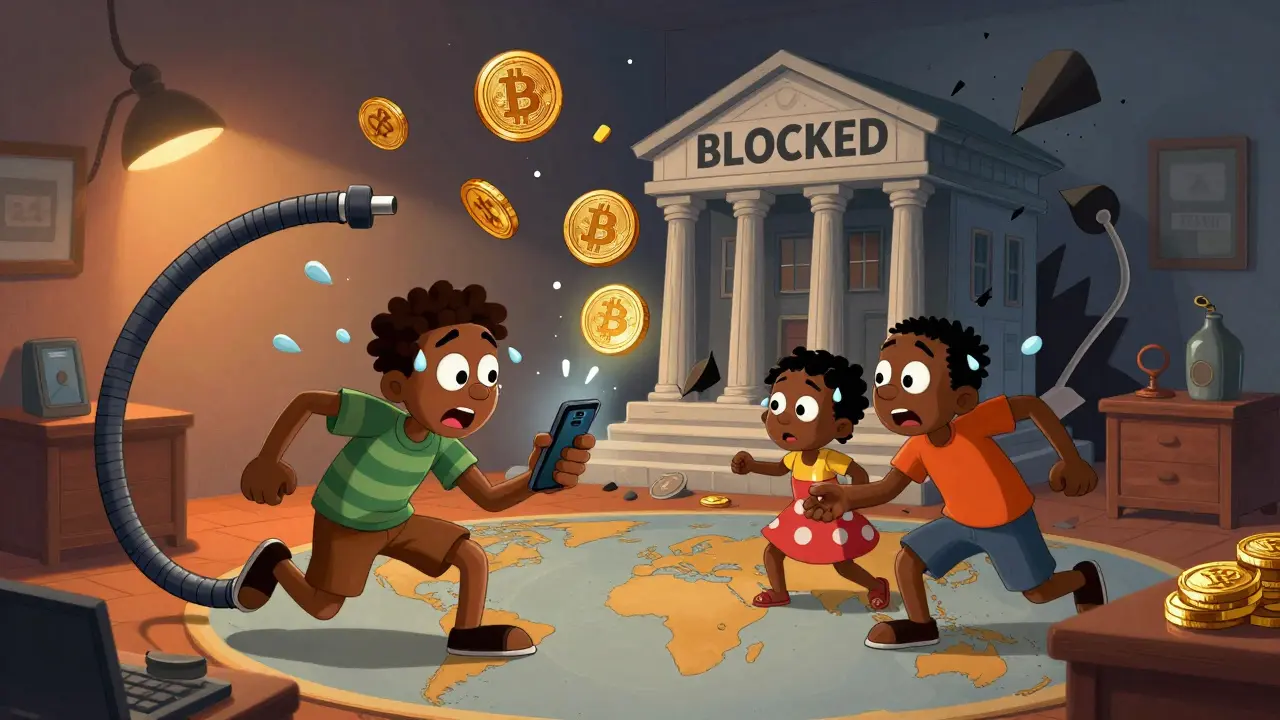
P2P crypto trading is the last financial lifeline in restricted countries-but sanctions, exchange bans, and compliance crackdowns are squeezing volumes. Here’s what’s really happening in 2025.

Using cryptocurrency to bypass sanctions is not anonymous or safe. Legal penalties include prison, fines, and asset seizures. Blockchain analytics make crypto transactions highly traceable, and regulators are actively prosecuting violators.