Cryptocurrency Regulations: What’s Legal, What’s Not, and How It Affects You
When we talk about cryptocurrency regulations, government rules that control how digital currencies can be used, traded, or taxed. Also known as crypto laws, they determine whether you can buy Bitcoin in your country, if you owe taxes on your gains, or if using crypto to bypass sanctions could land you in legal trouble. There’s no global rulebook—just a patchwork of conflicting policies that change every few months.
Some countries, like Colombia, a nation where crypto is legal but unregulated, leaving users vulnerable to fraud and tax uncertainty, let people use crypto with almost no oversight. Others, like the UK, a jurisdiction that now requires real-time blockchain monitoring to stop sanctions evasion and fines crypto firms millions for non-compliance, treat crypto like a financial instrument under strict watch. Then there’s Iran, where mining is legal but controlled, and Russia, where crypto is used to sidestep Western sanctions entirely—using tokens like A7A5 and exchanges like Grinex to move billions. These aren’t edge cases. They’re the new normal.
It’s not just about where you live—it’s what you do with your crypto. If you trade on an unregulated exchange like HitBTC or Zeddex, you’re playing without a safety net. If you earn airdrops like SAKE or try to claim fake ones like VDV, you risk losing everything. If you hold crypto in a wallet and don’t track your transactions, the crypto taxes, the government’s claim on your profits from buying, selling, or staking digital assets could hit you with penalties you didn’t see coming. The IRS now demands Form 1099-DA, and the UK’s OFSI is tracking wallet addresses like never before.
And it’s not just individuals. Businesses, DeFi platforms, and even gaming tokens like AQT or MIX are being pulled into compliance frameworks. Formal verification of smart contracts isn’t just a tech trend—it’s a legal requirement in some jurisdictions. Privacy chains like Tusima Network aren’t just about anonymity—they’re designed to meet regulatory demands for selective disclosure. Even something as simple as your seed phrase matters: 12-word or 24-word, the real risk isn’t the length—it’s whether you’ve stored it securely enough to survive a government raid or a hacker’s attack.
What you’ll find below isn’t a list of laws. It’s a collection of real stories—how El Salvador’s Bitcoin law failed, how Iranians bypass bans with DAI on Polygon, how miners in Iran get crushed by state-controlled power grids, and how crypto firms in the UK are being forced to build compliance into their code. These aren’t hypotheticals. They’re happening right now. Whether you’re holding, trading, mining, or just trying to keep your crypto safe, the rules are changing faster than ever. The next move isn’t about speculation—it’s about understanding what’s allowed, what’s dangerous, and what you need to do before the next regulation drops.
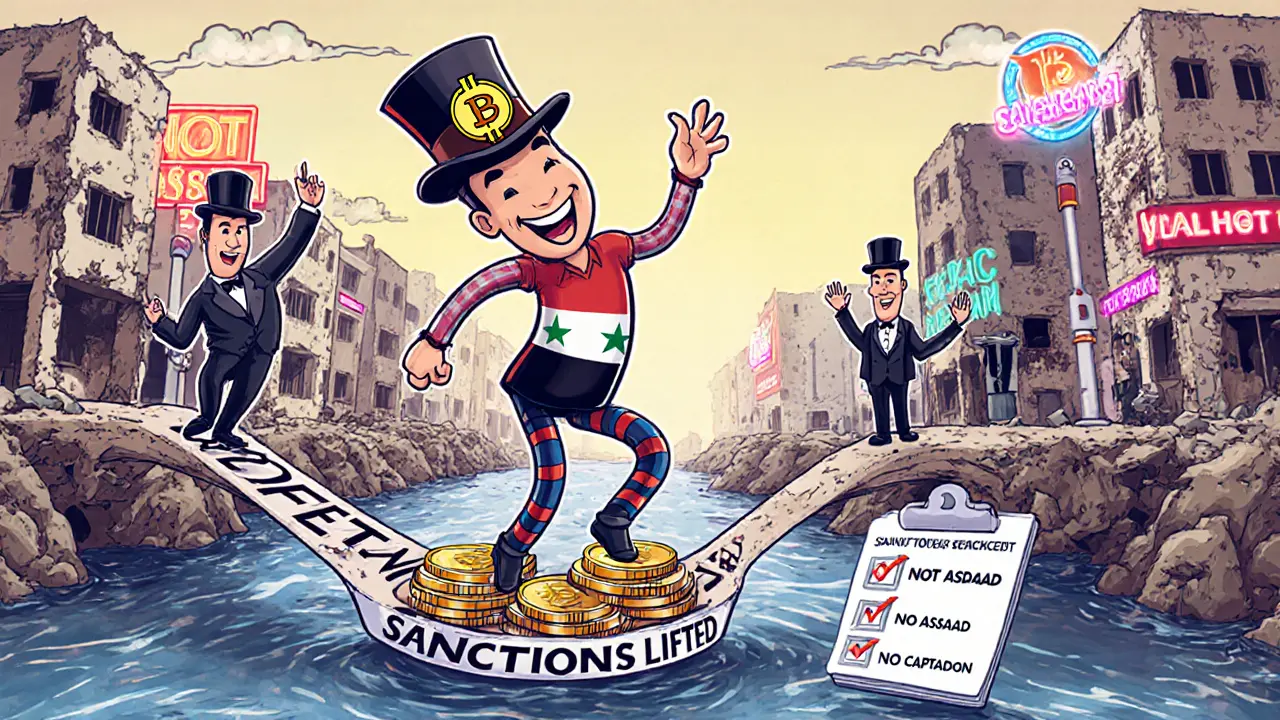
In 2025, the U.S. lifted sweeping sanctions on Syria while tightening them on Cuba. Crypto access in Syria is opening up, but legal gray areas remain. In Cuba, crypto use is growing under pressure. Here’s what it means for traders, businesses, and investors.