Cryptocurrency Scams 2025: How to Spot and Avoid the Most Dangerous Fake Airdrops, Fake Exchanges, and Meme Coin Traps
When you hear cryptocurrency scams 2025, deceptive schemes designed to steal crypto assets by exploiting trust, urgency, or ignorance. Also known as crypto fraud, these scams don’t need hackers—they just need you to click, sign, or send. The tools haven’t changed much: fake websites, fake support teams, fake airdrops. But the targets have. Now they’re going after beginners who think a free token is a gift, not a trap.
One of the biggest threats in 2025 is the fake crypto airdrop, a scam that promises free tokens in exchange for connecting your wallet or sharing your seed phrase. Also known as phantom token drops, these often use names like VDV, GZONE, or VIRVIA—projects that either don’t exist or were shut down years ago. The VDV airdrop by VIRVIA ONLINE SHOPPING? No token. No team. Just a wallet drain. Same with GZONE—no airdrop exists, only scammers pretending it does. These aren’t glitches. They’re organized thefts, built on social media hype and fake Telegram groups. Then there’s the crypto exchange scam, a platform that looks real but steals funds through withdrawal delays, fake fees, or outright shutdowns. Sites like Zeddex Exchange claim zero fees but have zero users and zero security. HitBTC and others still operate without regulation, and when they vanish, your coins vanish with them. These aren’t edge cases—they’re the new normal for unregulated platforms. And don’t forget the meme coin scam, a token with no utility, no team, and a supply so huge it’s designed to crash instantly. Beckos (BECKOS) has 420 trillion coins. ChainCade (CHAINCADE) has a quadrillion. Neither has a listing on a major exchange. Neither has a whitepaper. Both exist only to pump and dump. The price doesn’t matter. The supply doesn’t matter. What matters is that you’re being sold a lottery ticket with zero odds.
These scams work because they feel real. They use logos, fake testimonials, and even fake blockchain explorers. But the red flags are simple: if it asks for your seed phrase, it’s a scam. If it says "claim now before it’s gone," it’s a scam. If the token has no exchange listing and no audit, it’s a scam. The only safe move is to verify everything—check official websites, search for the project on CoinGecko or CoinMarketCap, and never connect your wallet to a site you didn’t type yourself.
Below, you’ll find real breakdowns of the most dangerous scams of 2025—the fake airdrops that stole wallets, the exchanges that disappeared, and the meme coins that vanished overnight. No fluff. No hype. Just what happened, how it worked, and how to make sure it doesn’t happen to you.
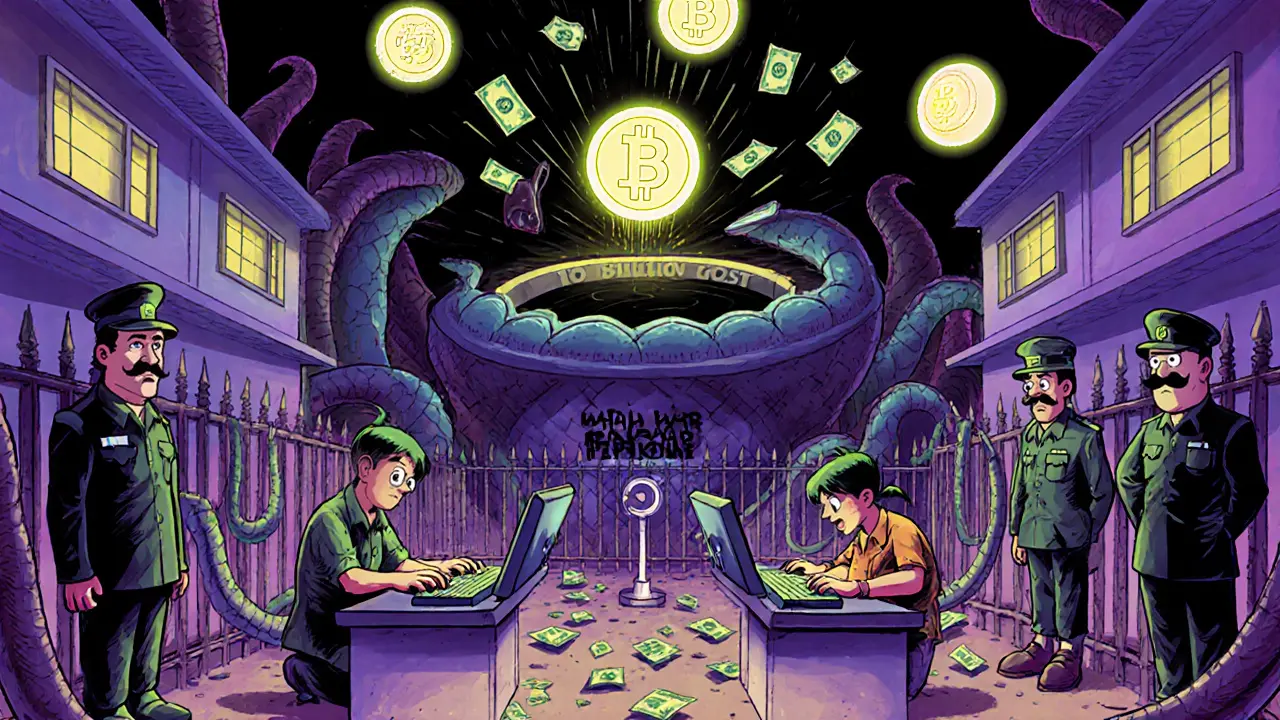
In September 2025, the U.S. sanctioned nine Myanmar-based crypto entities tied to a $10 billion cyber scam network operating in Shwe Kokko. These operations, protected by the Karen National Army, use forced labor to scam Americans. The sanctions freeze assets and block transactions, marking a major escalation in U.S. efforts to shut down crypto-fueled human trafficking rings.