Cuba Sanctions and Crypto: How Restrictions Shape Digital Finance
When Cuba sanctions, U.S. economic restrictions that limit access to global financial systems, including banks and payment networks hit hard, people don’t stop transacting—they adapt. In Cuba, where the government controls foreign currency and blocks most international banking, cryptocurrency became the only real alternative. It’s not about speculation or DeFi profits—it’s about feeding families, paying for medicine, and sending money home. This isn’t theoretical. It’s happening right now, in living rooms with Wi-Fi hotspots and phones charged by solar panels.
These sanctions don’t just block banks—they force innovation. Cubans use stablecoins, digital currencies pegged to the U.S. dollar to avoid volatility like USDT and DAI to store value and trade across borders. They bypass state monitoring by using P2P platforms, direct person-to-person crypto trading apps that don’t require exchanges or identity verification on Telegram and WhatsApp. Unlike Russia, which uses crypto to fund military operations, Cubans use it to survive. The tools are similar: wallets, VPNs, and encrypted messaging—but the stakes are personal, not political. And while Western regulators focus on sanction evasion by nations, they often ignore how ordinary people are using blockchain just to eat.
What you’ll find in these posts isn’t just theory. It’s real-world case studies: how Cubans trade crypto for food, how local miners keep lights on using subsidized electricity, and why the government is quietly building its own digital peso while cracking down on Bitcoin. You’ll see how Cuba sanctions created a parallel economy no one planned for—and how blockchain, once seen as a tool for the wealthy, became the most accessible financial system for the marginalized. These stories aren’t about crypto hype. They’re about human resilience. And what happens when money is no longer a privilege, but a necessity.
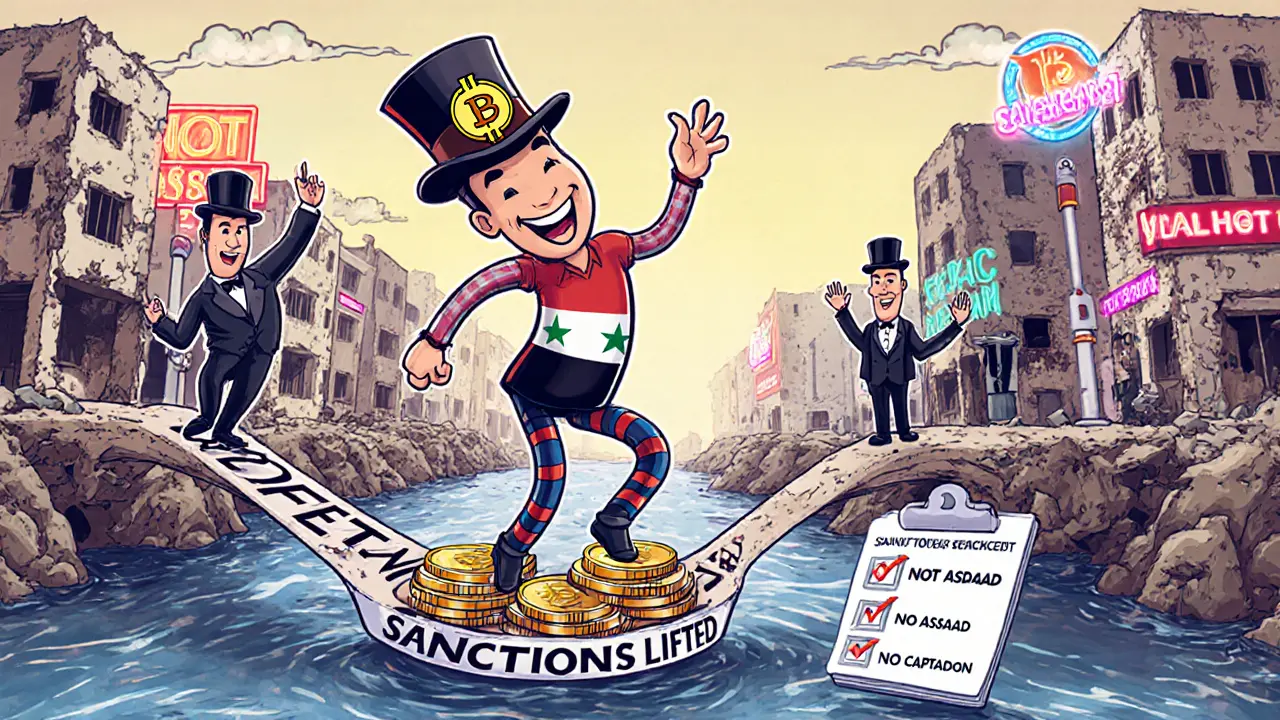
In 2025, the U.S. lifted sweeping sanctions on Syria while tightening them on Cuba. Crypto access in Syria is opening up, but legal gray areas remain. In Cuba, crypto use is growing under pressure. Here’s what it means for traders, businesses, and investors.