Digital Identity in Crypto: How Blockchain Protects Your Online Self
When you log into a crypto exchange, sign a smart contract, or claim an airdrop, you’re not just trading tokens—you’re revealing your digital identity, a collection of online data points that prove who you are in the digital world. Also known as self-sovereign identity, it’s the foundation of trust in Web3—without it, you’re either exposed or locked out. Traditional systems force you to hand over your name, address, and ID documents to centralized platforms. But in crypto, that’s not just risky—it’s outdated.
Enter decentralized identifiers, unique, user-controlled digital IDs stored on blockchains that don’t rely on any company or government to verify them. These let you prove you’re over 18, a verified citizen, or a wallet owner—without showing your passport or social security number. Behind them are zero-knowledge proofs, a cryptographic trick that lets you prove something is true without revealing the underlying data. Think of it like showing a bouncer a stamped ticket that says "over 21" without letting them see your birth certificate. Beldex and Data Ownership Protocol use this to let users transact privately while still meeting compliance needs. And it’s not theoretical—platforms like Binance DEX and ADEN already rely on these concepts to let users access services without KYC.
But digital identity isn’t just about privacy. It’s about control. If your identity is locked inside a bank or exchange, they can freeze your access—just like Iranian users face with Tether-linked accounts, or Nigerians who lose P2P trading options overnight. With blockchain-based identity, you own the keys. You decide who sees what, when, and why. That’s why privacy-preserving verification is now a core feature in cross-border payments, insurance fraud prevention, and even government services trying to cut red tape. The tools exist: decentralized IDs, selective disclosure, and zero-knowledge systems. The question isn’t if they’ll replace old KYC—it’s how fast you’ll adopt them before the next crackdown hits.
Below, you’ll find real-world examples of how digital identity shapes crypto access, security, and freedom—from exchanges that block users by country, to tokens built for private transactions, to airdrops that demand proof of identity without exposing it. These aren’t theory pieces. They’re survival guides for a world where your identity is your most valuable asset—and your biggest target.
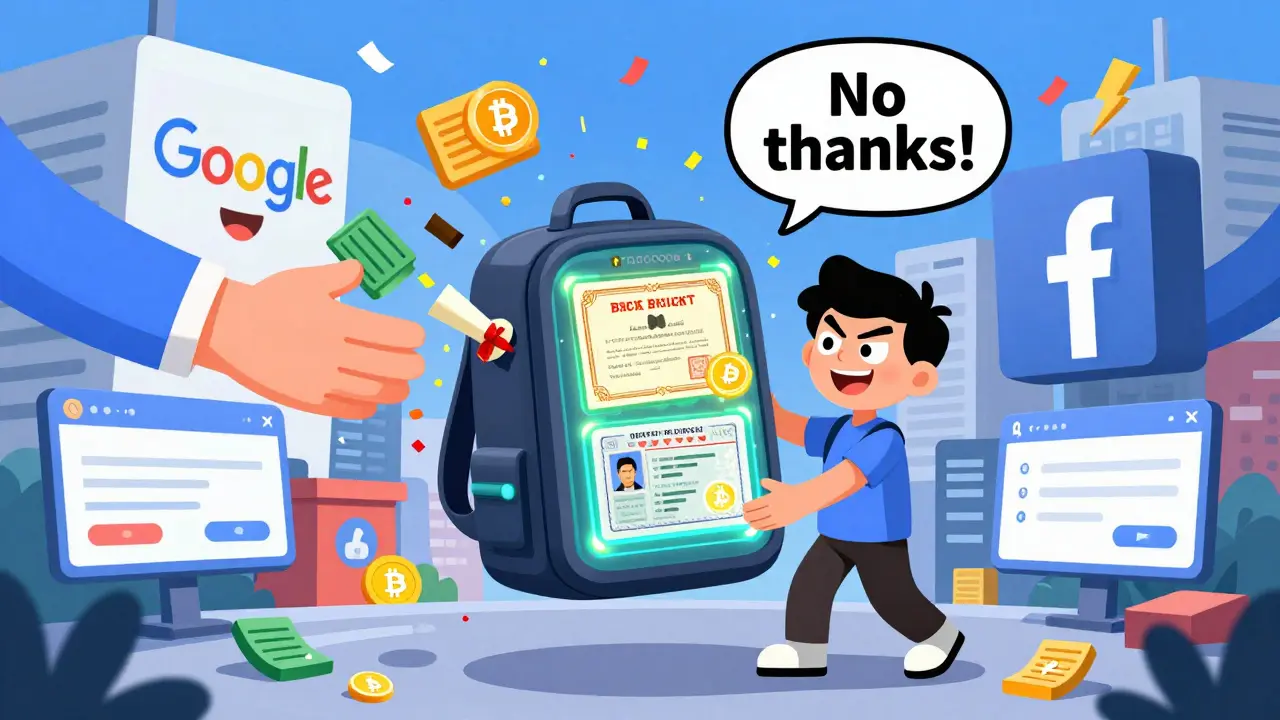
Self-sovereign identity on blockchain lets you own your digital identity instead of trusting companies with your data. Learn how DIDs, verifiable credentials, and blockchain work together to give you control, privacy, and security.