Gora Network: What It Is, How It Works, and Why It Matters in Crypto
When you hear Gora Network, a blockchain infrastructure project designed to improve scalability and reduce transaction costs for decentralized applications. It's not another meme coin or speculative token—it's a backend system meant to make Web3 apps faster and cheaper to use. Unlike Ethereum’s main chain, which can get slow and expensive during peak times, Gora Network acts like a parallel highway that handles transactions off the main road. This kind of setup is called a Layer 2 solution, a secondary framework built on top of a primary blockchain to increase throughput without sacrificing security. It's the same idea behind Polygon or Arbitrum, but Gora focuses on specific use cases like gaming, DeFi, and real-time data feeds. The goal? Let users trade, stake, or play games without waiting minutes for a transaction or paying $20 in gas fees.
What makes Gora Network different isn’t just speed—it’s how it handles data. Instead of broadcasting every detail to the main chain, it bundles hundreds of transactions into one compact proof. That proof then gets verified on the main blockchain, keeping everything secure while cutting costs. This method is called zk-rollup, a cryptographic technique that compresses transaction data while proving its validity without revealing the full details. It’s the same tech used by zkSync and StarkNet, but Gora’s team claims optimizations for mobile and low-bandwidth environments, which could matter if you’re in a region with unstable internet. That’s why you’ll see it mentioned alongside projects trying to reach users in emerging markets—not just Silicon Valley.
There’s no big marketing campaign or celebrity endorsement behind Gora Network. It’s not on CoinMarketCap’s top 100. But if you’re digging into how real blockchain infrastructure evolves, you’ll find it in the background of several niche DeFi apps and gaming platforms that need low-cost, high-speed transactions. Some developers use it to run token-gated communities. Others build prediction markets that settle in seconds. And while you won’t find a $100 million VC round attached to it, you will find engineers quietly building tools that actually work.
What you’ll find below isn’t hype. It’s a collection of real, technical deep dives—on how Merkle trees verify data, how Byzantine Fault Tolerance keeps networks secure, and how formal verification stops smart contracts from breaking. These aren’t random posts. They’re the same tools and concepts that power systems like Gora Network. If you want to understand how the backend of Web3 actually holds together—not the flashy apps, but the quiet, complex layers beneath—you’re in the right place.
12 Sep
2025
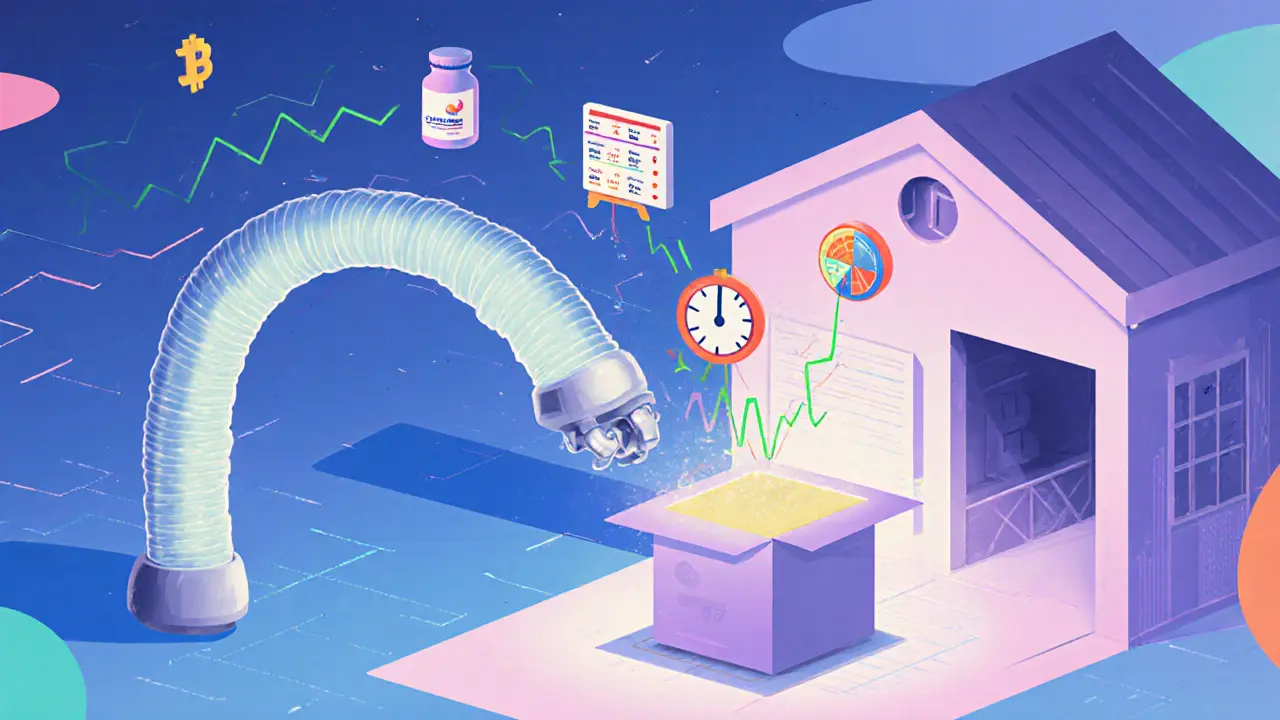
Gora Network (GORA) is a specialized blockchain oracle platform built on Algorand that lets developers create custom data feeds for smart contracts. Unlike Chainlink, it targets niche industries like healthcare and sports betting with tailored solutions.