Karen National Army Sanctions: How Crypto Is Used to Bypass Global Restrictions
When governments impose sanctions, they aim to cut off funding—but crypto sanctions evasion, the use of digital currencies to move money outside official financial systems. Also known as sanctions evasion crypto, it’s become a go-to workaround for groups under international pressure, from rebel armies to state actors. The Karen National Army, an ethnic armed organization in Myanmar facing global sanctions for human rights violations isn’t the only one using crypto. Similar tactics are seen in Russia cryptocurrency sanctions, where tokens like A7A5 and exchanges like Grinex help move billions to fund military operations, and in UK crypto sanctions, where firms must now use real-time blockchain analysis to avoid fines. These aren’t theoretical threats—they’re active, tracked, and increasingly sophisticated.
Sanctions don’t disappear just because money goes digital. But crypto makes tracing harder. Unlike banks, blockchain doesn’t require ID verification for every transfer. Groups use stablecoins like DAI to avoid volatility, mixers to obscure trails, and decentralized exchanges with no KYC to move funds. The sanctions evasion crypto playbook includes P2P trading via Telegram, using privacy coins, and routing payments through jurisdictions with weak oversight. In Myanmar, the Karen National Army likely relies on local traders who convert fiat to crypto, then send it overseas. In Russia, it’s more organized—state-backed exchanges and tokenized assets replace traditional banking. The UK’s OFSI has caught firms underreporting transactions, leading to multi-million dollar penalties. This isn’t just about bad actors—it’s about systems designed to be opaque.
What’s clear is that blockchain isn’t just a tool for innovation—it’s also a tool for evasion. The same features that make DeFi accessible—permissionless access, global reach, and pseudonymity—are the ones that make it dangerous in sanctioned contexts. Governments are responding with blockchain analytics firms, on-chain monitoring, and stricter licensing for exchanges. But the arms race continues. Below, you’ll find real-world cases of how crypto bypasses controls, how regulators are catching up, and what this means for anyone using digital assets today. These aren’t hypotheticals. They’re happening now.
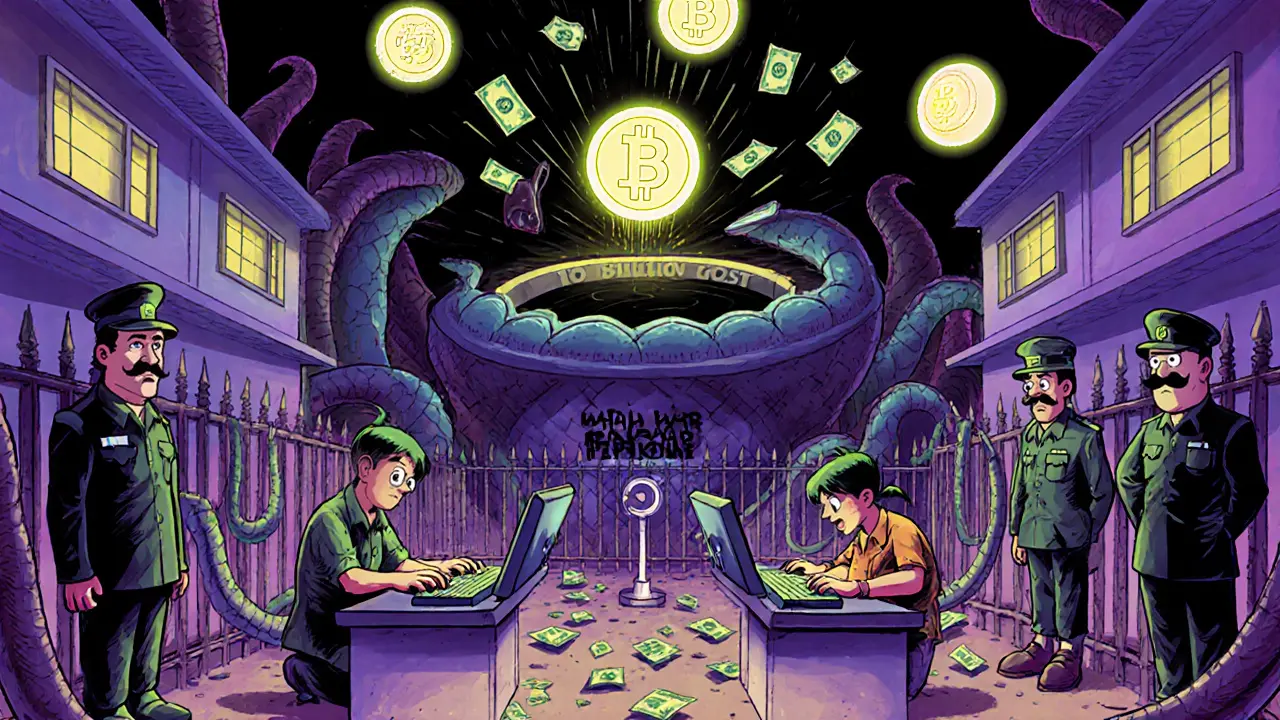
In September 2025, the U.S. sanctioned nine Myanmar-based crypto entities tied to a $10 billion cyber scam network operating in Shwe Kokko. These operations, protected by the Karen National Army, use forced labor to scam Americans. The sanctions freeze assets and block transactions, marking a major escalation in U.S. efforts to shut down crypto-fueled human trafficking rings.