OFAC and Crypto: What You Need to Know About Sanctions and Digital Assets
When you hear OFAC, the U.S. Treasury’s Office of Foreign Assets Control, which enforces economic sanctions against individuals, companies, and countries. Also known as Office of Foreign Assets Control, it doesn’t just target banks—it tracks crypto wallets, exchanges, and even DeFi protocols that move money across borders. If you’re using crypto in Iran, Russia, or any country under U.S. sanctions, OFAC’s rules apply to you—even if you’re not American.
OFAC doesn’t care if you bought Bitcoin on Binance or swapped tokens on a decentralized exchange. What matters is where the wallet came from and where it’s sending funds. In 2025, crypto firms in the UK, Canada, and Australia are being fined millions for failing to block transactions linked to sanctioned addresses. The OFSI, the UK’s Office of Financial Sanctions Implementation, which enforces asset freezes and transaction bans just reported that 78% of crypto firms under audit missed at least one sanctioned address. And it’s not just about big players—individuals who send crypto to blocked wallets can face legal trouble, even if they didn’t know the recipient was listed.
Some projects try to slip through by renaming tokens or using privacy layers, but OFAC’s tools are getting smarter. They now monitor on-chain patterns, not just wallet addresses. If a wallet that once held funds from a sanctioned entity later sends coins to a major exchange, that exchange is required to freeze it. The sanctions evasion, the act of using crypto to bypass financial restrictions imposed by governments tactics used by Russia—like shifting funds from Garantex to Grinex or using obscure tokens like A7A5—are now flagged automatically by compliance software. Even if a token has no official website or team, if it’s tied to a sanctioned chain, it’s blocked.
And it’s not just about breaking rules. If you’re running a crypto business, ignoring OFAC isn’t an option—it’s a liability. Exchanges like Crypto.com and Luno now block users from sanctioned regions before they even deposit. Wallet providers like Trust Wallet and Phantom scan incoming transactions in real time. If you’re using crypto in a high-risk country, your best defense isn’t hiding—it’s understanding what’s tracked and why.
Below, you’ll find real-world examples of how OFAC impacts crypto users, what happens when exchanges get caught violating sanctions, and how people in Iran, Russia, and elsewhere are adapting. Some stories are about compliance. Others are about survival. All of them matter if you’re using digital assets today.
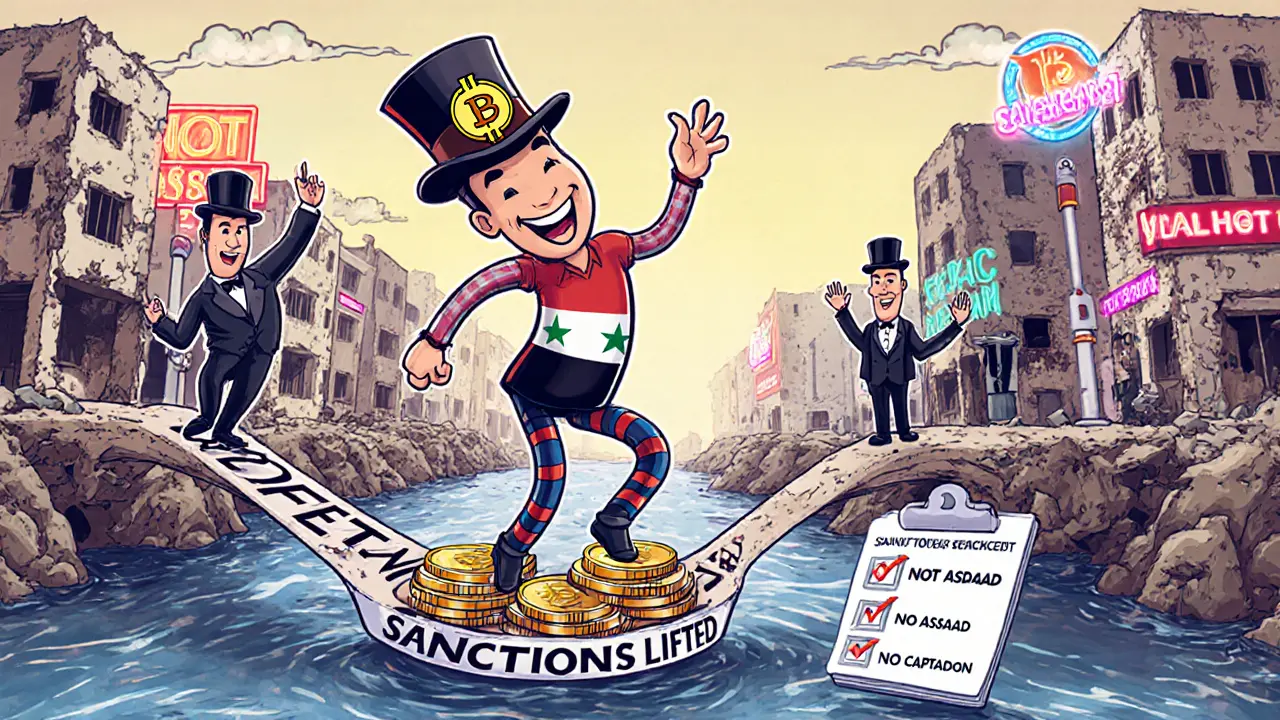
In 2025, the U.S. lifted sweeping sanctions on Syria while tightening them on Cuba. Crypto access in Syria is opening up, but legal gray areas remain. In Cuba, crypto use is growing under pressure. Here’s what it means for traders, businesses, and investors.