OFAC Myanmar Scams: How Sanctions Target Crypto Fraud in Southeast Asia
When you hear OFAC Myanmar scams, fraudulent crypto schemes tied to sanctioned entities in Myanmar that exploit humanitarian narratives to steal funds, think of a fake airdrop promising to send crypto to war victims. In reality, it’s a wallet drain disguised as charity. These scams aren’t just random—many are linked to entities blacklisted by the U.S. Treasury’s Office of Foreign Assets Control, the U.S. government agency that enforces economic sanctions against countries, organizations, and individuals involved in terrorism, narcotics trafficking, and human rights abuses. OFAC doesn’t just freeze bank accounts—it tracks crypto transactions, flags wallets, and forces exchanges to block funds tied to Myanmar’s military regime.
Why Myanmar? After the 2021 coup, the junta lost access to global banking. They turned to crypto. Criminal networks followed, creating fake tokens, fake charities, and fake exchanges that claim to support "democracy funds" or "refugee relief." These aren’t just scams—they’re sanctions evasion crypto, methods used by sanctioned regimes and their proxies to move money outside traditional financial systems using digital assets. Tools like Tornado Cash, privacy coins, and cross-chain bridges help obscure the trail. But OFAC doesn’t need to see every step—they follow the money’s end point. If a wallet receives funds from a known Myanmar-linked address, it gets tagged. Anyone who interacts with it risks asset seizure or account suspension.
And it’s not just Myanmar. The same playbook is used in Russia, Iran, and North Korea. The OFSI compliance, the UK’s Office of Financial Sanctions Implementation, which enforces asset freezes and financial restrictions under UK law now requires exchanges to scan blockchain data in real time. If your wallet touches a sanctioned address—even once—you could be flagged. You don’t need to know the scam to get caught. That’s why so many "free crypto" offers from Myanmar-based groups are red flags. No legitimate project uses Telegram bots to send tokens to strangers. No real charity asks you to send ETH to a random wallet to "unlock aid."
The posts below expose the real projects behind these scams—the fake airdrops, the shell exchanges, the tokens with zero code or team. You’ll see how VDV VIRVIA and similar schemes mimic charity to steal wallets. You’ll learn how UK and U.S. regulators track these flows. And you’ll find out why even "legit" crypto projects get caught in the crossfire when they fail to verify users. This isn’t about avoiding crypto. It’s about avoiding traps disguised as opportunity. The next scam won’t come with a warning label. But now you know what to look for.
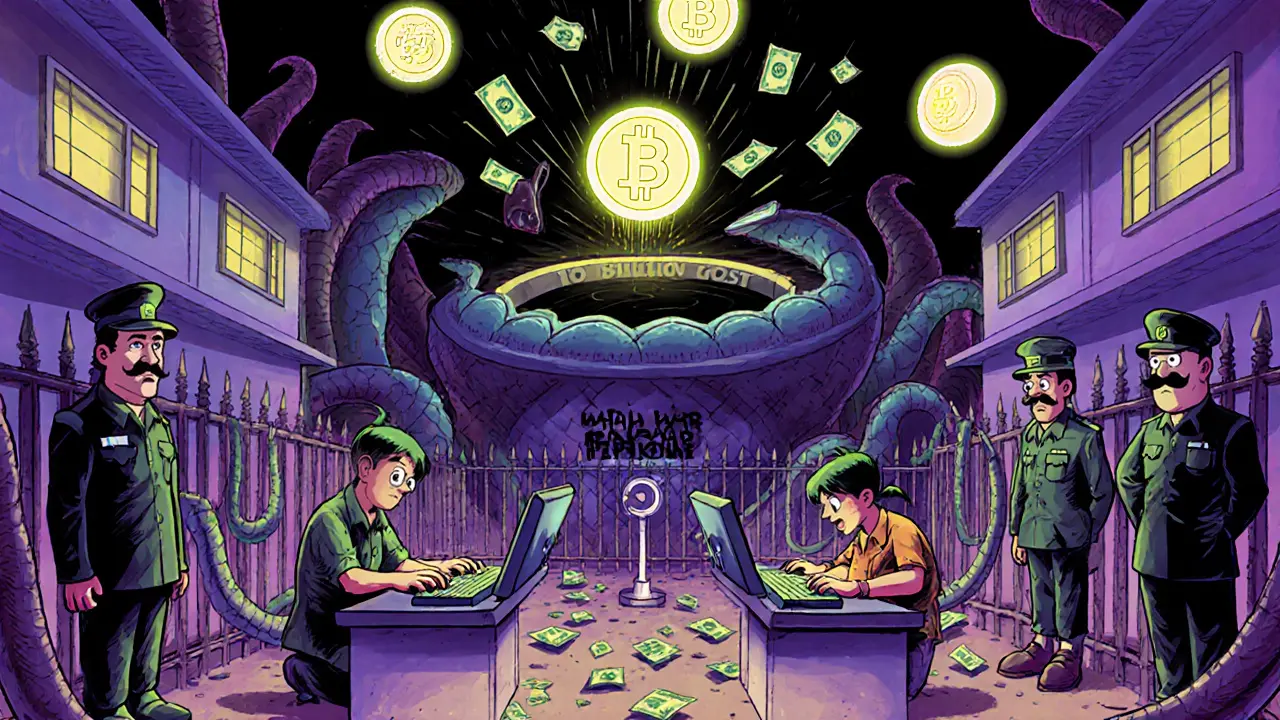
In September 2025, the U.S. sanctioned nine Myanmar-based crypto entities tied to a $10 billion cyber scam network operating in Shwe Kokko. These operations, protected by the Karen National Army, use forced labor to scam Americans. The sanctions freeze assets and block transactions, marking a major escalation in U.S. efforts to shut down crypto-fueled human trafficking rings.