Restricted Countries and Crypto: Where You Can't Trade and Why
When you try to buy crypto and get blocked, it’s not a glitch—it’s geographic restrictions, rules that limit who can use crypto platforms based on where they live. These restrictions aren’t random; they’re tied to national laws, sanctions, and financial control. In places like Iran, Nigeria, and Myanmar, governments either ban exchanges outright or force them to freeze accounts. Meanwhile, countries like Canada and India let you trade but demand strict KYC, know-your-customer checks that require ID and proof of address. Even in the U.S., some states like New York have their own rules that make trading harder than elsewhere.
Crypto regulation, the patchwork of laws governments use to control digital assets varies wildly. The U.S. sanctions entire crypto entities tied to fraud rings, like those in Myanmar’s Shwe Kokko. Iran’s government blocks platforms linked to Tether or state media, pushing users toward self-custody. In British Columbia, mining is banned because it uses too much hydro power. These aren’t just policies—they’re survival tactics for people living under financial pressure. That’s why banned crypto exchanges, platforms officially prohibited in certain regions due to legal or political reasons still get used: people find workarounds. P2P trading on Binance or YellowCard lets Nigerians bypass local banking failures. Iranians use Bitcoin in cold wallets because stablecoins get frozen. And in India, UPI payments are the quiet backbone of crypto adoption, even with tax rules tightening.
What you’ll find here isn’t just a list of blocked countries. It’s the real stories behind the restrictions: how people adapt, which platforms are safe (and which are traps), and why some crypto tools only work if you’re not in the wrong place. Whether you’re trying to trade from a sanctioned zone, avoid a scammy exchange, or just understand why your app won’t load, these guides cut through the noise. No fluff. Just what works—and what gets you locked out.
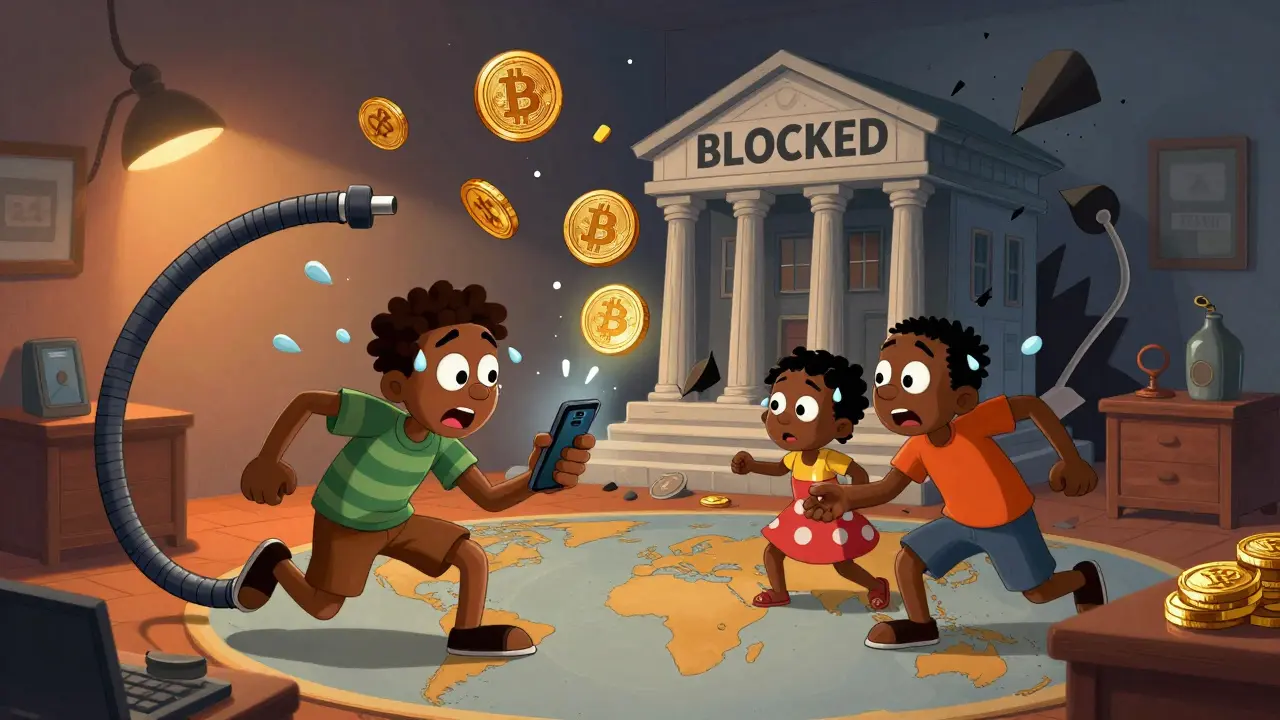
P2P crypto trading is the last financial lifeline in restricted countries-but sanctions, exchange bans, and compliance crackdowns are squeezing volumes. Here’s what’s really happening in 2025.