Self-Sovereign Identity: Own Your Data, Not the Platforms
When you log into a website with your email or phone number, you’re giving away more than just access—you’re handing over your name, location, birthdate, and sometimes even your ID documents. That data gets stored in corporate servers, vulnerable to leaks, sold to advertisers, or frozen by regulators. Self-sovereign identity, a system where you control your own digital identity without relying on centralized authorities. Also known as decentralized identity, it lets you prove who you are—like your age, citizenship, or credentials—without revealing your full personal details. This isn’t science fiction. It’s already being used in places where governments and banks won’t let you in, and where crypto users need to stay anonymous but still compliant.
Self-sovereign identity works with zero-knowledge proofs, a cryptographic method that lets you prove something is true without showing the actual data. Imagine proving you’re over 18 without showing your driver’s license. Or verifying you’re a citizen of a country without handing over your passport number. This is the core of privacy-preserving identity verification, and it’s why projects like Beldex and Data Ownership Protocol are gaining traction. These aren’t just privacy tools—they’re tools for survival in countries where exchanges freeze accounts or governments track every crypto move. When you use a decentralized identifier (DID), your identity lives on your device, not on a server you can’t control. You decide who gets what, when, and for how long.
It’s not about avoiding KYC—it’s about owning it. Traditional KYC means handing your data to a company that might get hacked or shut down. Self-sovereign identity means you hold the key, and only share what’s necessary. In Nigeria, where P2P trading is the only way to bypass inflation and banking limits, users don’t just need crypto—they need a way to prove their identity without exposing themselves to scams or sanctions. In Iran, where exchanges are blocked or monitored, holding Bitcoin in self-custody isn’t enough—you also need a way to prove you’re not a sanctioned entity without revealing your name. That’s where blockchain-based identity becomes essential.
What you’ll find below isn’t just theory. These are real stories: how people in restricted countries use privacy tech to trade, how DeFi platforms are testing identity systems that don’t track you, and why some crypto projects are building identity layers into their protocols—not for marketing, but for survival. You’ll see what works, what doesn’t, and what’s just hype. No fluff. No promises. Just what’s happening now, on the ground, with real users.
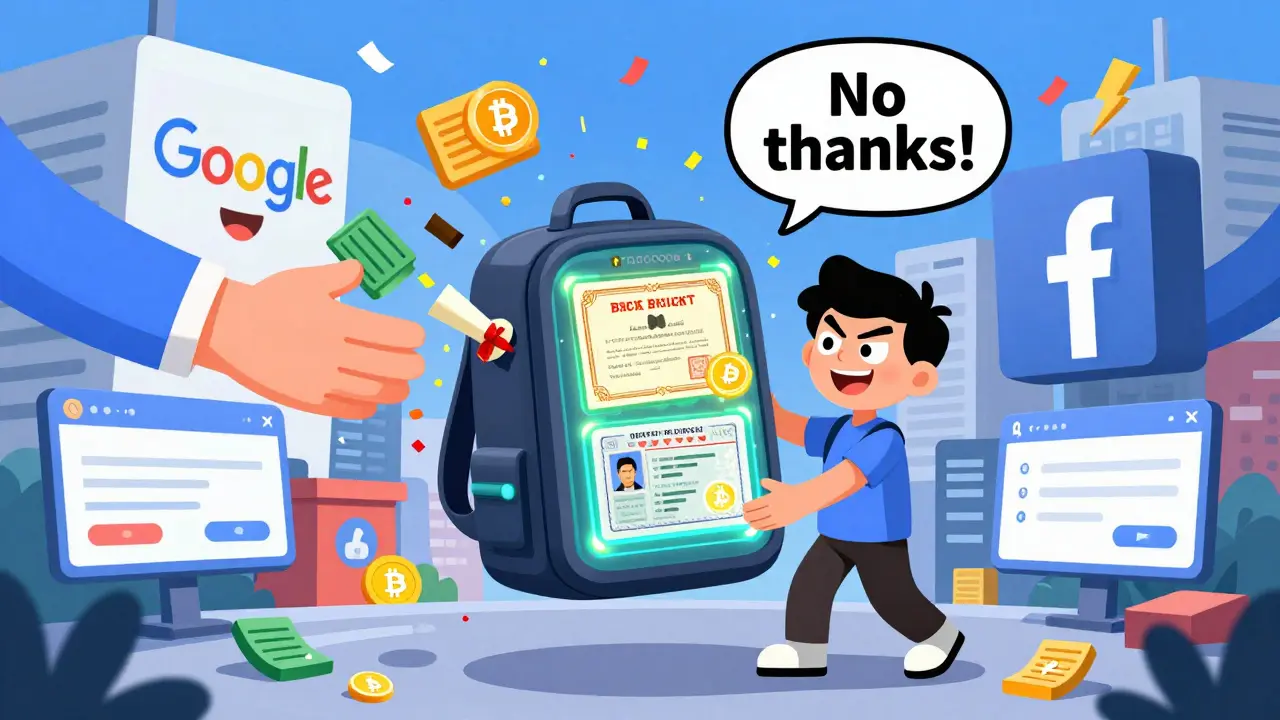
Self-sovereign identity on blockchain lets you own your digital identity instead of trusting companies with your data. Learn how DIDs, verifiable credentials, and blockchain work together to give you control, privacy, and security.