US Sanctions and Crypto: How Government Actions Impact Blockchain Networks
When the US sanctions crypto, the US government blocks specific digital assets, wallets, or exchanges tied to sanctioned entities like governments, terrorists, or criminal networks. Also known as crypto-focused financial restrictions, these moves aren’t just about freezing accounts—they’re designed to break the flow of money through decentralized systems that were meant to be untouchable. This isn’t theoretical. Russia, Myanmar, and others have turned to crypto to bypass traditional banking controls, forcing the US to adapt its financial weapons for a blockchain world.
One key tool is blockchain analysis, software that traces cryptocurrency transactions across public ledgers to identify wallets linked to sanctioned parties. Companies like Chainalysis and Elliptic now work closely with the Office of Foreign Assets Control (OFAC), the US agency that enforces economic sanctions. When a wallet gets flagged, exchanges like Crypto.com or Luno must freeze it or risk massive fines. The UK’s OFSI is doing the same—showing this isn’t just an American tactic, but a global shift. In 2025, compliance isn’t optional. If you run a crypto service anywhere, you’re expected to monitor for sanctioned addresses in real time.
But sanctions don’t always work as planned. In Myanmar, authorities tried to block crypto to stop rebels from funding operations. Instead, users turned to stablecoins like DAI on Polygon, using Telegram and P2P platforms to trade without intermediaries. Iran does the same. Russia built entire networks around tokens like A7A5 and exchanges like Grinex. These aren’t just workarounds—they’re proof that crypto’s design makes it resilient to top-down control. The more governments try to shut it down, the more creative users get.
Meanwhile, blockchain projects are responding. Formal verification tools now help DeFi protocols prove they’re not facilitating sanctions evasion. Smart contracts are being coded to auto-reject transactions from flagged addresses. Even meme coins like Beckos or ChainCade, with no real team or audit, are being scanned for ties to sanctioned wallets—because regulators don’t care if a token is a joke. If it moves value, it’s under scrutiny.
What you’ll find below is a collection of real cases where crypto met government power: how countries like Russia and Myanmar use it, how exchanges get caught in the crossfire, and how everyday users adapt. These aren’t hypotheticals. They’re happening right now, in real time, with real money at stake.
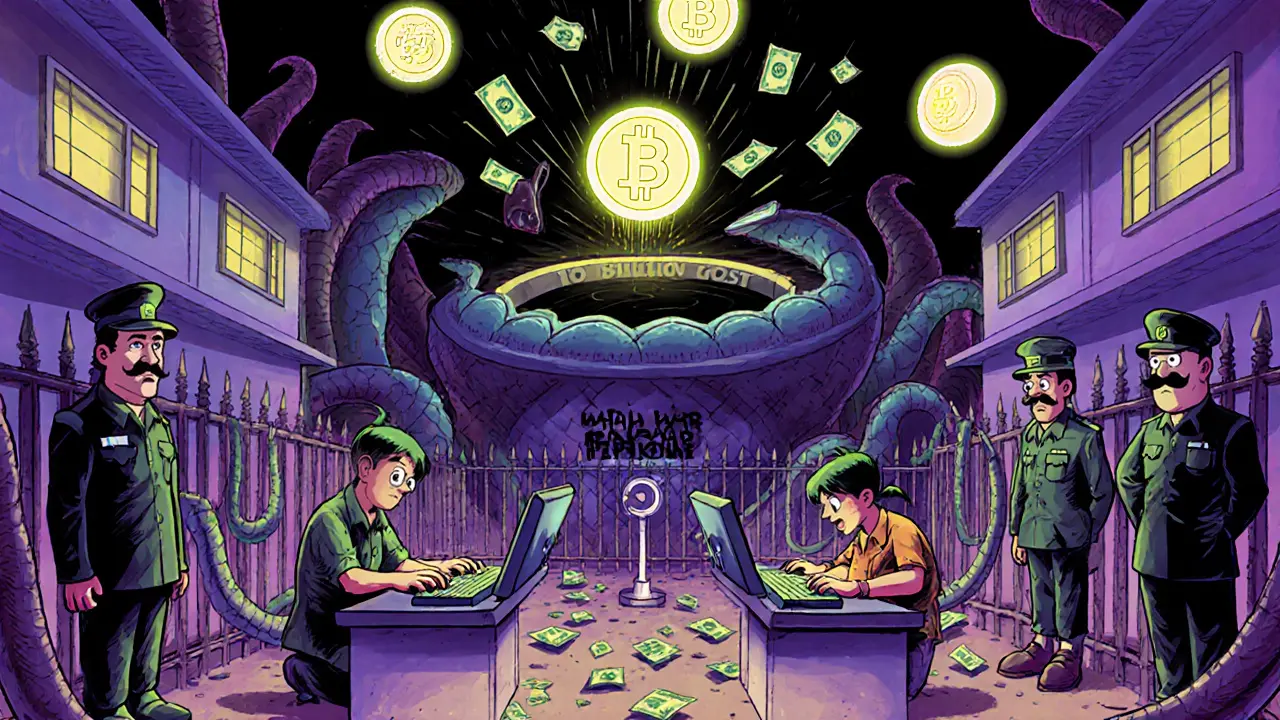
In September 2025, the U.S. sanctioned nine Myanmar-based crypto entities tied to a $10 billion cyber scam network operating in Shwe Kokko. These operations, protected by the Karen National Army, use forced labor to scam Americans. The sanctions freeze assets and block transactions, marking a major escalation in U.S. efforts to shut down crypto-fueled human trafficking rings.