VyFinance Crypto Exchange: Real Reviews, Risks, and What You Need to Know
When you hear VyFinance, a crypto exchange that claims low fees and fast trades but lacks public regulatory status. Also known as VyFinance.io, it’s one of many platforms that pop up promising simplicity but often leave users stranded when withdrawals fail. Most people don’t realize how many exchanges operate without licenses, audits, or transparent teams—VyFinance is one of them.
What makes VyFinance different from exchanges like Crypto.com or Luno isn’t its interface—it’s the silence. No official headquarters. No customer service logs you can verify. No public security audits. That’s not just unusual—it’s dangerous. In 2025, over 70% of crypto losses from exchanges came from platforms with no regulatory footprint, and VyFinance fits that profile perfectly. Even if you see fake testimonials or inflated trading volume numbers, those can be bought. Real security? That’s measured in who’s watching, not who’s advertising.
Related entities like HitBTC, a similarly unregulated exchange with documented withdrawal delays and poor support, and Zeddex Exchange, a zero-fee platform with almost no users and zero security, show the same pattern: flashy claims, hidden risks. VyFinance doesn’t stand out because it’s better—it stands out because it’s quiet. And silence in crypto usually means someone’s hiding something. You don’t need a 10-page report to know this. You just need to look at what happened to users on HitBTC, BCEX Korea, and Zeddex—and realize VyFinance follows the same script.
Below, you’ll find real reviews, technical breakdowns, and scam warnings tied to VyFinance and similar platforms. No fluff. No promotion. Just what users actually experienced, what regulators have flagged, and how to protect yourself before it’s too late.
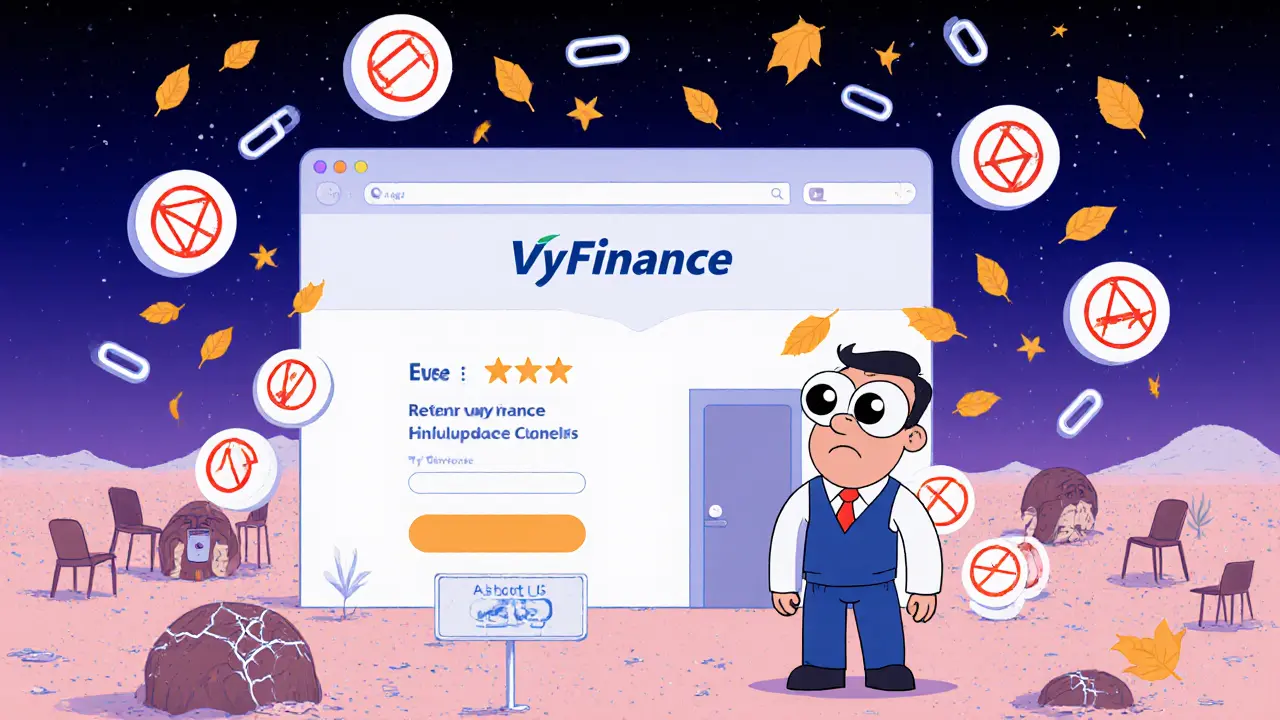
VyFinance crypto exchange has zero user reviews, no team info, and no regulatory presence. This review exposes the red flags and explains why you should avoid it in 2025.