VyFinance Scam: How to Spot and Avoid Fake Crypto Projects
When you hear about VyFinance, a fraudulent crypto project that lured users with fake airdrops and impossible returns. Also known as VyFinance scam, it’s not a platform—it’s a trap designed to steal wallets and vanish. This isn’t the first time a fake project used flashy names and fake promises to pull in unsuspecting users. And it won’t be the last.
Scams like VyFinance rely on three things: urgency, anonymity, and false legitimacy. They create fake websites with professional designs, copy real project logos, and post fake testimonials on Twitter and Telegram. Then they push a simple hook: "Claim your free tokens now." No sign-up, no KYC, just a wallet connection. That’s the moment you lose everything. Once you connect your wallet, the scammer drains it in seconds. No transaction history. No refund. No recourse. Real projects don’t ask you to connect your wallet just to claim airdrops. They don’t have zero code on GitHub. They don’t disappear after a week.
The fake airdrop, a deceptive tactic used to trick users into approving malicious contracts behind VyFinance is a classic. It’s the same method used in the VDV VIRVIA scam, the GZONE fake IDO, and dozens of others. These scams share the same DNA: no team, no audits, no exchange listings, and a supply so large it’s meaningless. They’re not coins—they’re digital ghosts. And they’re getting smarter. Some now use deepfake videos of supposed founders or fake YouTube reviews. But the red flags never change: if it sounds too good to be true, it is. If you’re asked to connect your wallet without knowing what you’re signing, walk away.
What makes VyFinance dangerous isn’t just the theft—it’s how it erodes trust in real crypto projects. People start thinking all airdrops are scams, and that’s exactly what the fraudsters want. But not all are. Legit airdrops come from known teams, have public code, and list on exchanges like Uniswap or PancakeSwap. They don’t rush you. They don’t beg you. They don’t disappear after a few days.
Here’s what you can do right now: never connect your main wallet to unknown sites. Use a burner wallet for anything that feels sketchy. Check the contract address on Etherscan or BscScan. Look for a verified source code. Google the project name + "scam." If even one result shows up, avoid it. And if someone DMs you on Twitter saying "you’ve been selected," block them. Real projects don’t reach out like that.
The crypto fraud, a broad category of scams that exploit trust in blockchain technology is growing—but so is awareness. People are learning. Communities are calling out fakes faster. And tools are getting better at flagging malicious contracts. But your best defense is still your own judgment. Don’t chase free money. Don’t rush. Don’t ignore the red flags. The next VyFinance is already being built. You just need to know how to see it before it’s too late.
Below, you’ll find real breakdowns of similar scams, how they work, and how to avoid them. No fluff. Just facts. And the tools you need to stay safe.
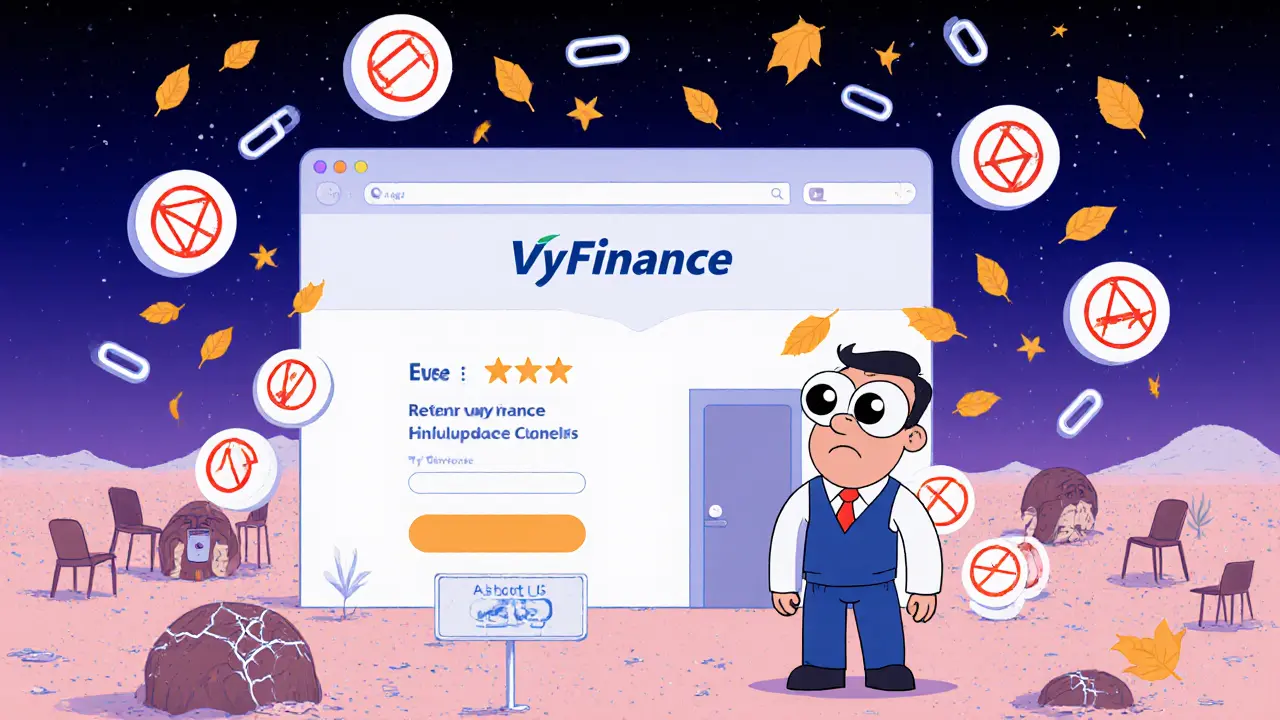
VyFinance crypto exchange has zero user reviews, no team info, and no regulatory presence. This review exposes the red flags and explains why you should avoid it in 2025.