Zero-Knowledge Proofs: How Privacy Tech Keeps Your Crypto Secret
When you use zero-knowledge proofs, a cryptographic method that lets one party prove to another that a statement is true without revealing any information beyond the truth of that statement. Also known as ZKP, it’s the quiet engine behind private transactions on blockchains like Zcash and Ethereum upgrades. Think of it like proving you’re over 21 without showing your ID—you just say ‘yes’ and the system believes you because the math checks out. No name, no date, no number—just proof.
This isn’t science fiction. It’s how zk-SNARKs, a specific type of zero-knowledge proof optimized for blockchain efficiency and compact verification let you send crypto without anyone seeing the amount or who sent it. Projects like Beldex and Data Ownership Protocol use similar ideas to give users control over what data they share—keeping compliance records hidden from prying eyes while still proving they’re legitimate. Even Merkle trees, a data structure that enables lightweight verification of large datasets by compressing them into a single hash, work hand-in-hand with zero-knowledge systems to make wallets fast and secure without storing everything.
Why does this matter? Because if you’re using crypto in a country with strict controls, or if you’re a business that needs to prove it followed rules without exposing customer data, zero-knowledge proofs are the only way to do it safely. They’re not magic—they’re math. And that math is now running behind the scenes in DeFi, insurance fraud tools, and even enterprise blockchains like Hyperledger Fabric. You won’t see them, but you’ll feel their effect: more privacy, less risk, and fewer leaks.
Below, you’ll find real-world examples of how zero-knowledge proofs and related privacy tech are being used—some successfully, some barely hanging on. From encrypted messaging networks to tokens that vanish from public view, this collection shows what’s working, what’s risky, and what’s just noise.
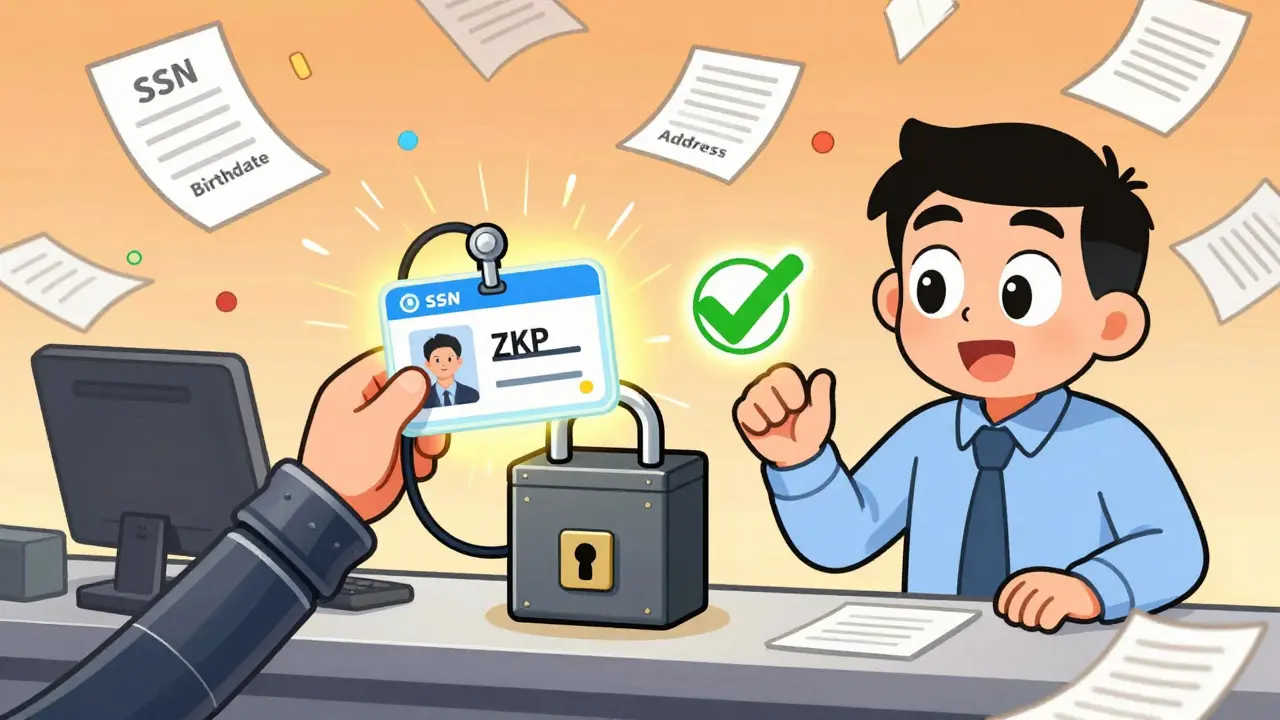
Privacy-preserving identity verification uses blockchain, zero-knowledge proofs, and decentralized IDs to let you prove who you are without sharing your personal data. It's transforming banking, healthcare, and government services.