Key Takeaways
- The 2025 flash crash triggered a massive market reset, shifting focus from extreme gains to risk mitigation.
- Regulatory clarity from the SEC and CFTC is moving leverage toward registered, compliant exchanges.
- Institutional adoption is growing, with a heavy focus on hedging rather than pure speculation.
- DeFi lending remains a powerful alternative, though it faces unique smart contract and volatility risks.
The Great Reset: Lessons from the 2025 Liquidation Event
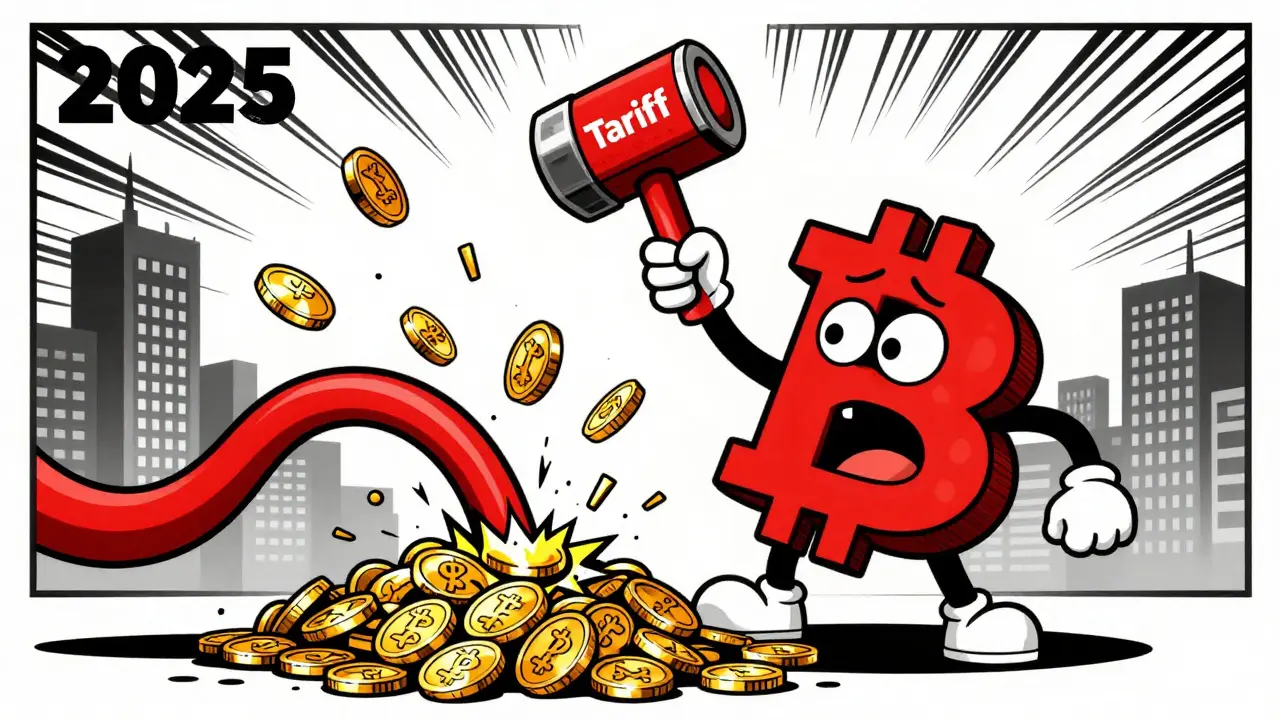
To understand where we're going, we have to look at the wreckage. In October 2025, the crypto market hit a wall. Leveraged crypto trading is the practice of using borrowed capital to amplify potential returns and risks in cryptocurrency markets. While the goal is to maximize exposure with minimal cash, the October 10 crash proved that high leverage turns a small price dip into a total wipeout.
When prices dropped 15-20% in minutes, cascading liquidations occurred. Traders who thought a 10x or 25x position was "safe" found themselves liquidated as collateral values plummeted by over 30% almost instantly. According to a post-mortem by Nasdaq, this event effectively purged the market of unsustainable expansion. It was a brutal but necessary correction that forced traders to stop guessing and start calculating.
Centralized vs. Decentralized Leverage: Choosing Your Battlefield
Depending on where you trade, your experience with leverage varies wildly. You generally have two paths: Centralized Finance (CeFi) and Decentralized Finance (DeFi). Binance is a leading global centralized exchange that recently reduced its maximum leverage on volatile assets to 50x to protect retail users. On the other hand, Coinbase provides a more conservative, SEC-compliant environment via its Advanced Trade platform, typically capping leverage at 10x.
Then you have the DeFi side. Aave and Compound are the heavyweights here. Instead of a company lending you money, you use smart contracts to collateralize loans. The catch? While you avoid counterparty risk (the risk that the exchange goes bust), you are still exposed to the same volatility. During the 2025 crash, DeFi users faced massive liquidations because they couldn't add collateral fast enough to keep up with the price plunge.
| Feature | Regulated CeFi (e.g., Coinbase) | Offshore CeFi (e.g., Bybit, OKX) | DeFi Protocols (e.g., Aave) |
|---|---|---|---|
| Typical Max Leverage | 10x - 25x | 100x - 500x | 3x - 5x |
| Regulatory Status | High Compliance | Low/Varies | Non-custodial |
| Primary Risk | Limited Leverage | Extreme Volatility/Liquidation | Smart Contract Bugs |
| User Experience | Guided/Educational | High-speed/Aggressive | Self-managed/Wallet-based |
The Shift Toward Institutional Guardrails
For a long time, leverage was the playground of retail speculators. That's changing. We're seeing a surge in institutional participation, with firms like BlackRock and Fidelity developing leverage-enabled products for 2026. But institutions don't gamble with 100x leverage. Instead, they use it for hedging-protecting their portfolios against price drops.
This institutional shift is bringing a "grown-up" vibe to the market. We're seeing more focus on Basis Rates (the difference between the spot price and the futures price) and implied volatility. Professional traders now operate on a much lower leverage scale, typically 3x to 5x, which allows them to survive volatility spikes that would wipe out a retail trader using a 50x contract.
Navigating the New Regulatory Landscape
The biggest turning point for U.S. traders came on September 2, 2025, with the SEC/CFTC Joint Statement. This wasn't a new law, but a clarification that registered exchanges could offer leverage under existing rules. It essentially gave a green light for compliant platforms to scale their offerings without fear of immediate shutdown.
In Europe, the MiCA (Markets in Crypto-Assets) regulations are providing a structured framework that reduces the "guesswork" for platforms. The result is a diverging market: one side where regulated, safer products thrive, and another where offshore exchanges continue to offer extreme 200x-500x contracts. The latter is increasingly viewed as an existential risk rather than a trading strategy.
Practical Risk Management for the Modern Trader
If you're going to trade with leverage in 2026, you can't just wing it. The learning curve has steepened. New traders now spend an average of 40 to 60 hours studying risk mechanics before touching a leverage button. Why? Because the tools have evolved. Many are now using risk analytics platforms to run stress tests on their positions.
To survive, you need to master a few non-negotiable skills:
- Liquidation Price Calculation: Never enter a trade without knowing the exact price where your position vanishes.
- Position Sizing: Stop using the "maximum available leverage." Only risk a small percentage of your total capital on any single trade.
- Stop-Loss Discipline: In a market where prices move 20% in minutes, a manual exit is too slow. Automated stop-losses are your only real safety net.
- Understanding Funding Rates: Be aware that holding a leveraged position isn't free. Funding rates (averaging 0.01%-0.1% every 8 hours) can eat your profits if you hold too long.
What the Future Holds: AI, Buffers, and Better Data
Looking ahead to the rest of 2026, the trend is clear: risk-first evolution. We're seeing platforms implement "mandatory liquidation buffer zones"-essentially a safety margin that prevents a position from being wiped out by a tiny, momentary price flicker.
We are also seeing a move toward dynamic leverage limits. Instead of a flat 50x cap, platforms may automatically lower your maximum leverage as market volatility increases. This prevents the "cliff effect" where everyone gets liquidated at once, which is what caused the October 2025 disaster. With the Federal Reserve expected to cut rates in Q2 2026, we might see a new wave of liquidity, but the industry is much better prepared this time around. Transparency in risk mechanics is becoming the most valuable asset in the game.
Is 100x leverage ever a good idea?
For the vast majority of traders, no. 100x leverage means a 1% move against your position results in a 100% loss. In the volatile crypto market, 1% moves happen in seconds. It is closer to gambling than trading and is generally only used by those with extremely sophisticated algorithmic tools and very small amounts of capital they are willing to lose entirely.
How does DeFi leverage differ from exchange leverage?
Exchange leverage is custodial; you trust the company to hold your funds and execute the trade. DeFi leverage is non-custodial; you interact with a smart contract (like Aave) using your own wallet. While DeFi removes the risk of the exchange "going bankrupt," it introduces smart contract risk-the possibility that a bug in the code allows funds to be stolen or frozen.
What happened during the October 2025 flash crash?
A sudden announcement regarding tariffs triggered a massive sell-off. Because so many traders were using high leverage, a small drop triggered automatic liquidations, which forced more selling, creating a "cascade." This resulted in $19 billion being wiped out in a matter of hours, proving that high leverage increases systemic risk for the entire market.
What is the "Funding Rate" and how does it affect me?
Funding rates are periodic payments exchanged between long and short traders to keep the perpetual contract price pegged to the spot price. If most people are longing, the funding rate is positive, meaning longs pay shorts. If you hold a high-leverage position for days or weeks, these fees can significantly degrade your returns.
Are leveraged crypto products legal in the US now?
Following the September 2, 2025, SEC/CFTC Joint Statement, there is much more clarity. Registered exchanges that follow specific regulations can offer leverage. However, you should always use platforms that are transparent about their regulatory status to avoid having your account frozen or the platform banned.
Next Steps for Traders
If you are a beginner, avoid leverage entirely until you have traded spot assets for at least six months. Once you're ready, start with a maximum of 2x or 3x leverage on a regulated platform like Coinbase and complete any available education modules.
For intermediate traders, start using risk analytics tools to simulate the 2025 crash on your current portfolio. If your positions would have been wiped out, it's time to lower your leverage and widen your stop-losses.
Institutional users should focus on the evolving basis rate environment and look toward the new products being launched by BlackRock and Fidelity in Q1 2026 for more integrated, compliant hedging strategies.
Comments (12)
Tony Gurley-Ward
April 21, 2026 AT 13:27
The cosmic joke of the 2025 crash is that we all thought we were the architects of our own fortunes while just being puppets to a tariff headline. It's a kaleidoscopic dance of greed and gravity, really. Most people are just chasing a shimmering mirage of wealth while ignoring the yawning abyss beneath their feet. I personally find the move toward "disciplined" trading to be a bit of a snooze-fest, but hey, who doesn't love a good safety net when the world is on fire?
Gary Lingrel
April 23, 2026 AT 05:52
imagine actually thinking these regulations help anyone but the suits :( its just a way to keep the little guy down while the whales feast on our remains total scam 🙄
Jennifer Taylor
April 23, 2026 AT 17:31
The SEC and CFTC aren't "clarifying" anything. They're just marking the territory. This whole flash crash smells like a coordinated effort to flush out retail traders before the big banks move in and steal the rest of the liquidity. Follow the money, people. It's all a game to keep us in line.
Clair Geary
April 24, 2026 AT 11:09
Such a wild ride the last couple years’’ really makes you think about how we handle risk. I love that there is a focus on education now because diving into 100x without a map is just madness
Sarah Ingrams
April 26, 2026 AT 06:18
so many people lost everything in that crash it's just heartbreaking
Ellie Drews
April 27, 2026 AT 13:22
I think it's great that we're seeing a shift toward risk management. It's much more sustainable for everyone in the long run. Let's just hope the transition is smooth for the retail crowd.
Kyle Bush
April 29, 2026 AT 04:52
USA SHOULD LEAD THE CHARGE IN REGULATING THIS CRAP! 🇺🇸🇺🇸 Get those offshore exchanges out of the way and make it happen the American way! 🚀💥
Caiaphas Konkol
May 1, 2026 AT 04:40
The sheer banal nature of the retail struggle is almost poetic. While the masses scramble for "educational modules," the true initiates understand that volatility is not a risk to be managed, but a medium to be manipulated. This post is a quaint attempt to rationalize the irrational.
Hannah Rubia
May 1, 2026 AT 20:57
It is imperative to note that the distinction between custodial and non-custodial leverage is the most critical factor for long-term security. I would strongly advise all participants to thoroughly audit the smart contracts of any DeFi protocol before depositing significant capital.
Mary Tawfall
May 2, 2026 AT 08:19
I'm feeling really positive about the new buffers! It gives a lot of us a second chance to get it right without the fear of a tiny flicker wiping us out. We can do this!
Eric Raines
May 4, 2026 AT 08:00
Everyone acts like they're a genius now, but let's be real: most of you couldn't calculate a liquidation price if your life depended on it. I've been doing this since the early days and the "institutional shift" is just a fancy way of saying the big boys are finally stealing the toys from the kids. It's obvious if you actually know how the order books work.
Larry Yang
May 5, 2026 AT 09:33
The analysis here is a bit rudimentary at best. One might observe that the so-called "great reset" was merely an inevitability of poor collateralization. It is almost comical how the author treats a 10x position as "safe" in a market with this much beta. Truly, the lack of rigor is staggering. I suppose for the average retail mind, this passes for insight, though for those of us with a more refined pallette for market dynamics, it's simply tedious. The orthography of the current financial era is as messy as the trades themselves. One must wonder if anyone actually reads the whitepapers anymore or if they just wait for a blog post to tell them where the bottom is. It is a depressing state of affairs when basic risk parity is treated as a revolutionary discovery. I shall simply sit back and watch the next cascade with a glass of scotch while the rest of you "study" for 60 hours. Truly a marvel of inefficiency.