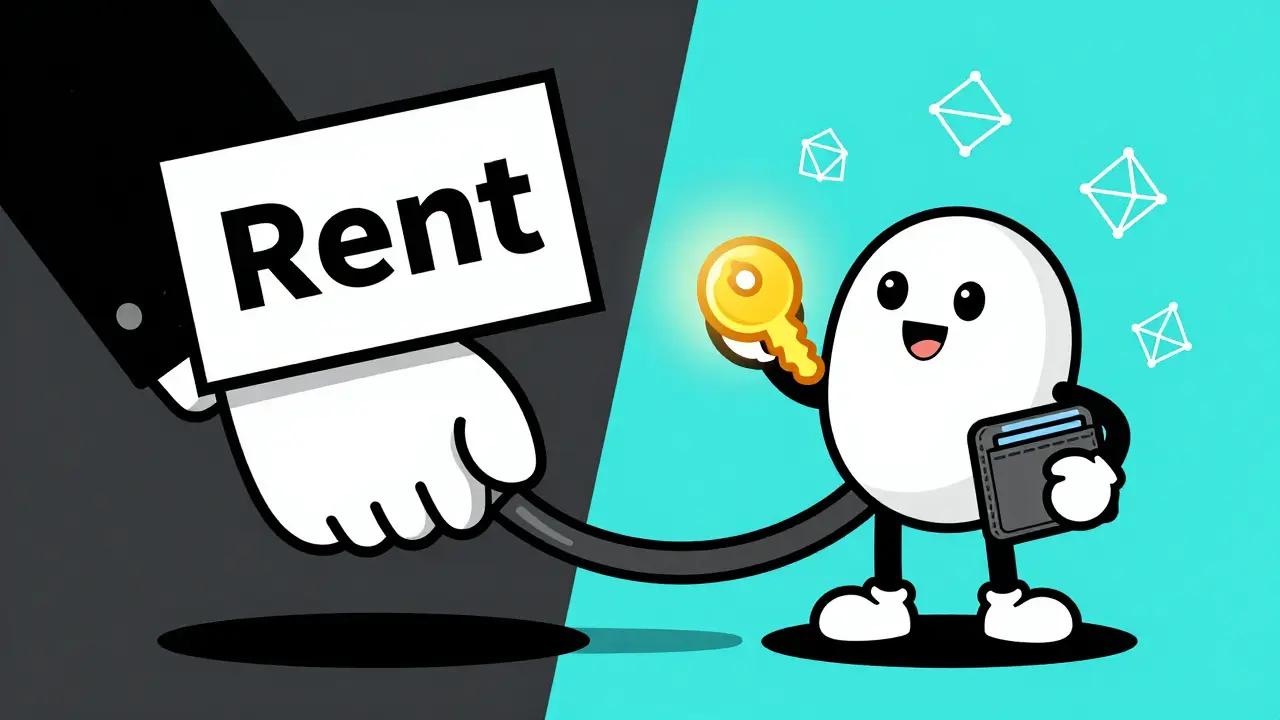
You don’t actually own your Instagram account. You don’t own the music files on Spotify, and you certainly don’t own the data those platforms sell to advertisers. In the current internet era-what experts call Web2-you are essentially renting space on someone else’s server. If they ban you, delete your post, or change their terms of service, your digital life vanishes instantly. This is the core problem that Web3 is trying to solve.
Web3 isn't just a buzzword for speculative tokens. It represents a fundamental shift in how we interact with the internet. Coined by Ethereum co-founder Gavin Wood in 2014, Web3 moves us from a "read-write" model (where companies control content) to a "read-write-own" model. In this new ecosystem, built on blockchain technology, you hold the keys to your digital identity and assets. No middleman. No corporate gatekeeper. Just you and the code.
The Shift from Renting to Owning
To understand why Web3 matters, look at what happens when a social media platform shuts down. In 2023, millions of users lost access to years of memories because a single company made a business decision. In Web3, your assets live on a decentralized ledger. Whether it’s a piece of digital art, a domain name, or membership credentials, the proof of ownership is cryptographic, not administrative.
Consider the difference between buying a song on iTunes versus owning an NFT (Non-Fungible Token). On iTunes, you have a license to listen. Apple can revoke that license. With an NFT, verified on a blockchain like Ethereum or Solana, you hold a unique token that points to that asset. While legal frameworks are still catching up, the technical reality is that no one can take that token from your wallet without your private key. That is the essence of digital sovereignty.
| Feature | Web2 (Current Internet) | Web3 (Decentralized Internet) |
|---|---|---|
| Data Control | Corporations own and monetize user data | Users own data; permission-based sharing |
| Asset Portability | Locked within specific platforms (e.g., Steam games) | Fully portable across compatible apps and chains |
| Censorship Resistance | High risk of account bans or content removal | Protocol-level resistance to unilateral censorship |
| Identity | Email/password login managed by providers | Self-sovereign identity via cryptographic keys |
| Monetization | Platform takes majority cut (often 30%+) | Direct peer-to-peer value transfer; lower fees |
How Blockchain Enforces Ownership
Ownership in the physical world relies on paper deeds and government registries. In the digital world, these systems fail because digital files are infinitely copyable. Blockchain solves this through scarcity and verification. When you buy a digital asset in Web3, a transaction is recorded on a distributed ledger. This record is immutable, meaning it cannot be altered or deleted by any single party.
The most common vehicle for this is the NFT, which stands for Non-Fungible Token. Unlike Bitcoin, where every coin is identical (fungible), each NFT has a unique identifier. Standards like ERC-721 on Ethereum allow developers to create tokens that represent unique items. But it’s not just about JPEGs. In 2026, NFTs are increasingly used for:
- Digital Identity: Verifiable credentials for education or employment history.
- Domain Names: Decentralized domains (like .eth) that act as human-readable addresses for your wallet.
- Gaming Assets: Items like swords or skins that you truly own and can sell outside the game’s marketplace.
- Real Estate Tokens: Fractional ownership of physical properties represented on-chain.
The technology doesn’t care if you’re a gamer, an artist, or a landlord. It only cares that the math checks out. This neutrality is what makes it powerful. However, it also means there is no customer support team to call if you make a mistake. That brings us to the biggest hurdle in Web3 adoption.
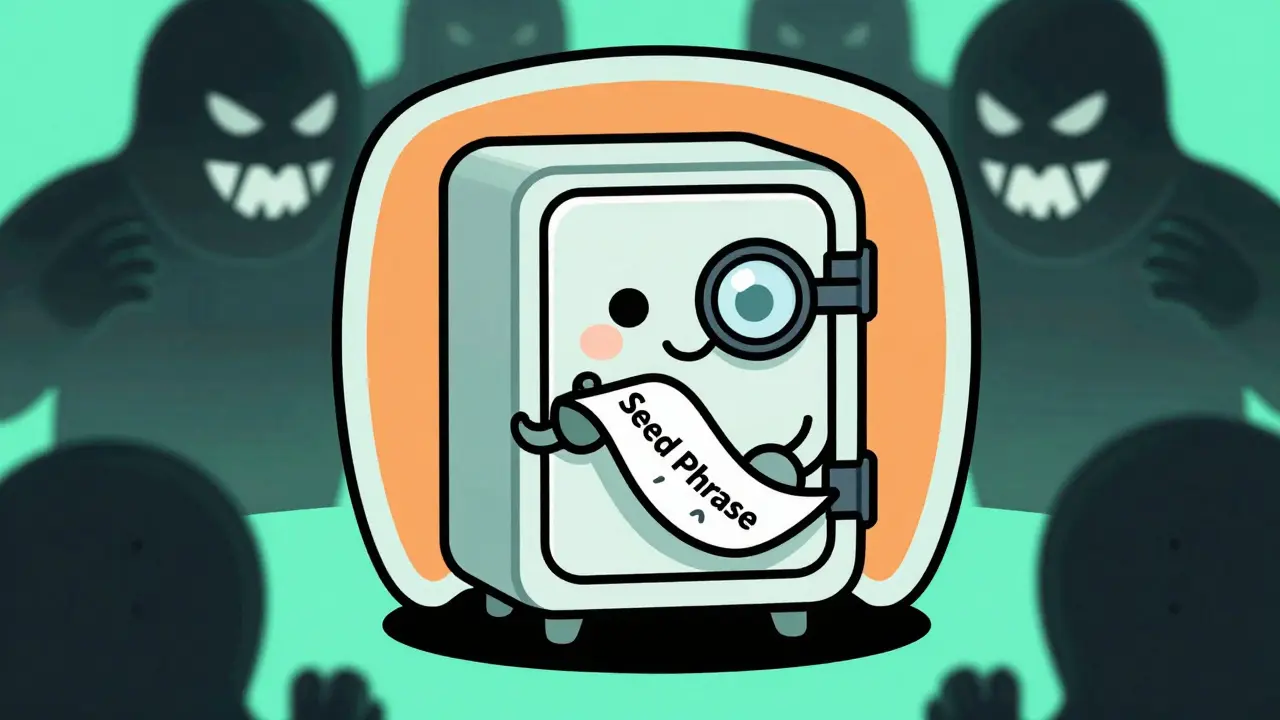
The Wallet: Your New Bank Account
In Web2, you log in with a password. If you forget it, you click "Forgot Password," and the company resets it. In Web3, there is no reset button. Your "account" is a cryptocurrency wallet, such as MetaMask or Phantom. These wallets do not store your coins; they store your Private Keys.
Your private key is a long string of characters that proves you own the assets associated with your public address. Think of your public address as your email inbox (you can share it with anyone) and your private key as the password to that inbox. If someone gets your private key, they own your assets. If you lose your private key, your assets are gone forever. There is no appeal process.
This model requires a significant shift in mindset. Security becomes your full-time job. Here is how pros manage this risk:
- Use Hardware Wallets: Devices like Ledger or Trezor keep your private keys offline. Even if your computer is hacked, your funds remain safe.
- Back Up Seed Phrases: When you create a wallet, you get a 12 or 24-word recovery phrase. Write this down on paper. Never store it digitally. Never screenshot it.
- Revoke Permissions: Regularly use tools like Revoke.cash to check which websites have access to your wallet. Scammers often trick users into granting unlimited spending allowances.
- Verify URLs: Phishing sites mimic popular dApps (decentralized applications). Always bookmark official sites and double-check web addresses before connecting your wallet.
The learning curve is steep. Consensys research indicated that new users spend an average of 8.3 hours completing their first successful Web3 transaction. But as interfaces improve and Layer 2 solutions reduce friction, this barrier is lowering.
Challenges: Speed, Cost, and Complexity
Despite the promise, Web3 faces real-world limitations. The most cited issue is scalability. Ethereum, the leading smart contract platform, processes roughly 15-30 transactions per second (TPS) on its base layer. Visa processes 65,000 TPS. For everyday purchases like coffee, this latency and cost are prohibitive.
Gas fees-the transaction costs paid to network validators-can fluctuate wildly. During peak congestion, sending a simple token might cost $50 or more. This has led to the rise of Layer 2 solutions like Arbitrum, Optimism, and Polygon, which bundle transactions and settle them on Ethereum later, offering faster speeds and lower costs. Solana offers high throughput natively but has faced stability issues in the past.
User experience (UX) remains another major friction point. In Web2, logging in is two steps. In Web3, it involves connecting a wallet, signing a message, approving a transaction, and waiting for confirmation. Each step introduces cognitive load and potential error points. A study by Consensys found that Web3 transactions require an average of 7.2 steps compared to 2.1 in Web2. Until this gap closes, mass adoption will remain elusive.
Security risks are also prevalent. In 2022 alone, over $3.8 billion was stolen from Web3 protocols due to hacks, scams, and exploits. Smart contracts-self-executing code that governs transactions-are only as secure as the code written. Bugs in these contracts can lead to irreversible losses. Users must exercise extreme diligence, verifying contract addresses and auditing project reputations before interacting.
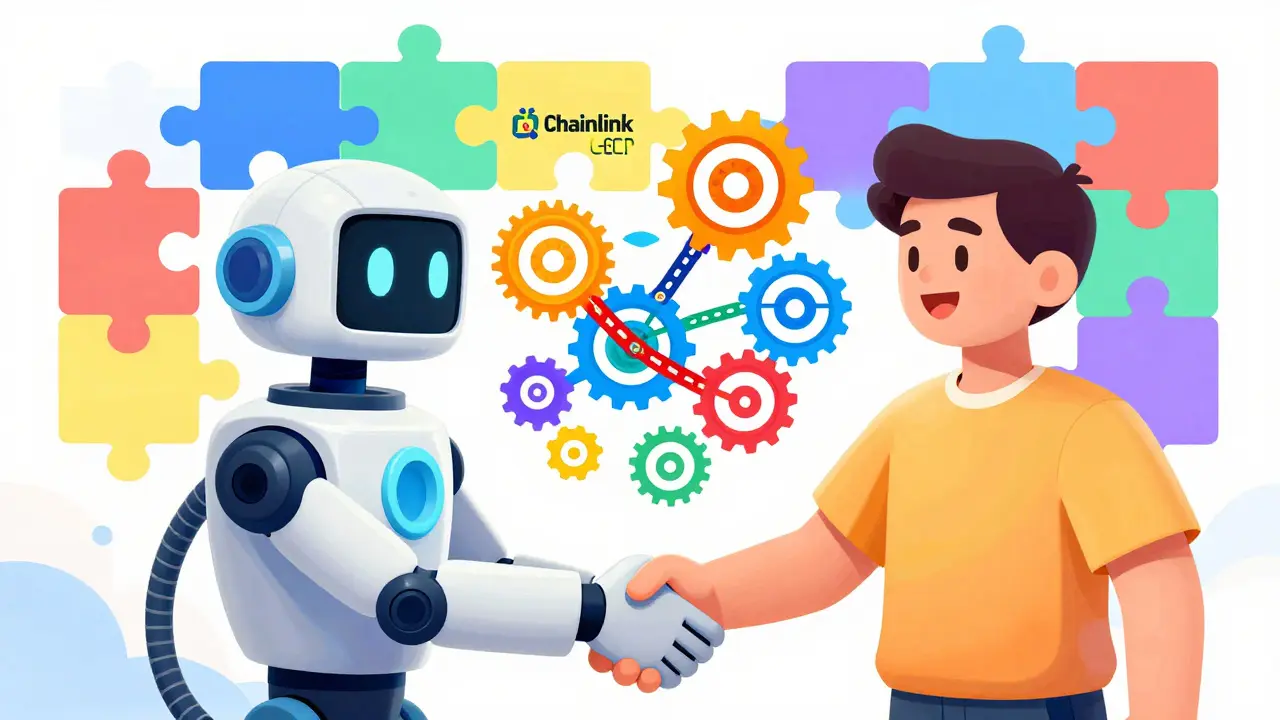
The Future: Interoperability and Regulation
By 2026, the landscape is maturing. We are moving away from isolated blockchains toward interoperability. Protocols like Chainlink’s CCIP (Cross-Chain Interoperability Protocol) allow different blockchains to communicate seamlessly. This means you could own an asset on Ethereum and use it in a game built on Solana without complex bridging risks.
Regulation is also clarifying. The European Union’s MiCA (Markets in Crypto-Assets) regulation, fully effective in 2024, provides a comprehensive framework for issuers and service providers. In the US, while regulatory clarity remains fragmented, court rulings have begun to distinguish between securities and utility tokens, reducing uncertainty for legitimate projects.
Enterprise adoption is growing cautiously. Major brands are exploring Web3 for supply chain transparency, loyalty programs, and digital collectibles. Gartner reports that 35% of large enterprises have explored Web3 initiatives, though production implementations remain under 10%. The focus is shifting from hype to utility-using blockchain where it adds genuine value, not just for the sake of being trendy.
Artificial Intelligence is converging with Web3. AI agents can now transact autonomously using crypto wallets, creating new markets for data and compute power. Projects like Fetch.ai demonstrate how AI-driven entities can own and trade resources in a decentralized economy. This fusion promises a future where digital ownership extends beyond humans to autonomous software agents.
Getting Started Safely
If you want to dip your toes into Web3, start small. Do not invest money you cannot afford to lose. Treat early interactions as tuition for learning.
- Choose a Reputable Wallet: Start with MetaMask for Ethereum-compatible chains or Phantom for Solana.
- Buy Stablecoins First: Use USDC or USDT to avoid volatility while learning transaction mechanics.
- Explore Testnets: Many networks offer test environments with fake currency. Practice minting NFTs or swapping tokens here first.
- Join Communities: Discord and Telegram groups provide real-time support, but beware of scammers DMing you. Never trust unsolicited messages.
- Verify Everything: Double-check contract addresses on Etherscan or Solscan before interacting. Look for audit badges from firms like CertiK or OpenZeppelin.
Web3 is not a utopia. It is a toolset. Like any tool, its value depends on how you use it. By understanding the principles of digital ownership, you position yourself to participate in the next evolution of the internet-one where you are not the product, but the proprietor.
What is the main difference between Web2 and Web3?
In Web2, centralized companies like Google or Meta own your data and control your access. In Web3, decentralized networks allow you to own your data and digital assets directly through cryptographic keys, giving you true sovereignty over your online presence.
Is Web3 ownership legally recognized?
Legal recognition varies by jurisdiction. While blockchain provides technical proof of ownership, courts are still defining how digital assets fit into existing property laws. In many cases, holding an NFT grants you rights to display or transfer the token, but not necessarily copyright to the underlying image. Always consult local regulations.
Can I recover my Web3 assets if I lose my private key?
No. If you lose your private key or seed phrase, your assets are permanently inaccessible. There is no central authority to reset your password. This is why securing your seed phrase offline is critical. Hardware wallets and multi-signature setups can mitigate some risks but do not replace the need for proper backup.
Why are gas fees so high on Ethereum?
Gas fees compensate miners or validators for processing transactions. High demand leads to congestion, driving up prices. Layer 2 solutions like Arbitrum and Optimism reduce costs by bundling transactions off the main chain. Switching to these networks can significantly lower fees for everyday use.
Is Web3 safe for beginners?
Web3 carries higher risks than traditional finance due to irreversibility and scam prevalence. Beginners should start with small amounts, use hardware wallets, and educate themselves on security best practices. Avoid clicking unknown links and never share your seed phrase. Treat early interactions as learning experiences rather than investments.
What role do NFTs play in digital ownership?
NFTs serve as unique certificates of ownership on the blockchain. They verify authenticity and provenance for digital items, from art to gaming assets. While often associated with images, NFTs are increasingly used for tickets, memberships, and real-world asset tokenization, providing a standardized way to prove ownership in the digital realm.
How does Web3 impact privacy?
Web3 enhances privacy by removing centralized data collectors. Transactions are pseudonymous, tied to wallet addresses rather than personal identities. However, all transactions are publicly visible on the blockchain. Zero-knowledge proofs (ZKPs) are emerging technologies that allow verification of transactions without revealing sensitive details, further strengthening privacy.
What is the future of Web3 adoption?
Adoption is expected to grow as user interfaces simplify and regulatory frameworks clarify. Interoperability protocols will connect disparate blockchains, making seamless cross-chain interactions possible. Enterprise integration and AI convergence will drive practical use cases beyond speculation, potentially bringing billions of users into the Web3 ecosystem by 2030.