
You’ve probably heard the term sidechain thrown around in crypto discussions, often alongside promises of faster transactions and lower fees. But what does it actually mean? Think of a sidechain as a separate highway running parallel to a major interstate (the main blockchain). You can take your car (your assets) from the interstate onto this new highway, drive around freely with less traffic, and then return to the interstate when you’re done. The key innovation here is that these two roads are connected by a special bridge-the two-way peg-that ensures your car doesn’t vanish or get duplicated during the trip.
This technology solves one of blockchain’s biggest headaches: scalability. Major networks like Bitcoin and Ethereum are secure but often slow and expensive because every node has to verify every transaction. Sidechains offer a workaround. They let developers build their own rules for speed and functionality without clogging up the main network. If you’re wondering how to move assets between chains safely, or why projects like Liquid exist, this guide breaks down exactly how sidechains work, their benefits, and where they fit in the broader crypto ecosystem.
The Core Concept: How Sidechains Connect to Mainnets
A sidechain is a distinct blockchain network that runs independently but maintains a connection to a parent blockchain, known as the mainnet. This connection allows assets to move back and forth between the two chains while preserving their value and ownership. Unlike a simple copy of data, a sidechain has its own consensus mechanism, block size, and transaction rules. It’s not just a layer on top; it’s a sibling chain.
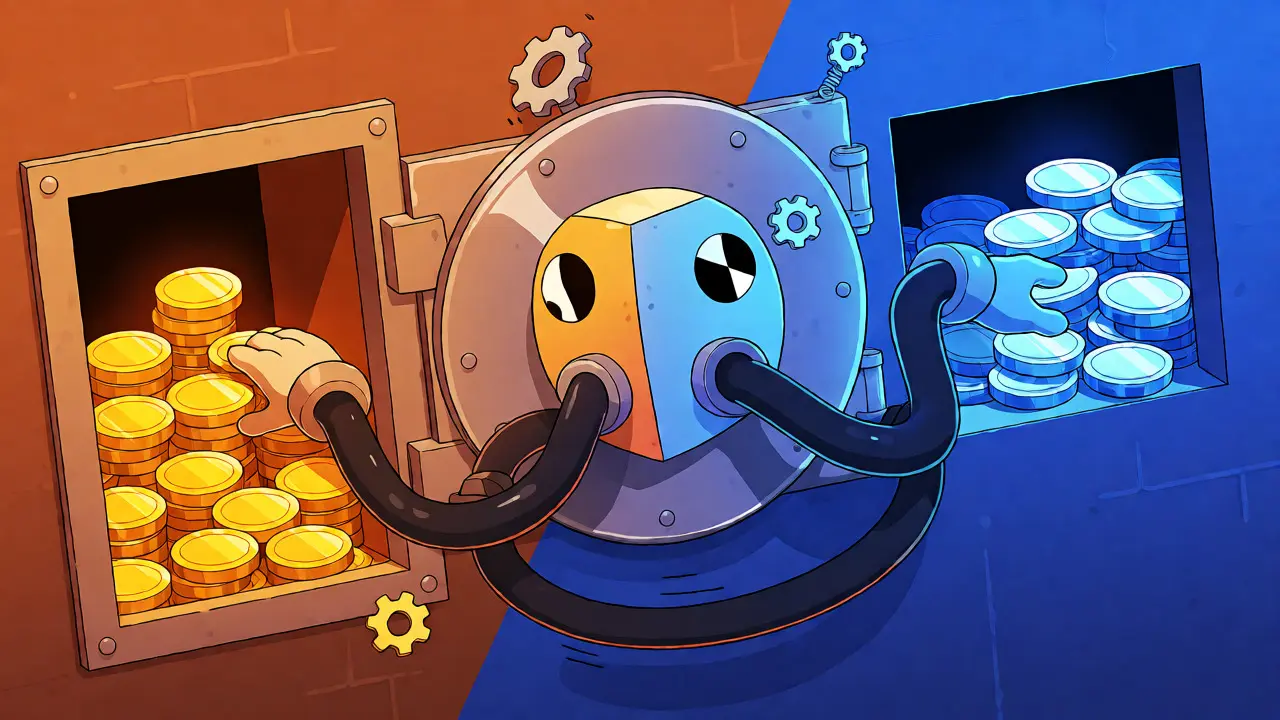
The magic glue holding them together is the two-way peg. Imagine you want to move 1 Bitcoin from the Bitcoin mainnet to a sidechain called Liquid. You send your BTC to a specific address on the mainnet-a "lockbox." Once confirmed, those coins are locked and unspendable on the mainnet. Simultaneously, the sidechain recognizes this lock and mints an equivalent amount of L-BTC (Liquid Bitcoin) on its own ledger. Now, you can trade L-BTC instantly and cheaply. To go back, you burn the L-BTC on the sidechain, which triggers the unlock of your original BTC on the mainnet.
Why Use Sidechains? Solving the Scalability Trilemma
Blockchain networks face a tough choice known as the scalability trilemma: you can have decentralization, security, or speed, but usually only two at once. Mainnets prioritize security and decentralization, which often sacrifices speed. Sidechains allow developers to tweak this balance. By moving certain activities off the mainnet, they reduce congestion.
- Faster Transactions: Because sidechains process fewer transactions than global mainnets, confirmation times drop significantly. For example, while Bitcoin might take 10-60 minutes to confirm, a well-designed sidechain can settle trades in seconds.
- Lower Fees: With less competition for block space, transaction costs plummet. Some sidechains charge fractions of a cent compared to dollars on congested mainnets.
- Experimental Features: Developers can test new smart contract languages or privacy features on a sidechain without risking the stability of the entire mainnet.
This separation means if a sidechain gets hacked, the damage is contained. The mainnet remains untouched. This containment is crucial for fostering innovation without endangering billions of dollars in stored value.
The Mechanics of the Two-Way Peg
The two-way peg is the technical heart of any sidechain system. It ensures that one unit of asset on the mainnet equals one unit on the sidechain. There are different ways to implement this peg, each with varying levels of trust and complexity.
| Mechanism | Trust Level | Speed | Complexity |
|---|---|---|---|
| SPV (Simplified Payment Verification) | Low (Light client verification) | Slow (requires waiting periods) | Moderate |
| Drivechains | Medium (Miner voting) | Moderate | High |
| Centralized Federated Pegs | High (Trusted custodians) | Fast | Low |
In a federated peg, like the one used by the Liquid Network, a group of trusted functionaries manages the lockboxes. This is fast but introduces centralization risk. In contrast, SPV-based pegs rely on cryptographic proofs from light clients, which is more decentralized but slower due to mandatory waiting periods to prevent fraud. Choosing the right peg depends on whether you prioritize speed or strict decentralization.
Real-World Examples: Liquid and Rootstock
Abstract concepts become clearer with concrete examples. Two prominent Bitcoin sidechains illustrate different use cases.
Liquid is a sidechain focused on financial institutions and traders. It uses a federated peg and offers confidential transactions, meaning amounts and addresses can be hidden for privacy. It also enables instant settlements, making it ideal for exchanges that need to move funds quickly without waiting for Bitcoin’s block time.
Rootstock, on the other hand, brings smart contracts to Bitcoin. It merges Bitcoin’s security with Ethereum’s programmability. Users can write Solidity contracts that run on Rootstock, leveraging Bitcoin’s hash power for finality while enjoying complex DeFi applications that Bitcoin alone cannot support natively.
These examples show that sidechains aren’t just about speed; they’re about adding capabilities. One adds privacy and speed; the other adds logic and flexibility.
Sidechains vs. Layer 2 Solutions
Confusion often arises between sidechains and Layer 2 solutions like Lightning Network or Rollups. While both aim to scale, they differ fundamentally in architecture and security assumptions.
- Security Model: Layer 2 solutions typically inherit security directly from the mainnet. If the mainnet halts, the L2 stops working. Sidechains have their own consensus; they can continue operating even if the mainnet is congested, though asset movement pauses.
- Interoperability: Layer 2s are often tightly coupled to one mainnet. Sidechains can theoretically connect to multiple mainnets, acting as bridges between ecosystems.
- Development Freedom: Sidechains allow completely different virtual machines and programming languages. Layer 2s usually stick close to the mainnet’s execution environment to ensure compatibility.
Think of Layer 2 as an express lane on the same highway, while a sidechain is a completely different road system connected by toll booths. Neither is strictly better; they serve different needs.
Risks and Challenges
Sidechains aren’t a silver bullet. The primary risk lies in the peg mechanism. If the validators managing the lockboxes collude or fail, users could lose their assets. In a federated model, you’re trusting a small group of entities. If they steal the keys, your collateral is gone.
Liquidity fragmentation is another issue. Assets spread across multiple sidechains may lack depth, making large trades harder to execute without slippage. Additionally, user experience can suffer. Moving funds requires understanding bridging processes, waiting periods, and potential fees on both ends. Mistakes, such as sending tokens to the wrong address type, can lead to permanent loss.
Key Takeaways
- Definition: Sidechains are independent blockchains connected to a mainnet via a two-way peg, allowing asset transfers.
- Purpose: They enhance scalability, reduce fees, and enable experimental features without burdening the mainnet.
- Mechanism: Assets are locked on the mainnet and minted on the sidechain, then burned and unlocked when returning.
- Trade-offs: Security depends on the peg mechanism; federated pegs are faster but more centralized.
- Differentiation: Unlike Layer 2s, sidechains have their own consensus and can operate independently of mainnet congestion.
Frequently Asked Questions
Are sidechains safe?
Safety depends on the peg mechanism. Centralized pegs rely on trusted custodians, introducing counterparty risk. Decentralized pegs use cryptographic proofs but may have longer settlement times. Always research who controls the lockboxes before moving significant funds.
Can I use any wallet for sidechains?
Not necessarily. Most standard wallets only support the mainnet. You’ll likely need a specific wallet or exchange that supports the particular sidechain you’re using, such as Blockstream Green for Liquid or MetaMask configured for Rootstock.
How long does it take to move assets back to the mainnet?
It varies. Federated pegs can be near-instant. SPV-based pegs require a waiting period, often several hours or days, to ensure the transaction is irreversible on the source chain before releasing funds on the destination chain.
Do sidechains compromise Bitcoin’s decentralization?
The sidechain itself may be less decentralized, depending on its consensus. However, since it’s separate from the mainnet, it doesn’t directly dilute Bitcoin’s node count. The concern is mainly about the trust placed in the peg operators.
What happens if a sidechain fails?
If a sidechain halts, you generally cannot withdraw assets until it resumes or a recovery mechanism kicks in. Your mainnet collateral remains locked. This highlights the importance of choosing established, actively maintained sidechains.