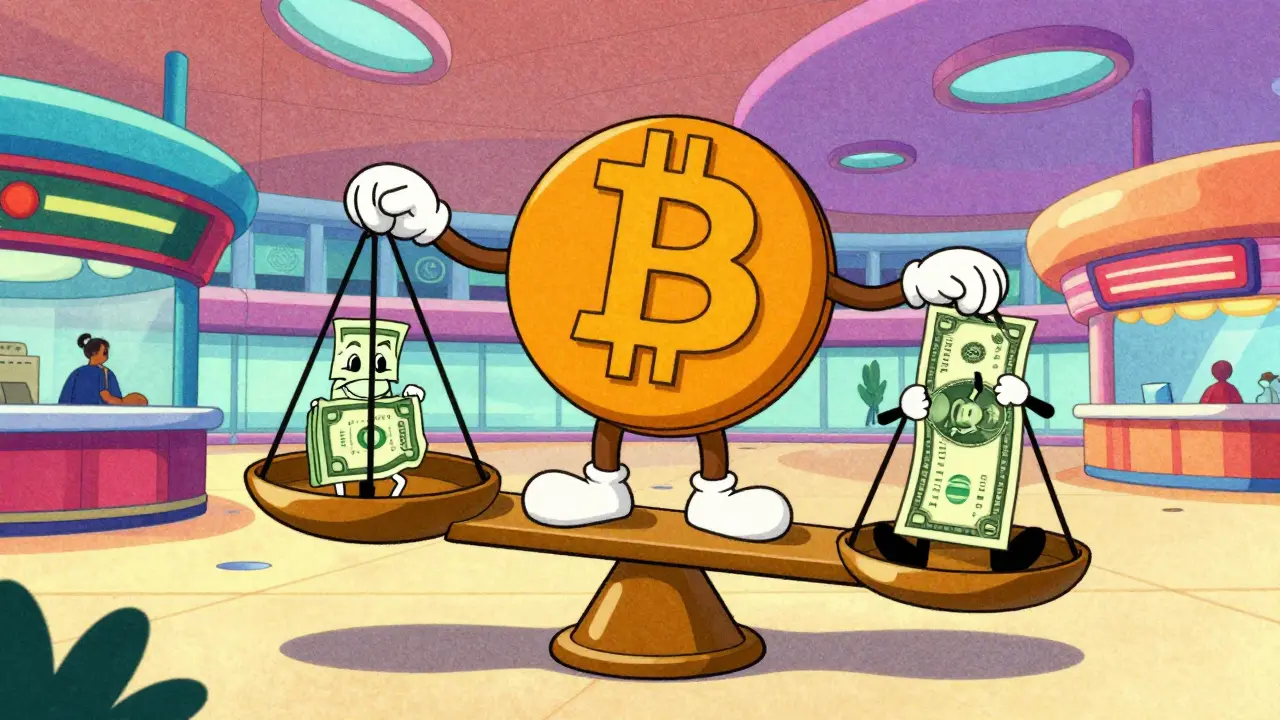
Imagine you walk into a currency exchange at the airport. You don't just ask for "some money"; you ask to trade your US Dollars for Euros. You're looking for the exchange rate between two specific things. In the world of digital assets, this is exactly what a trading pair is a combination of two different assets that can be traded against each other on an exchange. You can't just "buy" Bitcoin in a vacuum; you have to buy it using something else, like US Dollars or Ethereum.
If you've ever opened a trading app and seen symbols like BTC/USDT or ETH/BTC and felt a bit lost, you're not alone. These pairs are the backbone of every single transaction in the crypto market. Without them, we'd have no way to determine what a coin is actually worth or how to swap one for another. Understanding how these pairs work is the difference between making a smart move and accidentally losing money because you misread the chart.
The Anatomy of a Trading Pair: Base vs. Quote
Every trading pair consists of two parts. The first currency listed is always the base currency, and the second one is the quote currency. This isn't just a random order; it tells you exactly what you are buying and what you are paying with.
Take the pair BTC/USD as an example. In this scenario, Bitcoin (BTC) is the base currency and the US Dollar (USD) is the quote currency. The price you see on the screen tells you how many US Dollars it takes to buy one single Bitcoin. If the price is $65,000, the "quote" for one unit of the base asset is 65,000 dollars.
It works the same way with two cryptos. In a pair like ETH/BTC, Ethereum is the base and Bitcoin is the quote. Here, the price tells you how much Bitcoin you need to acquire one Ethereum. If the price is 0.05, it means 1 ETH costs 0.05 BTC. If you confuse these two, you might think you're buying 1 Bitcoin with Ethereum, when you're actually doing the opposite.
| Component | Position | Role | Example (BTC/USD) |
|---|---|---|---|
| Base Currency | First (Left) | The asset you are buying or selling | Bitcoin (BTC) |
| Quote Currency | Second (Right) | The asset used to determine the price | US Dollar (USD) |
Common Types of Trading Pairs
Not all pairs are created equal. Depending on what you're using to trade, you'll run into three main categories. Choosing the right one can affect your fees, how fast your trade executes, and how much risk you're taking.
- Fiat Pairs: These pair a cryptocurrency with a traditional government-backed currency, such as USD, EUR, or GBP. These are the most common entry points for beginners because they use money you already have in your bank account.
- Crypto-to-Crypto Pairs: Here, you trade one digital asset for another (e.g., BTC/ETH). These are great for investors who want to diversify their portfolio without exiting back into cash, which avoids certain bank fees and taxes in some regions.
- Stablecoin Pairs: These pair a volatile crypto with a stablecoin, which is a cryptocurrency pegged to a stable asset like the dollar. A classic example is BTC/USDT. Since Tether (USDT) stays close to $1, it acts like a "digital dollar," giving you the stability of fiat with the speed of blockchain.
Why Trading Pairs Matter for Your Strategy
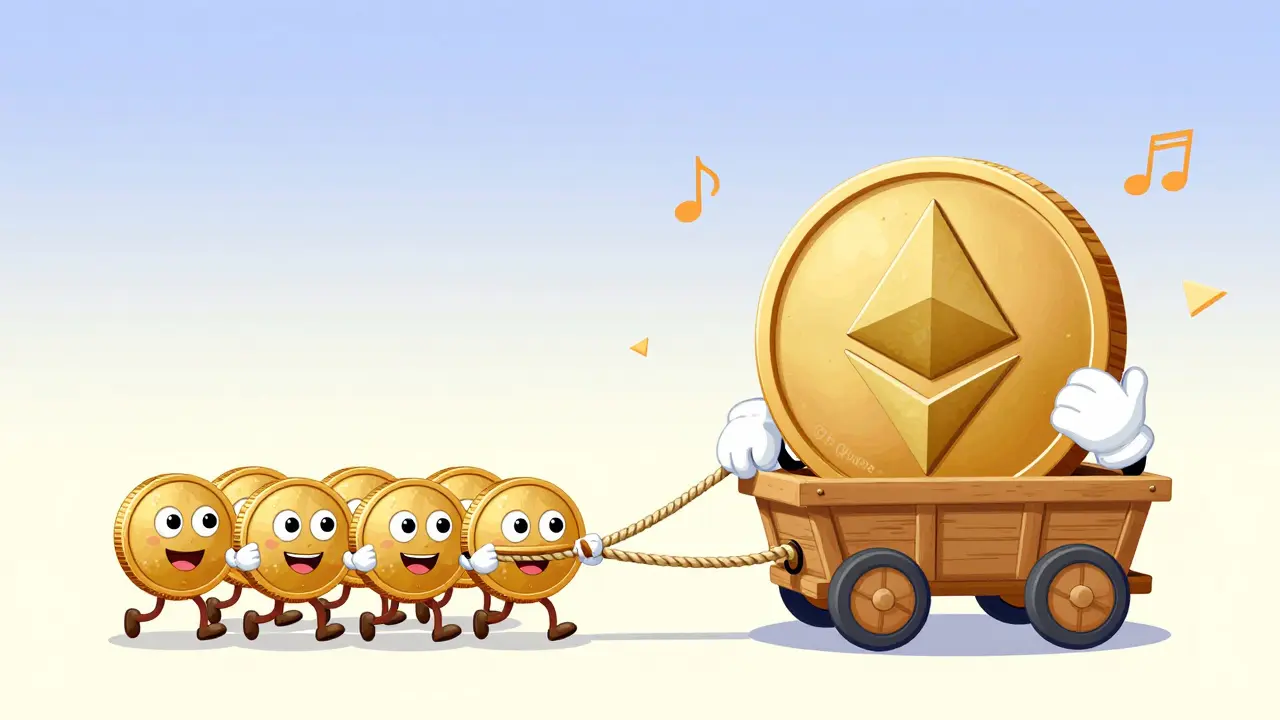
You might wonder, "Why not just have one price for every coin?" The reality is that value is relative. A coin might be dropping in value against the US Dollar but actually gaining value against Bitcoin. This creates opportunities for something called arbitrage.
Arbitrage happens when the same asset is priced differently across different pairs or exchanges. For example, if you notice that Ethereum is cheaper when bought with BTC than it is when bought with USD, you could theoretically execute a series of trades to profit from that gap. However, this requires a deep understanding of pairs and very fast execution.
Another critical factor is liquidity. Liquidity is essentially how easy it is to buy or sell an asset without changing its price. High-volume pairs, like BTC/USDT, have massive liquidity. This means you can trade millions of dollars instantly. If you try to trade a "rare" pair-say, a tiny new coin paired with an obscure token-you might experience "slippage," where the actual price you pay is much higher than the one you saw on the screen because there aren't enough sellers.
Navigating the "Chain" of Trades
Sometimes, the coin you want isn't paired with the currency you have. This is where a lot of beginners get stuck. Let's say you have XRP, but you want to buy a specific new project token that is only paired with Bitcoin (BTC).
You can't just click "buy" with your XRP. You have to perform a multi-step trade:
- Trade your XRP for Bitcoin (XRP/BTC pair).
- Use that Bitcoin to buy the new project token (ProjectToken/BTC pair).
Every time you do this, you pay a trading fee. This is why many experienced traders keep a portion of their holdings in "hub" currencies like BTC, ETH, or USDT. It makes moving between different assets much faster and cheaper.
Practical Tips for Choosing the Right Pair
If you're just starting out, don't get lured by the exotic pairs. Stick to the majors. High-volume pairs generally offer tighter "spreads"-the difference between the highest price a buyer is willing to pay and the lowest price a seller will accept. A tight spread means you're getting a fair market price.
Always check the trading volume on your exchange before diving in. If a pair has very low volume, you might find it easy to buy the coin but nearly impossible to sell it later without crashing the price. For most people, starting with USD or USDT pairs is the safest bet because the price action is intuitive.
Also, consider your goal. If you are "HODLing" (holding long-term), the specific pair you used to buy the coin doesn't matter much. But if you're day trading, the volatility of the quote currency matters. If you trade ETH/BTC, you're betting that Ethereum will outperform Bitcoin. If both coins crash but Ethereum crashes *less*, you've actually made a profit in BTC terms, even though you lost money in USD terms.
What happens if I trade the wrong pair?
If you mistake the base and quote currency, you might end up selling an asset you intended to buy, or buying far more than you planned. For example, if you think you're buying BTC with USD but you're actually in a pair where USD is the base, you're selling your dollars to get Bitcoin. Always double-check the pair symbol (e.g., BTC/USD) before hitting the trade button.
Can a coin have multiple trading pairs?
Yes, and most do. Bitcoin, for instance, is paired with almost everything: BTC/USD, BTC/ETH, BTC/USDT, and even BTC/EUR. The price of Bitcoin will be the same in terms of value, but the number will change depending on which quote currency is being used.
Which is better: Fiat pairs or Stablecoin pairs?
It depends on your needs. Fiat pairs (like BTC/USD) are better for moving money from your bank account into the crypto ecosystem. Stablecoin pairs (like BTC/USDT) are better for active trading because they are faster, available on more exchanges, and don't require constant transfers back to a traditional bank.
What is a "base pair"?
A base pair usually refers to a pair where a major currency (like BTC or USD) is the quote currency. Because so many other coins are paired with them, they act as the primary bridge for most trades in the market.
Does the trading pair affect the fee?
Not usually the pair itself, but the exchange's pricing structure. However, since some pairs have lower liquidity, you might pay more in "hidden costs" via slippage, which makes the trade more expensive overall than a high-volume pair.
Next Steps for New Traders
Now that you understand how pairs work, your next move should be to explore the order book of your chosen exchange. Look at the BTC/USDT pair and see how the buy and sell orders are stacked. This will help you visualize how the base and quote currencies interact in real-time.
If you're feeling adventurous, try comparing a crypto-to-fiat pair with a crypto-to-crypto pair. Notice how the price movements differ. This is the first step toward understanding market correlation and developing a professional trading strategy.
Comments (15)
Mike Word
April 24, 2026 AT 21:32
Stablecoins really changed the game for people who hate checking the charts every five minutes just to see if their portfolio vanished into thin air.
Jason M
April 25, 2026 AT 09:28
OH MY GOD, the part about the "chain" of trades is absolutely critical! I cannot stress this enough for every single person starting out! You don't want to be that person who loses a chunk of their capital just because they didn't understand how to pivot through BTC or USDT first! It is a total game-changer once you realize that hub currencies are your best friends in this wild market! Keep pushing, keep learning, and for the love of everything, always double-check your pairs before you hit that buy button! You've got this!
Kathleen Bergin
April 26, 2026 AT 22:18
Basically it's just like swapping a five dollar bill for five ones.
Miranda Jamieson
April 28, 2026 AT 13:44
If you're still using fiat pairs in 2024, you're basically admitting you have no clue how to actually trade. Real traders live in stablecoins or crypto-to-crypto pairs because moving money back to a bank is for amateurs who are scared of a little volatility. Get a grip on the basics or just stay out of the market before you get liquidated by a simple spread error.
Guy Bianco
April 29, 2026 AT 13:58
I must agree that the distinction between base and quote currencies is fundamental for any disciplined investor. :) It is often where the most preventable errors occur.
Greg Reynolds
April 30, 2026 AT 19:54
Actually, the suggestion to stick to "majors" is a bit simplistic. While liquidity is important, some of the most significant gains are found in the low-volume pairs that the "experts" tell you to avoid. Avoiding the exotic pairs is essentially avoiding the highest potential ROI in this asset class, provided you can handle the slippage.
Keith Garcia
May 1, 2026 AT 01:50
What a quaintly simplistic explanation for the masses. 🙄 It's almost adorable how it treats the complex machinery of global liquidity as a trip to the airport currency booth. The sheer pedestrian nature of the analogies is simply breathtaking. I suppose for the unwashed masses, this suffices, but for anyone with a modicum of financial sophistication, it's utterly banal. 💅
Larry Yang
May 2, 2026 AT 18:47
lol imagine thinking the airport analogy is actually a good way to explain this. its barely an explanation at all. way too basic for anyone who's actually spent more than ten minutes on binance.
Charlie Queen
May 3, 2026 AT 21:31
I love how we can all talk about this stuff regardless of where we are in the world! 🌍 Crypto really is the ultimate bridge between different cultures and economies. It's so cool to see people helping each other get their feet wet! 🚀✨
praveen subbiah
May 4, 2026 AT 04:45
The way we handle digital assets in India is becoming so advanced! It's honestly a revolution! We are bringing such a dramatic shift to the global financial landscape and I'm just so proud to see the energy here!
Ali Tate
May 5, 2026 AT 19:56
who cares about the labels just follow the money man... these pairs are just numbers on a screen and the only thing that matters is who's getting dumped on
Findlay Duncan Lyon
May 6, 2026 AT 04:48
Very clear guide. Great for the Brits trying to figure out GBP pairs.
Alex Wan
May 7, 2026 AT 00:55
I am most gratefull for the explnation of slippge! It is an absolutly horrifc experience for a new trader to lose money they didnt even know they were losing because the price shifted in a millisecond! Truly a nightmare scenario that we must all work together to avoid through education! I am deeply moved by how this guide simplifies such a chaotic process!
Paige Raulerson
May 7, 2026 AT 07:13
I've seen a lot of these "guides" and they're all the same. It's just basic filler. Why do people need a whole article to understand that A/B means A is priced in B? It's honestly embarrassing that we're still explaining this in the current market cycle.
Sarah Ingrams
May 8, 2026 AT 15:25
it's okay to be confused by this at first... just take your time