
You might have seen AppLovin Tokenized Stock (Ondo), known by the ticker APPon, popping up on your crypto portfolio or exchange list. It looks like a standard cryptocurrency, but it’s actually something quite different. Instead of being a native digital coin with its own network or utility, APPon is a bridge between traditional Wall Street and the blockchain world. It gives you exposure to the stock performance of AppLovin Corporation, a major player in mobile advertising technology, without needing a traditional brokerage account.
This guide breaks down exactly what APPon is, how it works through the Ondo Finance platform, and why it matters for investors looking to diversify into real-world assets (RWAs). We’ll cover the mechanics, the risks, and how it compares to just buying regular stock.
Understanding Tokenized Stocks and Ondo Finance
To understand APPon, you first need to understand the concept of tokenization. In simple terms, tokenization means creating a digital certificate on a blockchain that represents ownership or economic rights to a physical or financial asset. Think of it like a digital receipt for a share of stock, but one that lives on the blockchain rather than in a bank’s ledger.
Ondo Finance is a protocol specializing in these institutional-grade real-world assets. They don’t just create random tokens; they partner with regulated custodians to ensure that actual shares of companies like AppLovin are held securely off-chain. When you buy APPon, you aren’t buying a piece of code that does nothing. You are buying a claim on the economic value of AppLovin’s equity.
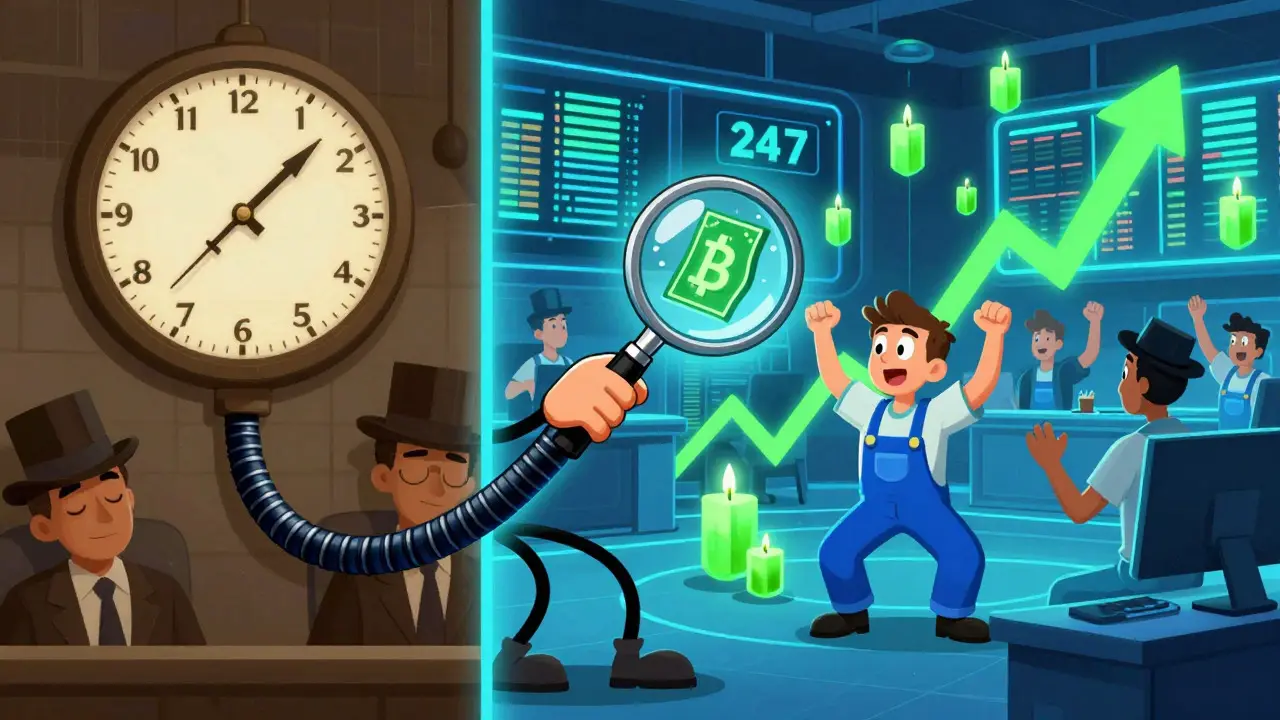
The key benefit here is accessibility and timing. Traditional stock markets in the U.S. operate on a strict schedule-usually 9:30 AM to 4:00 PM Eastern Time, Monday through Friday. Crypto markets never sleep. By tokenizing the stock, Ondo allows users to trade exposure to AppLovin 24 hours a day, five days a week. This is huge for global investors who live in time zones where U.S. market hours are inconvenient or impossible to watch.
How APPon Works: Economic Exposure vs. Ownership
Here is the most critical distinction to make: holding APPon is not the same as holding direct shares of AppLovin in your name at a broker like Fidelity or Charles Schwab. According to data from aggregators like CoinMarketCap and RevenueBOT, APPon provides "economic exposure similar to holding APP and reinvesting any dividends."
Let’s break that down. If AppLovin’s stock price goes up by 10%, the value of your APPon tokens should theoretically rise by roughly 10% as well. If AppLovin pays out dividends, those returns are typically reinvested into the pool, increasing the underlying value of the token over time. However, you do not get voting rights in AppLovin shareholder meetings, nor do you hold the legal title to the shares directly. The shares are held by a custodian, and Ondo manages the smart contracts that link the token to those shares.
This structure is designed primarily for non-U.S. retail and institutional users. Why? Because U.S. securities laws are incredibly complex. Ondo’s system often restricts access for U.S.-based persons to comply with regulations, opening the door for international investors to gain exposure to high-growth U.S. tech stocks without navigating the red tape of opening an American brokerage account.
Market Data and Performance Snapshot (2026)
Like any traded asset, APPon has a market price, volume, and supply. However, because it is a niche product within the broader crypto ecosystem, the data can look a bit different from massive coins like Bitcoin or Ethereum. As of mid-2026, APPon trades with a relatively low total supply. Reports vary slightly between platforms, with some showing a total supply around 469 to 640 tokens. This low supply means each individual token carries a high nominal value, often trading in the hundreds of dollars range.
| Metric | CoinMarketCap | CoinGecko | RevenueBOT |
|---|---|---|---|
| Price (USD) | $610.91 | $566.66 | $606.53 |
| 24h Volume | $134,219 | $87,393 | $2,893,123 |
| Market Cap | ~$390,320 | N/A | ~$284,700 |
| All-Time High | $1,943.50 | N/A | $738.56 |
Notice the discrepancies in the table above. This is normal for smaller-cap assets. Different exchanges and data aggregators pull information at different times, and liquidity can be thin. For instance, MetaMask showed significantly lower volume figures compared to RevenueBOT, suggesting that much of the trading happens on specific centralized platforms like Binance Alpha rather than decentralized peer-to-peer swaps. The all-time high variance also highlights how volatile this specific instrument can be, swinging from under $500 to nearly $2,000 depending on the tracking source and market conditions.
Where and How to Trade APPon
If you want to buy or sell APPon, you won’t find it on every corner exchange. It is available on platforms that support tokenized assets and have integrated with Ondo’s infrastructure. One of the primary venues is Binance Alpha. Binance offers fast purchase options and low fees for APPon, allowing users to swap other cryptocurrencies directly into APPon using their Convert tool.
For those who prefer self-custody, MetaMask supports APPon. You can add the token to your wallet interface, view its balance, and use MetaMask’s built-in swap aggregator to trade it if there is sufficient liquidity on supported networks. This integration makes it easier for experienced crypto users to manage APPon alongside their other DeFi holdings without leaving their wallet environment.
Other platforms like Crypto.com and Coinbase also track the price and offer conversion rates, particularly pairing APPon with fiat currencies like the Euro or with Ondo’s native governance token, ONDO. This cross-platform recognition ensures that even if you aren’t actively trading, you can accurately value your holdings in various contexts.
Risks and Considerations Before Buying
Tokenized stocks sound great, but they come with unique risks that pure crypto investors might overlook. First, there is the counterparty risk. Since you don’t own the underlying shares directly, you are trusting Ondo and its custodial partners to hold the actual AppLovin stock securely. If the custodian fails or the smart contract has a bug, your token could lose value regardless of how well AppLovin performs.
Second, regulatory restrictions are real. Ondo explicitly states that additional restrictions apply, and the product is largely targeted at non-U.S. residents. If you are a U.S. person, you may find yourself blocked from minting or redeeming APPon due to jurisdictional compliance rules. Always check the latest eligibility requirements on the Ondo platform before investing.
Third, liquidity can be shallow. With a market cap under half a million dollars and daily volumes fluctuating wildly, large trades can move the price significantly. Slippage-the difference between the expected price of a trade and the price at which the trade is executed-can be higher here than in major crypto pairs like BTC/USDT. Be prepared for wider bid-ask spreads.
Why Invest in APPon?
So, why bother with APPon when you can just buy AppLovin stock? For many international investors, the answer is convenience and consolidation. Holding APPon allows you to keep your entire investment portfolio within the crypto ecosystem. You can use stablecoins to buy APPon, earn yield on your idle crypto while waiting, and rebalance your portfolio instantly without transferring funds back and forth between a bank, a broker, and a crypto exchange.
Additionally, for those in countries with capital controls or limited access to U.S. financial markets, APPon offers a gateway to one of the world’s most dynamic tech sectors. AppLovin is a leader in machine learning-driven mobile ad optimization, and gaining exposure to its growth potential via a blockchain-native instrument is a powerful tool for modern, borderless finance.
Is APPon a cryptocurrency or a stock?
APPon is technically a cryptocurrency token, but it functions as a proxy for a stock. It is a digital asset on the blockchain that tracks the economic performance of AppLovin Corporation's equity. It is not a native utility token with its own network, nor is it a direct legal share of stock.
Can US citizens buy APPon?
Generally, no. Ondo Finance’s tokenized stock program is primarily designed for non-U.S. retail and institutional users due to complex U.S. securities regulations. Most platforms hosting APPon will require KYC (Know Your Customer) verification that excludes U.S. residents.
Does APPon pay dividends?
APPon is structured to provide economic exposure similar to holding the stock and reinvesting dividends. This means that if AppLovin pays dividends, the value of the underlying asset pool increases, which should reflect in the token's price appreciation over time, rather than paying out separate cash dividends to token holders.
Where can I buy APPon?
You can buy APPon on platforms like Binance Alpha, which offers direct purchasing and conversion tools. It is also supported in wallets like MetaMask, where you can swap for it using integrated DEX aggregators. Other trackers like Crypto.com and Coinbase list prices and conversions, facilitating trading across multiple venues.
What happens if AppLovin stock crashes?
If AppLovin’s stock price drops, the value of APPon will likely drop in tandem. Since APPon is designed to mirror the economic performance of the underlying equity, it carries the same market risk as the stock itself, plus additional risks related to the tokenization layer and crypto market volatility.