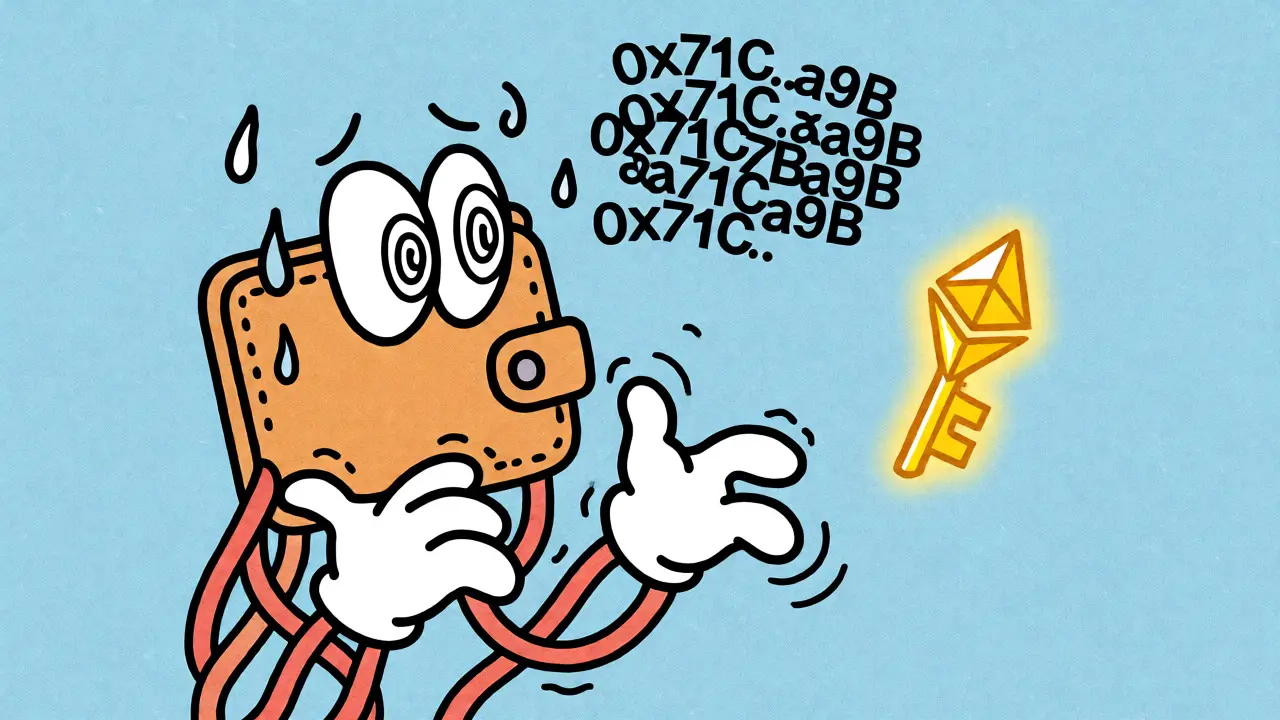
You know that feeling when you try to send crypto to a friend and end up staring at a string of gibberish like 0x71C...a9B? It’s stressful. One wrong character and your money vanishes into the void. This is exactly the problem the Ethereum Name Service (ENS) solves. But here’s the catch most people miss: ENS isn’t just a naming tool; it’s also a cryptocurrency with its own governance token, market cap, and controversial politics.
If you’ve seen "ENS" on an exchange and wondered if it’s worth buying, or if you’re just curious about how alice.eth works, this guide breaks it down without the jargon. We’ll look at what the tech actually does, how the token functions, why some investors are skeptical, and whether you should care in 2026.
The Core Concept: More Than Just a Nickname
At its heart, ENS is a decentralized domain name system built on the Ethereum blockchain. Think of it as the phonebook for Web3. Instead of memorizing complex hexadecimal addresses, users register human-readable names ending in .eth.
But calling it just a "nickname service" undersells it. The protocol maps these names to various data points:
- Crypto Addresses: The primary use case.
bob.ethresolves to Bob’s wallet address. - Social Handles: You can link Twitter, GitHub, or Discord profiles.
- Content Hashes: Point to decentralized websites hosted on IPFS or Arweave.
- Text Records: Store arbitrary data, like email addresses or avatars.
This flexibility makes ENS a foundational layer for digital identity. When you connect your wallet to a decentralized app (dApp), instead of seeing your raw address, the app pulls your .eth name and avatar from the ENS registry. It turns a cold, technical interaction into something recognizable and trustworthy.
How the ENS Token Works (And What It Doesn’t Do)
Here is where confusion often starts. There are two distinct things called "ENS":
- The Protocol: The infrastructure that resolves names.
- The Token (ENS): An ERC-20 governance token launched in November 2021.
Crucially, you do not pay for domain registrations with ENS tokens. You pay in ETH. So, what gives the ENS token value?
The token grants voting rights in the ENS DAO (Decentralized Autonomous Organization). Holders vote on key parameters:
- How much it costs to register a name.
- Technical upgrades to the smart contracts.
- How the treasury funds are spent.
As of late 2026, there are approximately 100 million total ENS tokens, with around 20-42 million circulating depending on the data source. The price hovers near $4.67, giving it a market cap of roughly $197 million. But unlike stocks, holding ENS doesn’t entitle you to dividends. The registration fees go into the DAO treasury, not directly to token holders. Your "yield" is influence over the protocol's future.
Technical Evolution: From ENSv1 to ENSv2
The original version, ENSv1, had limitations. It used a flat registry structure, which made managing subdomains cumbersome and gas-intensive. Enter ENSv2, a major architectural overhaul currently rolling out.
Why upgrade? Speed and cost. ENSv2 introduces hierarchical registries, meaning you can create unlimited subnames (app.alice.eth) cheaply and quickly. It also integrates better with Layer-2 scaling solutions, allowing resolution off the main Ethereum chain to save on transaction fees.
| Feature | ENSv1 (Legacy) | ENSv2 (Current/Future) |
|---|---|---|
| Registry Structure | Flat | Hierarchical |
| Subname Management | Manual, costly | Automated, cheap |
| L2 Support | Limited | Native integration |
| Resolution Method | On-chain only | Off-chain/L2 via CCIP Read |
Migrating to ENSv2 is optional but recommended. Existing names can be migrated through a two-phase process. If you hold a valuable short name, keeping it on v1 might expose you to higher renewal costs later, so check the official migration dashboard.

Pricing and Registration: What Does It Cost?
Registering a name isn't free. The pricing model is designed to prevent squatting on short, valuable names. As of the latest updates in 2026, the annual rent follows this tiered structure:
- 3-character names: $640/year
- 4-character names: $160/year
- 5+ character names: $8/year (up from the previous $5)
Note that these prices are denominated in USD but paid in ETH. Plus, you have to account for gas fees. During network congestion, registering a simple 5-letter name could cost more in gas than the domain itself. Always check gas trackers before committing transactions.
The commit-reveal mechanism adds another step. First, you submit a "commitment" hash to hide your intent from bots trying to front-run you. After a short delay, you reveal and finalize the registration. This prevents snipers from grabbing names instantly but means registration takes longer than clicking "buy" on GoDaddy.
Governance Drama: Who Controls the Treasury?
No discussion of ENS is complete without addressing the governance controversies. The ENS DAO holds a substantial treasury funded by registration fees. In 2026, debates intensified regarding control of these funds.
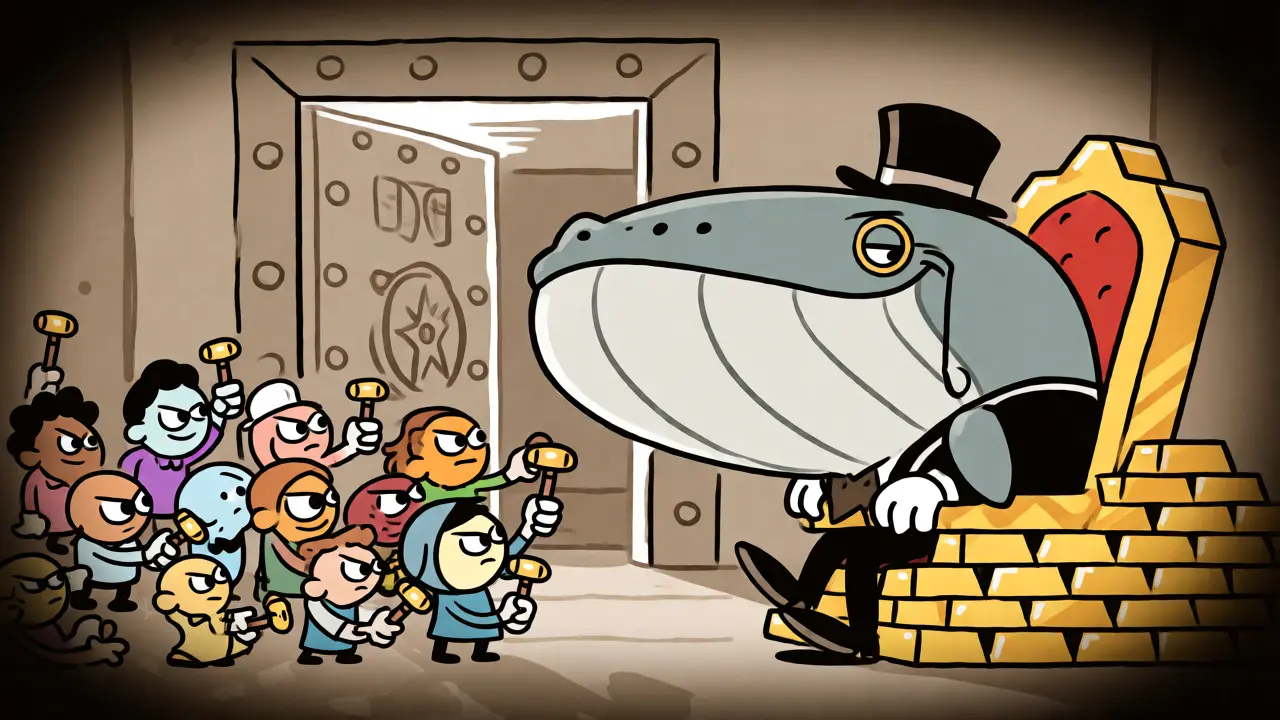
Founder Nick Johnson holds a significant portion of voting power, leading to accusations of centralization within a supposedly decentralized system. Critics argue that a small group of whales and foundations can sway votes on critical issues, such as how the ~$65 million endowment is managed. For investors, this is a risk factor: if governance becomes too centralized, the token’s value proposition as a democratic asset weakens.
However, proponents argue that experienced leadership is necessary for complex protocol upgrades. The balance between decentralization and efficiency remains a live debate, impacting community sentiment and token price volatility.
Should You Buy ENS? Investment Risks vs. Rewards
Is ENS a good investment? That depends on your thesis.
The Bull Case: ENS becomes the standard identity layer for all Ethereum-based applications. As adoption grows, demand for premium names increases, driving treasury revenue and potentially leading to mechanisms that capture more value for token holders (like buybacks or fee sharing, though none exist yet).
The Bear Case: ENS is a utility with no direct cash flow. Competitors like Unstoppable Domains offer one-time purchases rather than annual rents, appealing to some users. Additionally, if Ethereum gas fees remain high or if new L2s launch their own native naming systems, ENS could lose market share. Without automatic revenue distribution, the token relies entirely on speculative governance value.
Independent analyses suggest that while the protocol generates millions in fees, the disconnect between protocol success and token holder profit remains the biggest hurdle for institutional adoption.
Practical Tips for Users
If you're planning to get a .eth name, keep these best practices in mind:
- Verify Resolution: Always ensure your forward resolution (name → address) and reverse resolution (address → name) match. Mismatches can cause errors in wallets.
- Secure Your Keys: Losing your private key means losing your name forever. There is no "forgot password" button on the blockchain.
- Beware of Phishing: Scammers create fake ENS sites. Only interact with the official app.ens.domains. Never sign unknown transactions prompted by random airdrops.
- Consider Multi-Year Discounts: Registering for multiple years upfront offers discounts (e.g., 12.5% off for two years). This protects you against future price hikes and saves gas.
Frequently Asked Questions
Do I need to own ENS tokens to register a .eth domain?
No. You pay for registration and renewals using ETH. The ENS token is strictly for governance voting within the DAO. You can participate in the ecosystem fully without ever buying the token.
Is ENS the same as DNS?
They serve similar purposes but operate differently. DNS is centralized, managed by ICANN and registrars, and uses traditional web protocols. ENS is decentralized, stored on the Ethereum blockchain, and requires a compatible wallet or browser extension to resolve natively.
Can I sell my .eth domain?
Yes. ENS names are NFTs (Non-Fungible Tokens) compliant with the ERC-721 standard. You can list them on NFT marketplaces like OpenSea or Blur and transfer ownership freely, provided you cover the transaction gas fees.
What happens if I forget to renew my ENS name?
If you don't renew within the grace period (usually 90 days after expiration), the name enters a public auction phase. Anyone can then bid to claim it. Once auctioned, the original owner loses their rights unless they win the bid back.
Does ENS work on Bitcoin or other chains?
Primarily, ENS is an Ethereum-native service. However, through cross-chain bridges and specific integrations, some wallets allow resolving ENS names for non-Ethereum assets, but support varies widely compared to Ethereum-native interactions.