
Real estate has always been slow to move. Buying a house involves paperwork, banks, and months of waiting. Blockchain promised to fix this, but most projects stayed theoretical. Etherland (ELAND) is a utility cryptocurrency token that powers the Etherland ecosystem, focusing on real estate, NFTs, and decentralized governance. Launched in 2021 on the Ethereum blockchain, it aims to digitize property transactions and bridge physical assets with digital ownership.
If you are looking for the next Bitcoin or Ethereum, ELAND is not it. It is a niche tool designed for specific users: those interested in tokenized real estate, B2B marketplaces, and community-driven development. Before you buy or trade, you need to understand what actually happens when you hold an ELAND token.
The Core Purpose of Etherland
Etherland is not just a coin; it is part of a broader platform built on Ethereum technology. The project operates across several categories, including Real Estate, Collectibles & NFTs, Gaming, Mobile apps, and the Metaverse. However, its primary focus remains on bridging traditional real estate with blockchain efficiency.
The ELAND token serves two main functions:
- Medium of Exchange: It facilitates transactions within Etherland's B2B marketplaces like ProApp and Estatepedia. These platforms connect businesses in the property sector, allowing them to trade services, data, or fractional ownership without relying solely on traditional banking rails.
- Governance Rights: Holding ELAND gives you a voice in the Etherland DAO (Decentralized Autonomous Organization). This means token holders can vote on proposals that shape the project's future, from new feature rollouts to partnership decisions.
This dual utility distinguishes ELAND from pure meme coins or speculative assets. Its value is tied to the actual usage of the Etherland platform. If more businesses use ProApp for property deals, demand for ELAND could rise. If the platform stagnates, the token suffers.
Technical Specifications and Supply
Understanding the mechanics of a token is crucial for assessing its long-term viability. Here are the key technical details for Etherland as of late 2025:
| Attribute | Value |
|---|---|
| Total Supply | 41,024,063 ELAND |
| Circulating Supply | ~38.68 million ELAND |
| Blockchain | Ethereum (ERC-20) and BNB Smart Chain (BEP-20) |
| Token Type | Utility / Governance |
The fixed total supply creates a deflationary pressure mechanism if tokens are burned or locked through staking. Unlike inflationary tokens that print new coins indefinitely, ELAND has a hard cap. This scarcity model is common among serious utility tokens aiming for long-term store-of-value characteristics within their ecosystem.
Interestingly, ELAND exists on both Ethereum and the BNB Smart Chain. This multi-chain presence allows users to access the token via different liquidity pools, though it requires holding either ETH or WBNB to facilitate trades.

Market Performance and Volatility
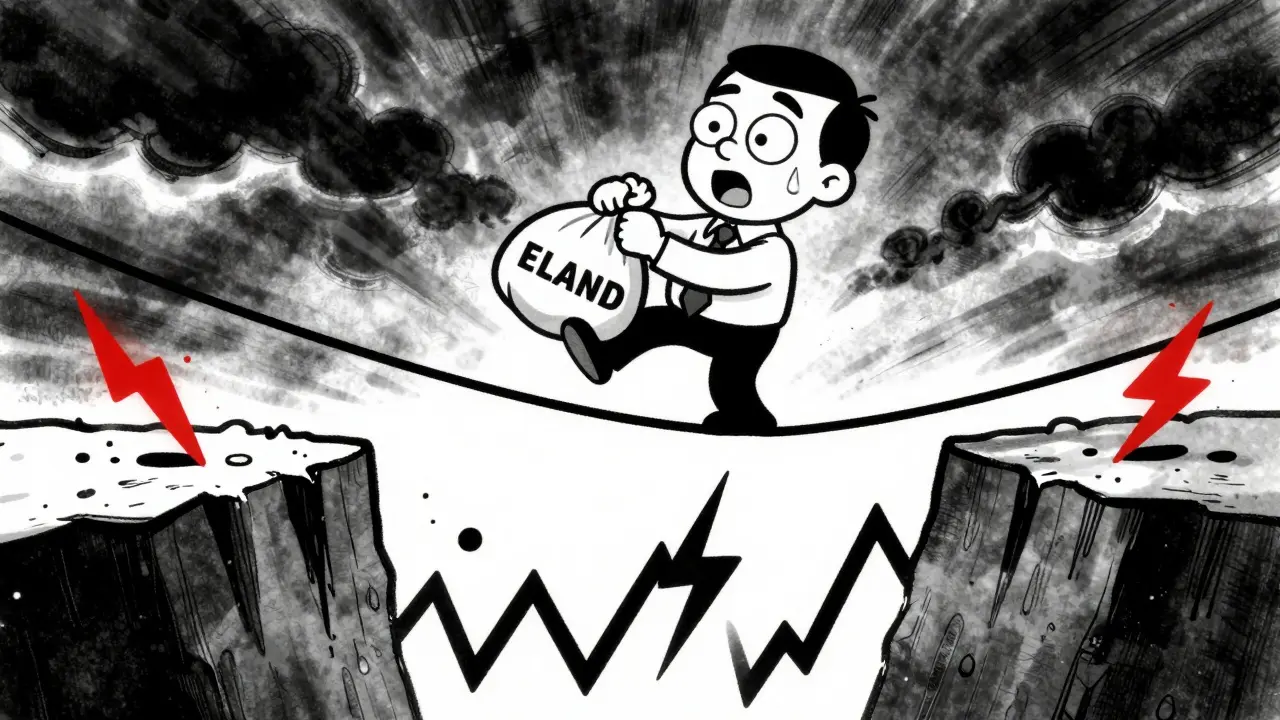
Let’s be honest: ELAND is a high-risk asset. Cryptocurrency markets are notoriously volatile, and small-cap tokens like ELAND experience extreme swings. As of mid-2025, prices have ranged between $0.0029 and $0.0047 depending on the exchange and timing.
Recent data shows conflicting signals. Some aggregators report sharp 24-hour gains exceeding 40%, while others show modest declines of 1-2%. This discrepancy often stems from low trading volume. When few people are buying or selling, a single large order can spike the price artificially, creating misleading charts.
Longer-term trends paint a starker picture. Year-over-year performance has seen declines of over 90% according to some data providers. This reflects the broader correction in the altcoin market and the specific challenges faced by niche real estate blockchain projects. Investors should view these numbers with caution-they indicate limited liquidity and potential difficulty in exiting positions quickly.
Trading occurs primarily on 21 active markets, mostly decentralized exchanges (DEXs). You won’t find ELAND listed on major centralized exchanges like Coinbase or Binance. This limits accessibility for retail investors who prefer simple fiat-to-crypto purchases.
How to Buy and Store ELAND
Acquiring Etherland requires basic knowledge of decentralized finance (DeFi). Since there are no direct fiat gateways, you must first obtain a base currency-either Ethereum (ETH) or Wrapped BNB (WBNB).
- Set Up a Wallet: Download a compatible wallet like MetaMask or Trust Wallet. Ensure you securely store your seed phrase offline.
- Fund Your Wallet: Purchase ETH or WBNB from a centralized exchange and transfer it to your wallet address.
- Connect to a DEX: Visit Uniswap (for Ethereum) or PancakeSwap (for BNB Chain). Connect your wallet.
- Swap Tokens: Paste the official ELAND contract address into the swap interface. Double-check the address to avoid scams. Set your slippage tolerance appropriately due to volatility.
- Confirm Transaction: Review the gas fees and confirm the swap. ELAND will appear in your wallet shortly after confirmation.
This process introduces friction for beginners. Unlike buying Bitcoin with a credit card, acquiring ELAND demands technical comfort with wallets, gas fees, and smart contracts. This barrier to entry naturally filters out casual speculators, leaving a core community of dedicated users.
Real-World Asset (RWA) Integration
The biggest promise behind Etherland is its integration with Real-World Assets (RWAs). RWAs involve tokenizing physical properties, such as apartment buildings or land plots, into digital shares. This allows fractional ownership, meaning you can own 1% of a commercial building instead of needing millions to buy the whole thing.
Etherland’s roadmap includes expanding these RWA solutions across multiple industries. By linking ELAND to tangible assets, the project attempts to ground its value in something beyond speculation. If successful, this could attract institutional investors seeking exposure to real estate without the hassle of property management.
However, regulatory hurdles remain significant. Governments worldwide are still defining rules for tokenized securities. Etherland must navigate complex legal landscapes to ensure compliance while maintaining decentralization. Progress here will determine whether ELAND remains a niche experiment or becomes a mainstream financial tool.
Risks and Considerations
No investment comes without risks, and ELAND presents several unique challenges:
- Liquidity Risk: Low trading volume means you might struggle to sell large amounts without crashing the price.
- Smart Contract Risk: Like all DeFi projects, Etherland relies on code. Bugs or exploits could lead to losses.
- Regulatory Uncertainty: Changes in crypto laws could impact the legality of tokenized real estate.
- Adoption Rate: The token’s value depends on businesses using the ProApp and Estatepedia platforms. Slow adoption limits utility.
Community feedback is also limited. There are fewer independent reviews and analyst reports compared to larger projects. This lack of transparency makes it harder to assess sentiment and trustworthiness.
Is Etherland (ELAND) a good investment?
ELAND is a high-risk, high-reward speculative asset. It is not suitable for conservative investors. Its value depends entirely on the adoption of the Etherland platform and the success of its real-world asset tokenization efforts. Only invest what you can afford to lose.
Where can I buy Etherland?
You cannot buy ELAND directly with fiat currency on major exchanges. You must use decentralized exchanges like Uniswap or PancakeSwap. First, acquire ETH or WBNB, then swap it for ELAND using the correct contract address.
What is the total supply of ELAND?
The total supply of Etherland is capped at 41,024,063 tokens. Approximately 38.68 million are currently in circulation, with the remainder likely held in reserve or locked for future incentives.
Does ELAND have staking rewards?
Staking features are planned as part of the project’s roadmap. Staking would allow holders to lock their tokens in exchange for rewards, potentially increasing demand and reducing circulating supply. Check the official Etherland website for current staking availability.
Why is ELAND price so volatile?
ELAND has low trading volume and a small market capitalization. In such markets, even small buy or sell orders can cause significant price swings. Additionally, discrepancies between different data aggregators can create confusion about the true market price.