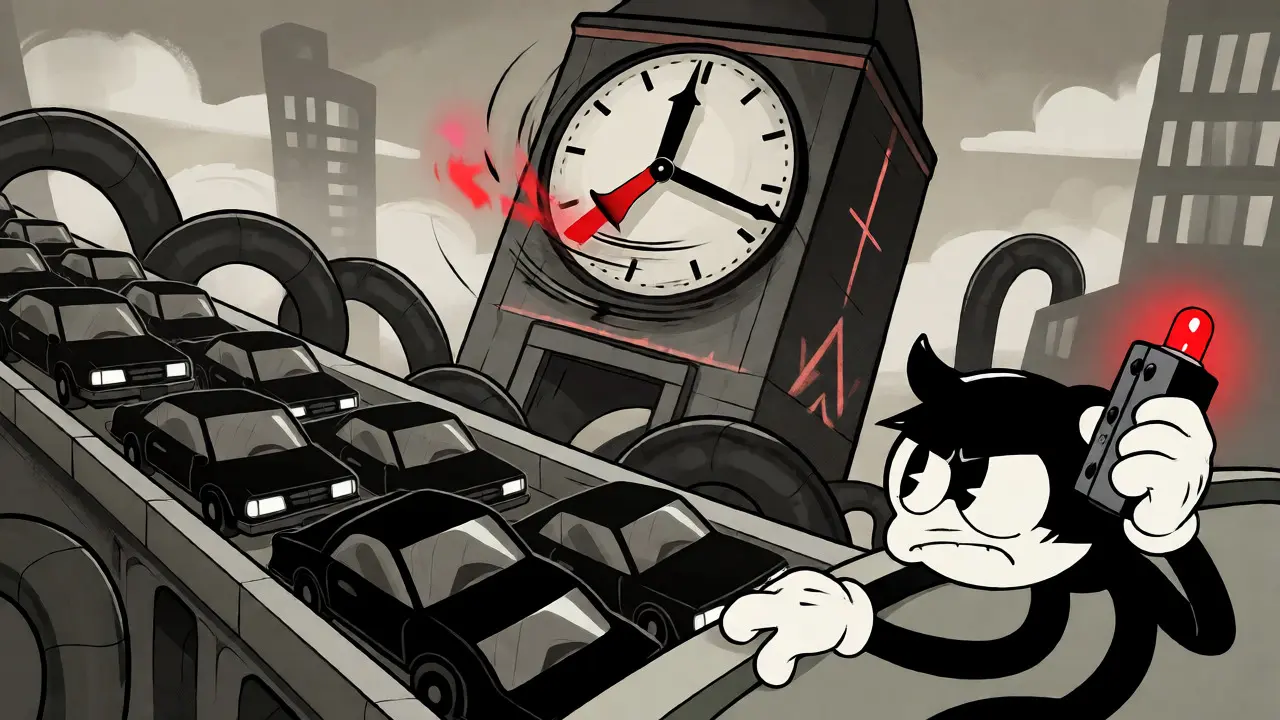
Imagine trying to send a text message during New Year's Eve. You hit send, but nothing happens because the network is clogged. That’s what using Ethereum feels like when gas fees spike to $50 for a simple swap. Harmony was built specifically to fix this problem. It is a layer one blockchain designed for high throughput and low latency through sharding technology. If you’ve seen the ticker ONE on your exchange and wondered if it’s worth your attention, you’re in the right place. We aren’t just looking at price charts here; we’re digging into whether Harmony actually delivers on its promise of speed without sacrificing security.
| Metric | Value | Context |
|---|---|---|
| Consensus Mechanism | Effective Proof-of-Stake (EPoS) | Prevents stake centralization better than standard PoS |
| Transaction Speed | ~2 seconds finality | Targeting ~1 second with Q1 2026 hardfork |
| Avg Transaction Fee | $0.0001 | Significantly cheaper than Ethereum ($1.50+) |
| Staking APY | 10-20% | Varies by validator participation |
| Total Supply | 13.3 Billion ONE | Fixed supply cap |
The Core Problem: Why We Needed Another Blockchain
Before Harmony existed, developers faced a brutal trade-off known as the "blockchain trilemma." You could have decentralization, security, or scalability-but rarely all three. Bitcoin is secure and decentralized but slow. Solana is fast but has struggled with stability. Harmony took a different approach by using sharding. Think of sharding like opening more checkout lanes at a grocery store. Instead of everyone waiting in one long line (like Ethereum’s mainnet), Harmony splits the network into four parallel chains, called shards. Each shard processes transactions simultaneously. This allows the network to handle about 2,000 transactions per second (TPS) right now, with a roadmap to scale up to 1 million TPS if needed.
This isn’t just theoretical math. For gamers or users making micropayments, this matters. On Ethereum, sending ten small payments might cost more in fees than the payments themselves. On Harmony, that same batch costs less than a penny. Dr. Stephen Tse, a former Google engineer, founded the project in 2019 with this specific user experience in mind. He wanted a chain where apps didn’t feel sluggish or expensive.
How Harmony Actually Works Under the Hood
You don’t need to be a computer scientist to understand why Harmony is faster, but knowing the mechanics helps you trust the tech. The secret sauce is Effective Proof-of-Stake (EPoS). In many proof-of-stake networks, the richest validators get to validate most blocks, which leads to centralization. EPoS prevents this by randomly distributing validation duties among stakers, ensuring no single entity dominates the network. This keeps Harmony decentralized while maintaining high speed.
Another critical feature is EVM compatibility. If you’re a developer who knows how to build on Ethereum, you can port your code to Harmony with minimal changes. This lowered the barrier to entry for projects wanting to move away from high gas fees. However, being compatible doesn’t mean identical. Harmony uses its own cross-shard communication protocol to ensure data moves smoothly between those four parallel lanes. Without this, sharded networks often struggle to talk to each other, creating isolated islands of liquidity. Harmony solved this early on, allowing assets to flow freely across shards.
The Elephant in the Room: The 2022 Hack
We can’t talk about Harmony without addressing the scar tissue. In June 2022, the Horizon Bridge-the tool used to move assets between Harmony and Ethereum-was hacked. Attackers stole roughly $100 million. This wasn’t a flaw in Harmony’s core blockchain; it was a vulnerability in the bridge smart contract’s key management. But in crypto, perception is reality. Trust evaporated overnight. Prices tanked, and many users fled to safer havens.
Has it recovered? Partially. The team refilled the treasury and hardened their security protocols. They also implemented stricter audits for future bridges. But the incident left a mark. Today, new users are wary. When you look at community sentiment on Reddit or Twitter, you’ll see a mix of optimism about the tech and caution about bridge security. If you plan to use Harmony for DeFi, always check if the bridge you’re using has been audited recently. Never assume safety just because the underlying chain is secure.
Where Harmony Fits in the 2026 Market
The landscape has changed since 2022. Competitors like Sui and Aptos emerged with even higher theoretical throughput. Solana remains a dominant force for high-frequency trading. So, does Harmony still have a niche? Yes, but it’s narrower. Harmony excels in areas where cost sensitivity is paramount. Gaming is a prime example. Developers building play-to-earn games need thousands of micro-transactions per session. Paying $0.0001 per action makes game economies viable. On Ethereum, those same actions would kill the player’s wallet balance.
Additionally, Harmony has found traction in supply chain logistics and renewable energy tracking. These industries need cheap, fast record-keeping but don’t require the massive speculative volume of meme coins. Partnerships with companies like TradeLens show that real-world utility is growing, albeit slowly. Adoption metrics remain modest compared to giants like Solana, with around 45,000 daily active addresses versus Solana’s millions. But for specific verticals, Harmony offers a compelling value proposition.
Investing in ONE: Risks and Rewards
If you’re thinking about buying ONE, consider the tokenomics. The total supply is fixed at 13.3 billion tokens. About 23.5% goes to staking rewards, which currently offer an attractive 10-20% APY. This is significantly higher than Ethereum’s staking yields, making it appealing for passive income seekers. However, high yield often comes with inflationary pressure or lower demand. You need to weigh the reward against the risk of price depreciation.
Liquidity is another factor. While Harmony ranks in the top 50 cryptocurrencies, executing large trades can cause slippage. One user reported a 15% price impact when selling 5 million ONE tokens. If you’re a whale, you need to split your orders. For retail investors, this isn’t a major issue, but it highlights that the market depth isn’t as robust as Bitcoin or Ethereum.
Price predictions for late 2026 vary wildly. Some analysts see potential for $0.05 if adoption spikes, while others predict stagnation around $0.003 due to fierce competition. There is no crystal ball. Your decision should hinge on whether you believe sharding will become the standard for Web3 gaming and IoT, or if newer Layer 1 solutions will render older sharded architectures obsolete.
Getting Started: How to Use Harmony
Ready to try it out? Here’s the quick path:
- Get a Wallet: MetaMask works perfectly with Harmony. Just add the Harmony Mainnet network manually or via Chainlist.
- Fund Your Account: Buy ONE on major exchanges like Binance or Coinbase. Withdraw to your wallet address.
- Bridge Assets (Optional): If you want to bring USDC from Ethereum, use a reputable bridge. Be cautious with amounts until you test with small sums.
- Explore Apps: Check out DeFi platforms like Viperswap for trading, or explore gaming dApps. Gas fees are negligible, so you can experiment freely.
Developer activity is lower than on Ethereum, with about 1,200 registered developers. This means fewer apps, but also less congestion. If you’re coding, expect a smooth transition if you already know Solidity. Documentation is rated highly, though tutorials on complex cross-chain interactions can still be sparse.
Frequently Asked Questions
Is Harmony safe after the 2022 hack?
The core blockchain remained secure during the 2022 incident; the breach occurred in the Horizon Bridge smart contract. Since then, Harmony has improved bridge security protocols and conducted additional audits. However, users should always exercise caution when bridging assets and prefer audited bridges.
Why is Harmony faster than Ethereum?
Harmony uses sharding to split the network into multiple parallel chains that process transactions simultaneously. Combined with Effective Proof-of-Stake consensus, this reduces finality time to approximately two seconds and lowers transaction fees to fractions of a cent.
Can I earn interest on my ONE tokens?
Yes, Harmony supports staking. Validators and delegators can earn annual percentage yields (APY) ranging from 10% to 20%, depending on network participation rates and validator performance. This is generally higher than yields on Ethereum or Bitcoin.
Does Harmony support Ethereum applications?
Yes, Harmony is fully EVM-compatible. This means developers can deploy Ethereum-based smart contracts on Harmony with minimal modifications, and users can interact with them using familiar tools like MetaMask.
What is the maximum supply of ONE tokens?
The total supply of Harmony (ONE) is capped at 13,316,442,432 tokens. Unlike some blockchains with infinite issuance, this fixed cap helps control inflation over the long term.