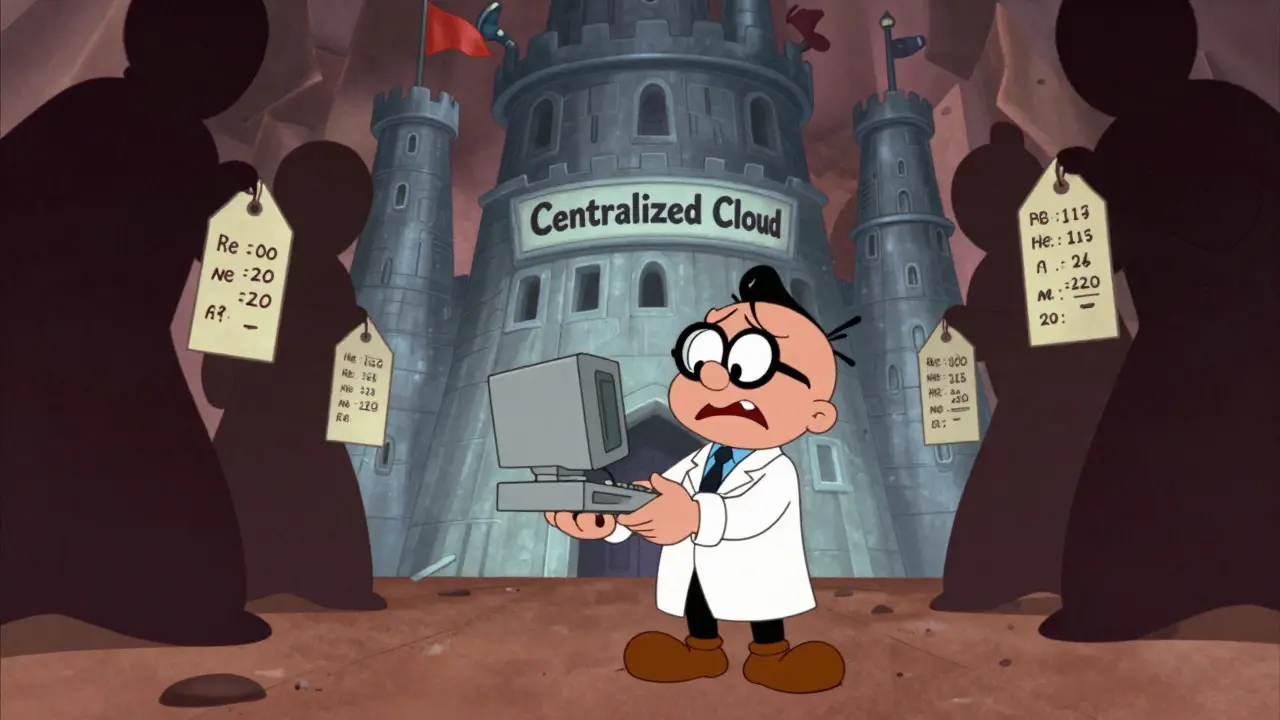
Artificial intelligence development has hit a wall. Not because we lack ideas, but because we lack the hardware to run them. High-end GPUs like the NVIDIA H100 are scarce, expensive, and often locked away in centralized data centers. This bottleneck is exactly what infraX (INFRA) aims to solve. It is not just another speculative coin; it is an attempt to build a decentralized marketplace for computing power.
If you have heard whispers about INFRA and wonder if it’s worth your attention, you are likely asking two things: What does this token actually do? And why is the price so volatile? This guide breaks down the mechanics of infraX, its role in the AI boom, and the real-world risks involved in holding or using this asset.
The Core Problem: The GPU Shortage
To understand infraX, you first need to understand the problem it tries to fix. Training large language models and rendering complex graphics requires massive amounts of graphical processing power. Traditional cloud providers like AWS, Google Cloud, and Azure dominate this space. They charge premium prices, offer opaque pricing structures, and require long-term contracts. For individual researchers, small startups, or hobbyists, these costs are prohibitive.
Meanwhile, millions of powerful GPUs sit idle in homes, offices, and smaller server racks around the world. These devices are underutilized, wasting potential energy and capital. infraX connects these two groups: those with idle hardware and those who desperately need it. By using blockchain technology, it creates a peer-to-peer network where GPU owners can rent out their machines directly to users.
How infraX Works: Four Pillars of Utility
The infraX platform operates on four main services that give the INFRA token actual utility beyond speculation. Understanding these pillars helps clarify whether the project has staying power.
- GPU Lending Facility: If you own a high-performance GPU, you can lend it through the infraX protocol. You earn INFRA tokens based on how long your hardware is used by others. This turns dormant assets into passive income streams without requiring technical expertise in mining cryptocurrencies.
- GPU Rental Facility: On the flip side, developers and AI researchers can rent GPUs at transparent, competitive rates. There are no middlemen inflating the cost. Users pay in INFRA tokens, ensuring liquidity within the ecosystem while accessing cutting-edge hardware like the NVIDIA H100.
- AI Request Endpoints: infraX provides pre-configured API endpoints for various AI tasks, such as image processing, video analysis, and natural language processing. Instead of setting up complex infrastructure, developers simply plug into these endpoints to integrate AI capabilities into their applications instantly.
- Staking Rewards: Holders can lock their INFRA tokens to support network security and stability. In return, they receive rewards denominated in Ethereum (ETH). This mechanism aligns the interests of token holders with the health of the broader Ethereum ecosystem.
Technical Architecture: Built on Ethereum
infraX is an ERC-20 token built on the Ethereum blockchain. This choice ensures compatibility with existing wallets, exchanges, and smart contract standards. The contract address for INFRA is 0xe9eccde9d26fcbb5e93f536cfc4510a7f46274f8, which allows anyone to verify transactions on Etherscan.
By leveraging Ethereum’s security, infraX benefits from decentralization and immutability. Every transaction-whether it’s a GPU rental agreement or a reward distribution-is recorded on the public ledger. This transparency builds trust between strangers in a decentralized market. You don’t have to trust a company’s word that your GPU was used; you can see the proof on-chain.
The total supply of INFRA is fixed at 1,000,000 tokens. With 100% of the supply already circulating, there is no inflationary pressure from new token issuance. This scarcity model is common among utility tokens designed to capture value from network usage rather than rely on endless minting.

Market Reality: Price Volatility and Discrepancies
Here is where things get tricky. As of May 7, 2026, the financial metrics for INFRA tell a story of extreme volatility and fragmented liquidity. Prices vary wildly depending on which exchange or tracker you consult.
| Source | Price (USD) | Market Cap (USD) | Notes |
|---|---|---|---|
| Coinbase | $4.19 | $4.20 Million | Reports 89% drop from ATH |
| Bitget | $12.40 | $12.4 Million | Higher liquidity depth reported |
| Etherscan | $0.0296 | $29,630 | On-chain valuation only |
| Crypto.com | $0.03 | N/A | Not currently tradable |
This discrepancy is a red flag for casual investors. Why does Coinbase show $4.19 while Etherscan shows pennies? It often comes down to liquidity pools. Some platforms may have outdated data, thin order books, or different calculation methods for market cap. The all-time high of $37.07 reached in April 2024 suggests a period of intense speculation that has since cooled significantly.
With only 3,951 unique addresses holding INFRA, the holder base is tiny compared to major cryptocurrencies. This limited distribution means the price can be easily manipulated by a few large holders. Trading volume remains modest, with daily volumes hovering around $13,000 to $19,000. While this indicates active niche interest, it also highlights illiquidity risks.
Risks and Challenges
No cryptocurrency is without risk, and infraX faces specific hurdles. First, competition is fierce. Established players like Render Network and Akash Network also focus on decentralized compute. Additionally, traditional cloud giants are constantly improving their offerings, making it harder for decentralized alternatives to gain mainstream enterprise adoption.
Second, regulatory uncertainty looms over all crypto projects. Platforms like Crypto.com have delisted or paused trading for INFRA, possibly due to internal compliance reviews or low trading volume. Lack of listing on major centralized exchanges limits accessibility for average users.
Third, the technological promise must translate into consistent uptime and performance. If GPU lenders fail to provide reliable connections, or if AI endpoints experience frequent downtime, user trust will erode quickly. The success of infraX depends entirely on delivering tangible computational value, not just token hype.

Who Should Care About INFRA?
infraX is not a one-size-fits-all investment. It appeals primarily to three groups:
- AI Developers and Researchers: Those needing affordable access to H100-class GPUs without signing multi-year contracts with AWS or Azure.
- Hardware Owners: Individuals or businesses with idle GPU capacity looking to monetize their assets passively.
- DeFi Enthusiasts: Investors interested in niche utility tokens tied to the intersection of AI and blockchain, willing to accept high volatility for potential upside.
If you fall outside these categories, INFRA might offer little practical value. For general portfolio diversification, more established assets with deeper liquidity and clearer regulatory status are usually safer choices.
Future Outlook
The long-term viability of infraX hinges on execution. Can it scale its network of GPU providers? Can it attract enough enterprise clients to stabilize demand? The integration of Ethereum staking rewards is a clever move to incentivize holding, but it ties the token’s fate closely to ETH’s performance.
As AI demands continue to grow throughout 2026 and beyond, decentralized compute solutions will become increasingly relevant. If infraX can overcome its current liquidity issues and expand its user base, it could carve out a sustainable niche. However, until then, it remains a high-risk, early-stage project best approached with caution and thorough due diligence.
Is INFRA a safe investment?
No, INFRA is considered a high-risk investment. It has a small market cap, limited liquidity, and significant price volatility. The token has dropped nearly 90% from its all-time high, indicating speculative behavior rather than stable growth. Always invest only what you can afford to lose.
Where can I buy INFRA tokens?
You can trade INFRA on platforms like Bitget and Coinbase, as well as through decentralized wallets like Phantom. Note that availability and pricing may vary significantly between exchanges. Always verify the contract address before transacting.
What is the maximum supply of INFRA?
The maximum supply of INFRA is fixed at 1,000,000 tokens. All tokens are currently in circulation, meaning there is no future inflation from new token creation.
How does infraX differ from other GPU rental platforms?
Unlike centralized cloud providers, infraX offers a decentralized peer-to-peer marketplace. It combines GPU lending, rental, AI API endpoints, and Ethereum-based staking rewards into a single ecosystem, aiming for greater transparency and lower costs.
Why is the price of INFRA different on various exchanges?
Price discrepancies arise due to differences in liquidity, trading volume, and data update frequencies across platforms. Thinly traded markets like INFRA can experience wide spreads between exchanges, reflecting fragmented market conditions.