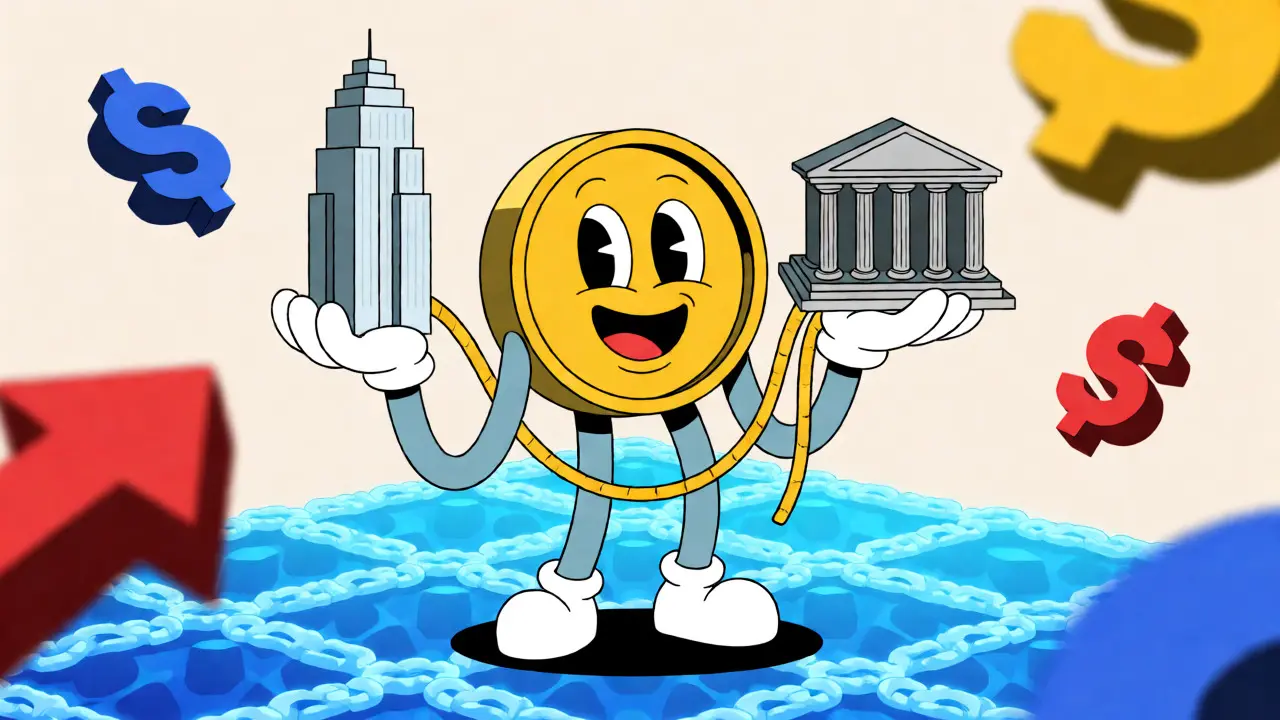
Imagine holding a piece of the US small-cap market in your digital wallet, trading it at 3 AM on a Tuesday, and having dividends automatically reinvested without touching a brokerage account. That is the promise behind IWMon, or the iShares Russell 2000 Tokenized ETF created by Ondo Finance. It’s not just another meme coin; it’s a bridge between Wall Street and Web3.
If you’ve been watching the Real-World Asset (RWA) narrative unfold, you know that putting stocks on the blockchain is the next big frontier. But what does IWMon actually do for you? Is it worth the risk given its tiny market cap? Let’s break down exactly how this token works, who holds it, and whether it solves any real problems for crypto investors.
The Core Concept: Bridging TradFi and DeFi
Ondo Finance is the issuer here. They are known for making institutional-grade finance accessible on-chain. Their latest move with IWMon is to tokenize the IWM ETF, which tracks the Russell 2000 index of small-cap US companies. Unlike a standard crypto asset that derives value from network usage or speculation, IWMon derives its value directly from the underlying equities held in the traditional IWM fund.
Here is the critical distinction: when you buy IWMon, you aren’t buying shares in an open-ended fund directly. You are buying a token that represents economic exposure to those shares. The structure is designed to mirror the performance of the Russell 2000. If the small-cap index goes up, the token price should go up. If it drops, so does your token. But there’s a twist-dividends. Traditional ETFs pay out dividends periodically. With IWMon, these are typically reinvested into the token itself, increasing your holdings over time rather than sending cash to a bank account.
This setup appeals to two types of people. First, crypto natives who want equity exposure without leaving their wallet ecosystem. Second, international investors who might find it difficult to access US markets through traditional brokers but can easily interact with Ethereum-based tokens.
How IWMon Works Under the Hood
Technically, IWMon is an ERC-20 token living on the Ethereum blockchain. This means it interacts seamlessly with most major wallets like MetaMask and exchanges that support ERC-20 standards. The magic happens in the legal wrapper. Ondo uses a special purpose vehicle (SPV) based in the British Virgin Islands. This SPV holds the actual IWM shares in custody.
Why the BVI? It allows them to operate under Regulation S exemptions from the US Securities Act. This is crucial because it lets non-US investors participate without triggering complex SEC registration requirements for every single holder. For US investors, eligibility often depends on being an "accredited investor," meaning you meet specific income or net worth thresholds. This regulatory nuance keeps the token compliant while keeping it accessible to global capital.
The contract address is public and verifiable, ensuring transparency. Anyone can check the on-chain data to see how many tokens exist and who holds them. This transparency is one of the few advantages tokenization has over traditional opaque custodial arrangements.

Market Metrics and Liquidity Reality Check
Let’s look at the numbers, because they tell a story of early-stage adoption. As of late 2025, IWMon had a market capitalization hovering around $1.9 million. Compare that to the billions traded daily in the traditional IWM ETF, and you see the scale difference immediately. The circulating supply was roughly 7,900 tokens. Every single token was in circulation; none were locked up by the team or reserved for future unlocks.
Liquidity is the elephant in the room. Trading volume varies wildly depending on where you look. Some aggregators report daily volumes under $200, while others show figures closer to $150,000. This discrepancy highlights the fragmentation in crypto liquidity. If you try to sell a large position, you might face significant slippage because there aren’t enough buyers on the other side at any given moment.
| Feature | IWMon (Tokenized) | IWM (Traditional ETF) |
|---|---|---|
| Trading Hours | 24/7 | Market Hours Only |
| Custody | User Wallet (Self-custody possible) | Brokerage Account |
| Dividend Handling | Auto-reinvested (typically) | Paid as Cash |
| Liquidity Depth | Low ($150k-$200k daily vol) | Extremely High (Billions daily) |
| Accessibility | Global (Reg S / Accredited) | US-focused (mostly) |
The volatility profile is also distinct. Because the underlying asset is the Russell 2000, IWMon inherits all the risks of small-cap equities. These stocks are more volatile than large caps like Apple or Microsoft. However, the token adds another layer of risk: smart contract risk and exchange liquidity risk. If the Ethereum network gets congested, your ability to trade quickly could be hampered, even if the stock market is calm.
Who Is Holding IWMon?
Adoption metrics reveal a concentrated user base. Data from RWA.xyz showed only about 18 unique holders at one point, though this number spiked recently. A 500% increase in holders sounds impressive, but going from 3 to 18 holders is still a niche community. This concentration poses a risk. If one or two whales decide to exit, the price could crash disproportionately compared to the broader market.
These early adopters are likely crypto-savvy investors testing the waters of RWAs. They are probably using platforms like Ondo’s own interface or specialized DEXs that list tokenized equities. The fact that major centralized exchanges haven’t fully integrated high-volume pairs for IWMon suggests that retail awareness is still low. Most trading happens through direct minting/redemption mechanisms or smaller secondary markets.
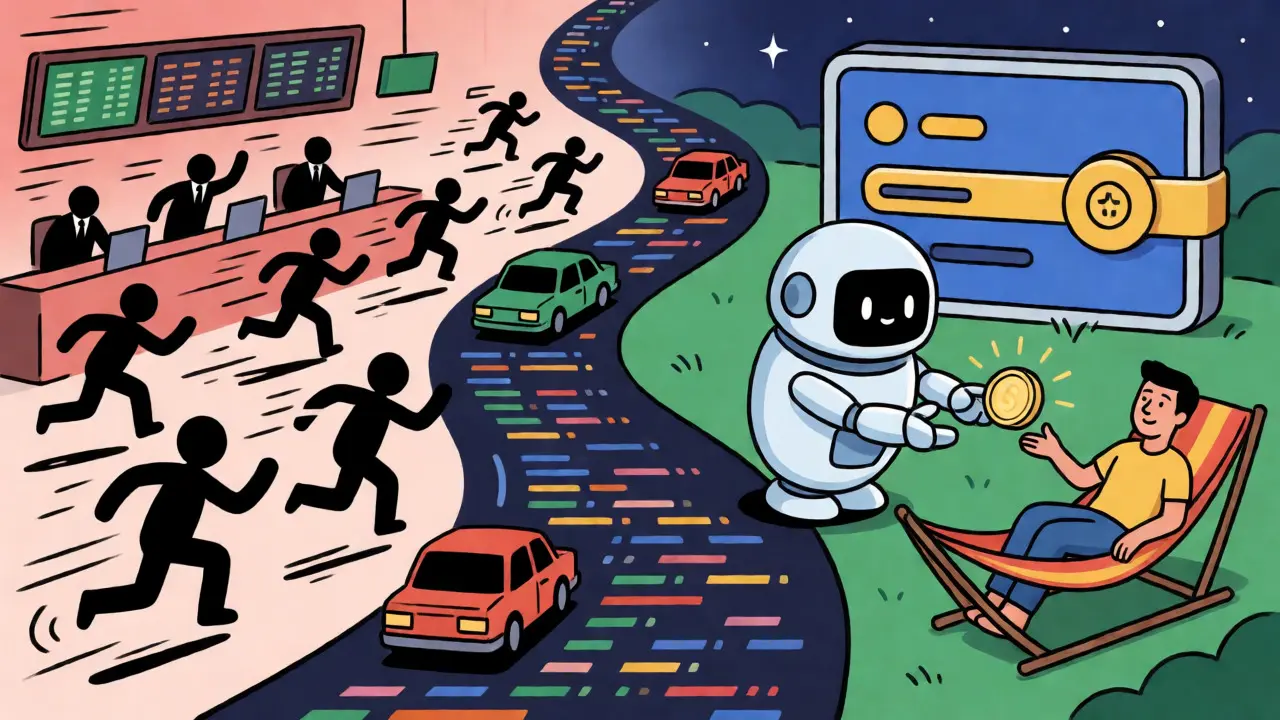
Risks You Cannot Ignore
Before you rush to buy, consider the downsides. First, counterparty risk. Even though you hold a token, the value relies on Ondo and its custodians properly managing the underlying shares. If the legal entity fails or faces regulatory hurdles, the token could lose its peg or become illiquid.
Second, regulatory uncertainty. While Regulation S provides a pathway today, the SEC continues to scrutinize tokenized securities. Future rulings could change how these tokens are taxed or who is allowed to hold them. US persons, in particular, need to verify their eligibility status before purchasing.
Third, technical complexity. Interacting with tokenized ETFs requires understanding gas fees, wallet security, and redemption processes. If you make a mistake sending tokens to the wrong address, recovery is difficult. This isn’t a set-it-and-forget-it investment for beginners unfamiliar with DeFi mechanics.
Is IWMon Right for Your Portfolio?
IWMon serves a specific job-to-be-done: providing 24/7 access to US small-cap exposure for global crypto investors. If you already live in the crypto ecosystem and want diversification beyond Bitcoin and Ethereum, this is a logical step. It removes the friction of opening a brokerage account and waiting for market hours.
However, if you are looking for deep liquidity and tight spreads, stick to traditional ETFs. The current market cap of under $2 million means you are an early adopter, not a mainstream participant. You are betting on the growth of the RWA sector as much as you are betting on the Russell 2000.
Keep an eye on Ondo’s expansion plans. They have launched other tokenized treasuries and funds. If they succeed in bringing massive institutional liquidity to these products, IWMon could benefit from improved infrastructure and tighter bid-ask spreads. Until then, treat it as a high-risk, high-potential utility play within your crypto allocation.
Can US citizens buy IWMon?
Generally, no, unless you qualify as an accredited investor. The token is issued under Regulation S, which primarily targets non-US investors. US residents often face restrictions due to securities laws, though some may access it through specific brokerages or if they meet wealth criteria.
Does IWMon pay dividends in cash?
No. Typically, dividends generated by the underlying Russell 2000 stocks are automatically reinvested into the token. This increases the number of tokens you hold or the NAV per token, compounding your returns rather than providing immediate cash flow.
What blockchain does IWMon use?
IWMon is an ERC-20 token that operates on the Ethereum blockchain. This ensures compatibility with most major crypto wallets and decentralized exchanges that support Ethereum assets.
Is IWMon safer than regular crypto coins?
It has different risks. It avoids the extreme volatility of speculative altcoins because it tracks a diversified stock index. However, it introduces smart contract risk, regulatory risk, and liquidity risk that traditional stocks do not have. It is not inherently "safer," just differently risky.
How do I redeem IWMon for cash?
Redemption usually involves selling the token on a supported exchange for stablecoins or fiat, or using Ondo’s redemption mechanism if available to your jurisdiction. Direct redemption for the underlying stock shares is often restricted to institutional partners.
Comments (18)
lea terrade
September 5, 2026 AT 10:01
the idea of holding stocks in my wallet is kinda cool but i dont trust the smart contracts enough yet
Rachel Leet
September 7, 2026 AT 07:37
You are missing the fundamental epistemological crisis at play here. By tokenizing a derivative of a derivative, you create an infinite regress of abstraction that detaches value from reality entirely.
Wall Street has always been about selling promises, but Web3 sells promises about promises. The 'bridge' metaphor is lazy; it's not a bridge, it's a hall of mirrors. You think you're buying equity, but you're buying a legal wrapper around a custodial arrangement around a digital representation of a fractional claim on a basket of failing small-cap companies.
The market cap tells the truth: $1.9 million is not adoption, it's noise. Real institutional money doesn't care about your ERC-20 standard if the underlying liquidity is fragmented across three obscure DEXs. Until the spread tightens to within 5 basis points, this is just a toy for people who want to feel like they're participating in finance without actually understanding how finance works.
John Lewis
September 8, 2026 AT 08:59
I appreciate the skepticism, but I think we need to look at the utility for non-US investors specifically. For someone in Europe or Asia who can't easily open a US brokerage account due to CRS reporting or tax complexities, IWMon offers a frictionless entry point.
Also, the auto-reinvestment of dividends is a feature, not a bug, for long-term holders who don't want to deal with cash drag. It compounds automatically within the token NAV.
The low volume is definitely a concern for large positions, but for retail-sized trades ($1k-$5k), the slippage is manageable on Ondo's own platform. It's not meant to replace VTI for day traders, but as a passive hold in a DeFi portfolio, it fills a specific gap.
Sophie Fitzgerald
September 9, 2026 AT 14:23
i agree with the expert above. its good for people outside the us. simple and easy to use.
Stephen McElreavy
September 10, 2026 AT 14:47
From a cultural standpoint, this represents a fascinating shift in global financial sovereignty. We are seeing the democratization of access where geographic borders no longer dictate investment eligibility.
However, one must consider the regulatory arbitrage involved. The BVI SPV structure is clever, yes, but it relies heavily on the continued leniency of global regulators. If the SEC decides to crack down on Reg S exemptions for tokenized securities, the entire premise could unravel overnight.
It’s a beautiful experiment, truly dramatic in its ambition, but let’s not pretend it’s ready for prime time. The jargon-heavy nature of the product itself-SPVs, Reg S, ERC-20 wrappers-is a barrier to true mass adoption. We are still talking to insiders here, not the grandmother trying to save for retirement.
Indu Nair
September 12, 2026 AT 13:39
Listen to me closely because this is the future! Stop being so negative and look at the growth potential! 🚀
We are building the infrastructure for tomorrow right now. Yes, the market cap is small, but that means the upside is MASSIVE. Every major tech stock started as a tiny niche product. Do you think Bitcoin was liquid in 2010? No!
Be aggressive in your investments and optimistic about the technology. This is not just a token, it is a movement. Get in early or get left behind. The world is changing and those who refuse to adapt will be left holding fiat currency while we trade equities on-chain. Believe in the process!
Dominic Jones
September 13, 2026 AT 23:11
I think there is a philosophical balance to strike here. On one hand, we have the promise of permissionless access, which is inherently inclusive. On the other hand, we have the technical barriers that exclude the very people who need access most.
The 'accredited investor' requirement for US persons creates a paradox. It claims to be decentralized, yet it replicates the gatekeeping of traditional finance. Is it truly inclusive if only the wealthy can participate safely?
We should mentor new users to understand that convenience often comes at the cost of security. The ease of trading at 3 AM is nice, but the risk of smart contract failure is real. Let us approach this with cautious optimism, recognizing both the potential and the pitfalls.
sri harni
September 14, 2026 AT 05:41
just watching from india. seems complicated for normal people.
Duncan Fisher
September 14, 2026 AT 20:15
As someone based in the UK, I find the accessibility argument quite compelling. Our brokers often charge hefty fees for US exposure, and the tax treatment can be messy.
That said, I share the concerns about counterparty risk. Holding a token that depends on a British Virgin Islands entity feels slightly precarious compared to holding shares directly through a regulated UK broker. But for smaller amounts, the convenience outweighs the hassle.
It’s a useful tool, provided you understand what you’re actually holding. Don’t treat it like cash; treat it like a complex derivative wrapped in code.
adam veikkanen
September 15, 2026 AT 16:07
Who is verifying the custody?
Eugene McGrath
September 16, 2026 AT 23:32
Another useless crypto gimmick designed to steal American wealth. 🇺🇸 We already have ETFs that work fine. Why do we need some offshore shell company wrapping our stocks in blockchain nonsense?
The liquidity is garbage. Try moving more than $10k without crashing the price. It’s a scam for people who hate their banks but love paying gas fees to rich whales. Keep your money in actual US markets, not in some digital monopoly money experiment.
Ted Thoroughgood
September 18, 2026 AT 15:49
hey guys, dont be so harsh! 😊 this is just starting out. give it some time to grow. its exciting stuff for sure. keep the faith fam 💪
Sasha Wilde
September 20, 2026 AT 00:58
Regulatory uncertainty = bagholder uncertainty. 📉 Simple as that. If the SEC sneezes, this thing catches pneumonia. 🤧💀
Ferdinand Friday
September 20, 2026 AT 05:40
Let us delve deeper into the ontological status of the asset itself. When we speak of 'ownership' in the context of IWMon, we are engaging in a semantic sleight of hand that obscures the true nature of the contractual relationship between the holder and the issuer.
The token is not a share; it is a claim on a claim. This layering introduces latency and opacity that the blockchain narrative often tries to hide under the guise of transparency. Yes, the ledger is public, but the legal enforceability of that ledger across jurisdictions remains untested in courtrooms worldwide.
Furthermore, the volatility of the Russell 2000 is amplified by the illiquidity of the token wrapper. In times of market stress, when everyone rushes for the exit, the bid-ask spread on IWMon could widen exponentially, trapping holders in a position where the theoretical price diverges wildly from the executable price.
We must also consider the opportunity cost of capital tied up in these experimental vehicles versus established index funds. While the novelty factor drives initial interest, sustainable adoption requires reliability, not just innovation. Until the redemption mechanism is seamless and instantaneous for all users regardless of geography, this remains a speculative instrument rather than a core portfolio holding.
Gabriela Gonzalez
September 20, 2026 AT 16:23
Love the energy here! 🔥 It’s awesome to see people discussing the details. Let’s support each other as we learn this new tech! 🌟
Jess Emmerson
September 21, 2026 AT 08:35
Just chiming in to say that for my use case (diversifying a crypto-heavy portfolio), it works great. I hold it alongside ETH and SOL. The fact that I can swap it instantly for stablecoins during a crash is worth the risk for me. Not for everyone, but definitely useful for degens like me who want equity exposure without leaving the chain.
Christian Pasamonte
September 21, 2026 AT 17:39
This analysis is superficially competent but fundamentally flawed in its assessment of risk-adjusted returns. The author fails to account for the correlation breakdown that occurs during high-volatility events, where the peg between the token and the underlying ETF may fail due to liquidity constraints in the secondary market.
Moreover, the comparison to traditional ETFs ignores the total expense ratio implications when accounting for gas fees and potential slippage, which effectively erodes the yield advantage of dividend reinvestment. The '24/7 trading' benefit is largely illusory for small-cap stocks, as the underlying market is closed for 16 hours a day, meaning any price discovery during off-hours is purely speculative and disconnected from fundamental valuation metrics.
Finally, the concentration risk among the 18 holders is understated. A single whale exit could trigger a cascade of liquidations in leveraged DeFi protocols that might use IWMon as collateral, leading to systemic contagion effects that are completely absent in traditional equity markets.
Kathy Siew
September 22, 2026 AT 01:15
oh wow, another tokenized everything. cant wait until my wallet gets hacked because i clicked the wrong link on a dex aggregator. sounds super safe and easy. totally not a headache waiting to happen. 🙄