Imagine a world where your digital wallet doesn't just hold assets for profit, but actually helps save an endangered species from extinction. That's the core idea behind New Born Haggis Pygmy Hippo is a community-driven cryptocurrency token built on the Solana blockchain that merges digital asset trading with wildlife conservation efforts. Known by its ticker HAGGIS, this project tries to move past the typical "moon shot" mentality of meme coins by tying its value to real-world environmental impact.
The Technical Backbone: Why Solana?
You can't run a global conservation movement on a network that charges $50 in fees for a single transaction. That's why HAGGIS lives on Solana is a high-performance blockchain known for its incredibly fast transaction speeds and minimal costs. By leveraging this infrastructure, HAGGIS ensures that when a community member makes a small donation or transfers tokens, the network fee doesn't eat up the contribution.
The technical setup relies on Smart Contracts is self-executing contracts with the terms of the agreement directly written into lines of code. These contracts handle the token's distribution and transactions automatically. Because it's decentralized, there is no single "bank" in the middle; everything is recorded on the ledger, providing a level of transparency that is crucial for projects claiming to fund charities.
How HAGGIS Actually Works
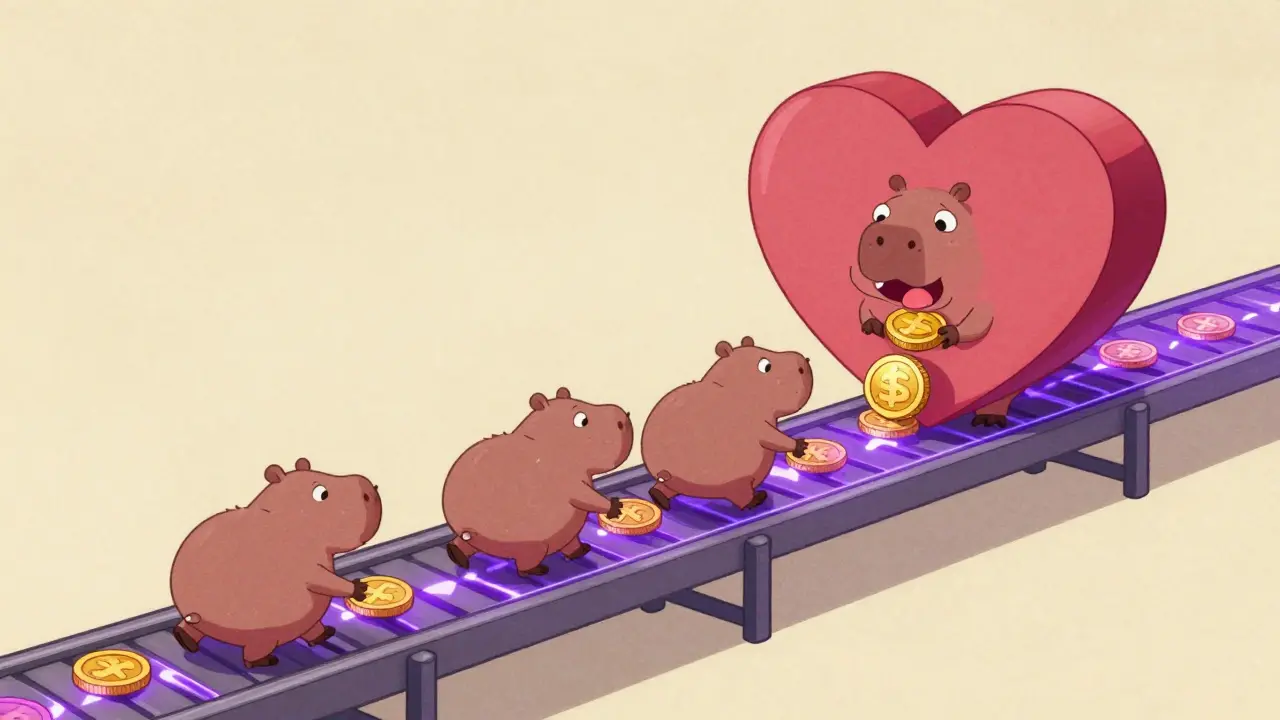
Unlike traditional stocks, New Born Haggis Pygmy Hippo isn't selling a product; it's building an ecosystem. The project operates as a mission-driven asset. This means a portion of the funds generated by the community and specific proceeds from the token's activity are funneled directly into animal conservation initiatives. It's a way to turn speculative trading into a tool for planetary health.
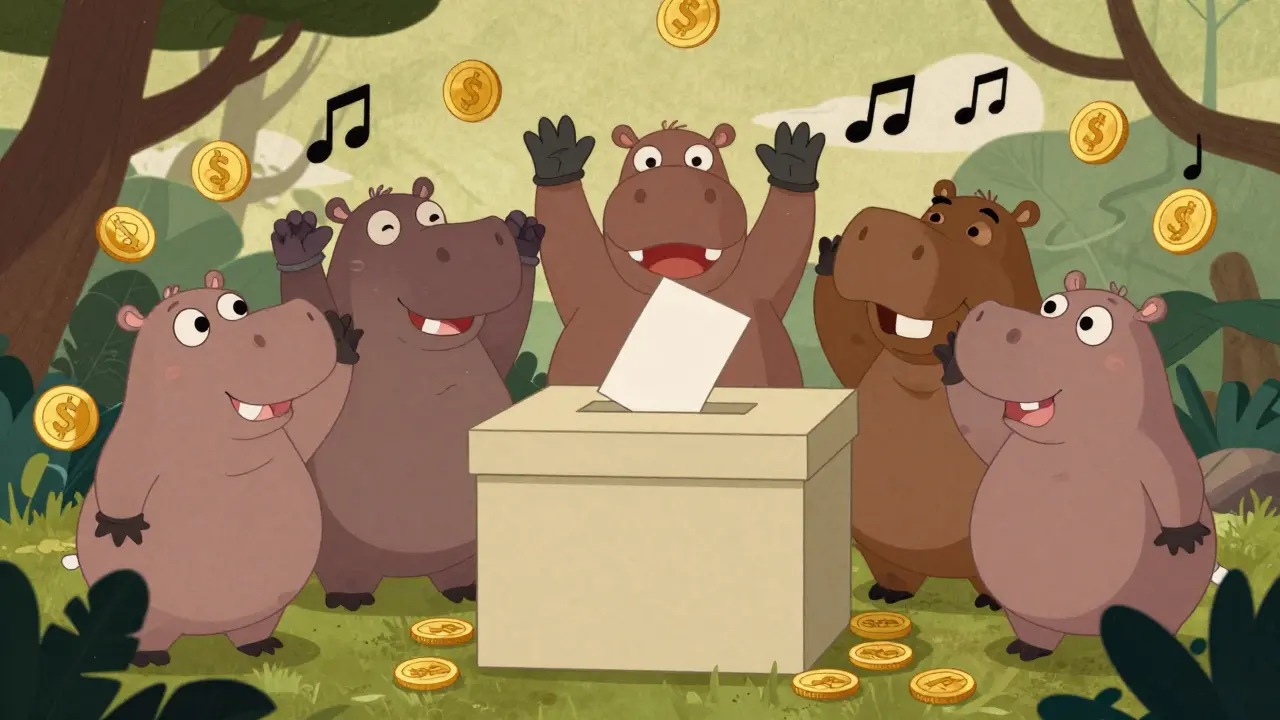
But it's not just about the money. The project focuses on creating a hub for people who care about endangered species. By holding HAGGIS, you aren't just an investor; you become part of a governance structure. This means token holders can vote on which conservation projects get funding or how the project should evolve. It's a direct democracy for wildlife protection.
| Attribute | Value |
|---|---|
| Current Price | $0.00004314 USD |
| Blockchain Network | Solana |
| 24-Hour Trading Volume | ~$150,420.23 USD |
| Primary Mission | Wildlife Conservation |
| Governance Model | Community Voting / Proposals |
The Strategy: Beyond the Speculation
Most new coins launch with a hype cycle and then disappear. HAGGIS is trying to avoid that by integrating with the broader DeFi is Decentralized Finance, which removes intermediaries from financial transactions using blockchain technology. The goal is to partner with other DeFi projects that prioritize the environment, creating a network of "green" digital assets.
Think of it as a niche market. While Bitcoin is digital gold and Ethereum is a global computer, HAGGIS is positioning itself as the "conservationist's coin." It targets a specific type of user: the one who wants their portfolio to reflect their values. If you're more interested in saving pygmy hippos than just watching a chart go up, this is where the project finds its strength.
Risks and Reality Checks
We have to be honest: investing in small-cap tokens is like hiking in a jungle without a map. While the mission is noble, there are several gaps in the public data that every user should notice. For instance, there isn't a widely available whitepaper that details the exact percentage of funds going to charity, nor is there a public list of the founding team's credentials.
Trading volume is also modest. With around $150,000 in daily movement, the coin is active but far from a mass-market asset. This means price swings can be violent. If a few large holders (whales) decide to sell, the price could drop significantly in minutes. This volatility is the trade-off for being an early adopter in a niche community project.
Is This Right For You?
Deciding whether to get involved with HAGGIS depends on what you're looking for. If you're chasing a 10,000% return overnight, you're gambling. But if you're looking for a project that attempts to bridge the gap between the high-tech world of Blockchain is a distributed ledger technology that records transactions across many computers and the tangible need to protect animals, then it's an interesting experiment.
Before jumping in, ask yourself: Do I trust the community governance? Am I okay with the volatility of the Solana ecosystem? Most importantly, am I contributing to the conservation goal or just hoping for a price pump? The most successful community coins are those where the users actually believe in the mission, not just the ticker symbol.
What makes HAGGIS different from other meme coins?
Unlike most meme coins that rely solely on social media hype, HAGGIS has a built-in mission to fund wildlife conservation. It uses a portion of its community funds to support animal protection initiatives, giving the token a real-world purpose beyond speculative trading.
How do I participate in the HAGGIS governance?
Governance is handled through community proposals and voting. If you hold the HAGGIS token, you typically gain the right to vote on how the project's conservation funds are allocated and what the future direction of the ecosystem will be.
Why is it built on Solana instead of Ethereum?
Solana was chosen because of its scalability and low fees. Since the project encourages small community contributions for conservation, paying high "gas fees" (like those often found on Ethereum) would make small donations impractical.
What are the risks of investing in HAGGIS?
The primary risks include high price volatility due to low market cap and a lack of detailed public documentation regarding the founding team and a formal roadmap. Investors should be aware that small-cap tokens are high-risk assets.
How does the project fund animal conservation?
The project allocates a portion of community-generated funds and specific proceeds toward conservation initiatives. The exact distribution is managed via the community's decentralized governance model, where holders vote on the best causes to support.
Comments (18)
Benjamin Forg
April 25, 2026 AT 20:43
just another way for them to track our wallets and pretend they care about nature while the real players hide the gold in plain sight no one thinks about who actually owns the nodes
Hannah Rubia
April 27, 2026 AT 14:10
The integration of the Solana blockchain is a prudent technical choice given the necessity for high throughput and minimal transaction costs in a donation-based model. However, for the long-term sustainability of such an initiative, the establishment of a transparent, legally binding trust for the conservation funds would be highly advisable to ensure institutional accountability.
Eric Raines
April 28, 2026 AT 23:13
Everyone's acting like this is some revolution but it's literally just a token on Solana. I've seen a thousand of these 'charity' coins and 99% of them just rug after the devs buy their Lambos. Also, the 'governance' part is a joke because a few whales will always dictate where the money goes anyway. Basic game theory, people.
Ellie Drews
April 29, 2026 AT 12:12
I totally get where the skeptics are coming from, but maybe we can give them a chance to actually do some good! It's a small-cap risk, but the idea is sweet. Let's see how they handle the first few voting rounds before judging too harshly.
Tara Aman
April 30, 2026 AT 09:25
Omg yes! I am so here for this! Let's all get in on this and push it to the moon for the hippos! 🚀 We can actually make a difference if we all just believe in the vision and keep the energy high!
debashish sahu
April 30, 2026 AT 22:37
It is interesting to see such global connectivity through a digital asset. In my experience, community-led projects often bring a unique sense of shared purpose that transcends borders.
Matthew Morse
May 1, 2026 AT 10:13
no whitepaper is a red flag as big as a barn door
Lisa Camp
May 2, 2026 AT 19:41
STOP BEING SO HESITANT! If you want to save the planet you have to take risks! Get your tokens and start voting now or just keep complaining from the sidelines!
Sarah Ingrams
May 3, 2026 AT 21:08
it really is a gamble but the idea of helping animals is just so sweet
Doc Coyle
May 4, 2026 AT 23:31
It's quite simple. People want to feel good about their greed. By calling it a conservation coin, they can gamble on a volatile asset while pretending they are saints. It is a moral failure to trust a project with no listed team.
Kyle Bush
May 5, 2026 AT 21:55
USA all the way baby! 🇺🇸 Love seeing this kind of innovation! Who cares about the roadmap when you have the hype! 🚀💰🔥 Let's get this bread and save some hippos at the same time! 🇺🇸🇺🇸🇺🇸
Caiaphas Konkol
May 7, 2026 AT 02:35
The sheer audacity to present a lack of documentation as a 'reality check' is quaint. One must wonder which shadow cabinet is actually orchestrating the fund flow. It's likely a front for something far more esoteric than pygmy hippos.
Gloris Young
May 8, 2026 AT 01:42
Love the vibe of this. Very chill way to give back.
Liz Ariza
May 9, 2026 AT 16:07
This is just sparkling with potential! ✨ I love how it turns trading into a little adventure for a great cause! 🐾 Stay gold everyone! 🌈
Yvette P
May 9, 2026 AT 21:05
Oh please, as if a few SOL-based smart contracts are going to solve biodiversity loss. I'm sure the 'governance' is just a bunch of teenagers in a Discord channel arguing over which zoo to fund while the liquidity pool is thinner than a piece of wet tissue paper. It's a classic example of leveraging the 'green-washing' narrative to attract retail liquidity into a high-slippage environment. I've seen this playbook a dozen times in the DeFi space where the 'impact' is basically a rounding error compared to the developer's take. Truly groundbreaking stuff if you've never seen a pump-and-dump with a cute animal mascot before.
Jason M
May 10, 2026 AT 05:43
LISTEN! We have an opportunity here to CHANGE THE WORLD! Imagine the sheer magnitude of the impact if we unite as one community! I will guide anyone who feels lost in the technical side of Solana-we are not just buying coins, we are buying a FUTURE where nature thrives!
jill huyo-a
May 12, 2026 AT 04:04
I'm curious if we could find a way to collaborate with existing wildlife NGOs to make the funds more effective. It would be great to have a bridge between the crypto world and established conservationists.
Jennifer Taylor
May 13, 2026 AT 13:26
They are hiding the team because they are working for the New World Order. Pygmy hippos are just a cover. Don't trust the blockchain, it's a trap to track your soul.