Most people hear "Salad" and think of a salad bowl. But in crypto, Salad (SALD) is a project trying to turn your idle computer into a money-making tool - no farming required.
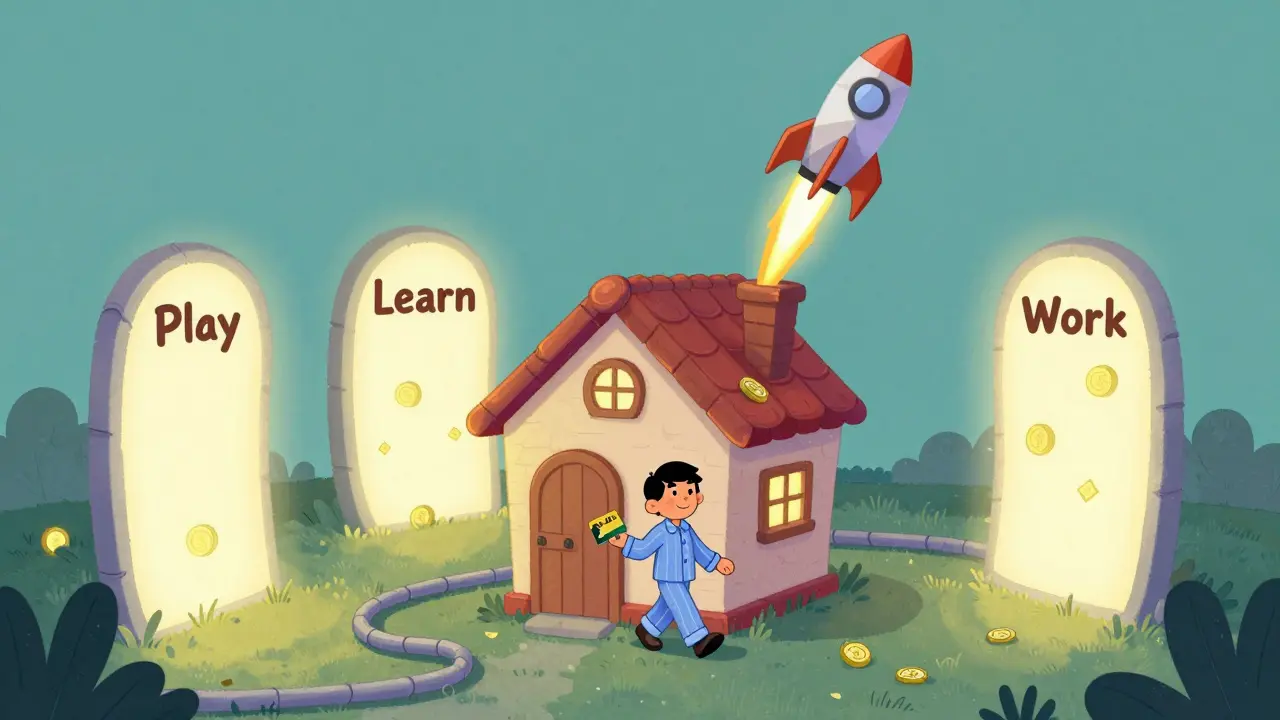
Launched in 2021, Salad isn’t just another altcoin. It’s a Web3 ecosystem built around three real-world activities: playing games, learning blockchain skills, and doing small online jobs. The goal? Let anyone earn cryptocurrency just by using their device normally. No fancy hardware. No mining rigs. Just your laptop or phone.
The core of Salad is the SALD token, an ERC-20 token on Ethereum. Its contract address is 0x5582a479f0c403e207d2578963ccef5d03ba636f. You can’t buy it at Walmart, but you can trade it on Uniswap V2 using the SALD/WETH pair. If you use MetaMask, you can add SALD manually using that address - and start using it inside Salad’s platforms.
How Salad Actually Works: Play, Learn, Work
Salad doesn’t rely on hype. It’s built on three concrete platforms:
- Arcaden.com - This is the Play2Earn side. You play browser-based games, complete challenges, and earn SALD tokens. No downloading. Just open the site, log in, and play. Games are simple, like puzzle solvers or memory matchers - not AAA titles, but enough to keep you engaged while earning.
- Apollo Academy - The Learn2Earn platform. Here, you watch short videos, take quizzes, and complete lessons on Web3 topics: wallets, DeFi, NFTs, smart contracts. Each module unlocks SALD rewards. It’s like Duolingo for crypto beginners.
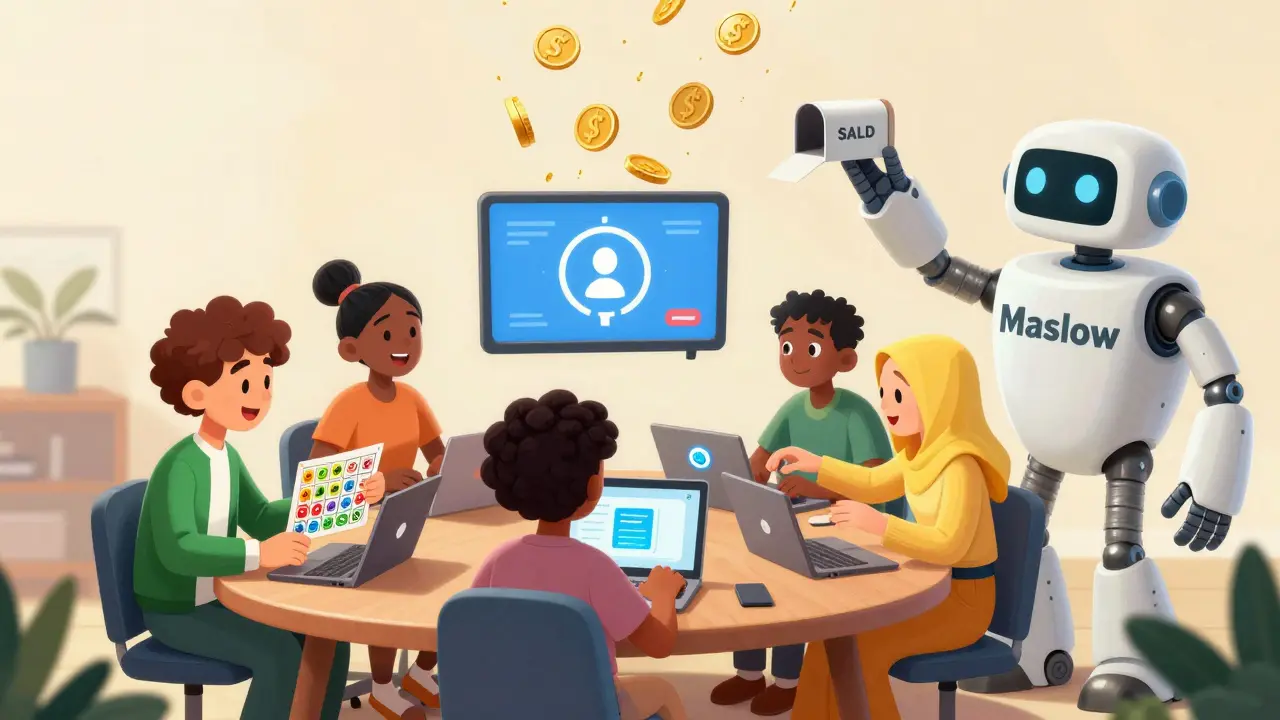
- Maslow - This is the Work2Earn part. Salad connects users with microtasks: data entry, surveys, testing dApps, translating content. You get paid in SALD. Think of it as a decentralized Upwork, but focused on Web3 tasks.
These aren’t gimmicks. They’re functional tools. People in Nigeria, Indonesia, and Ukraine use them to earn small amounts of crypto daily - money that can be converted to local currency or saved as a hedge against inflation.
What Is the SALD Token Used For?
It’s not just a reward. SALD has three jobs:
- Medium of exchange - Use it inside Salad’s platforms to unlock premium features, buy game boosts, or pay for course upgrades.
- Staking rewards - You can lock up SALD tokens to earn more. The longer you stake, the higher your yield. It’s not high APY like some DeFi projects, but it’s steady.
- Governance - Holders can vote on proposals: new game integrations, fee structures, which educational topics to add next. This makes users stakeholders, not just users.
There’s no central team making all the decisions. The roadmap is shaped by the community. That’s the Web3 promise - and Salad is one of the few projects actually doing it.
Token Supply and Market Stats (March 2026)
Salad’s tokenomics are simple:
- Total supply: 1,680,000,000 SALD
- Circulating supply: ~123 million (as of March 2026)
- Price: Around $0.000213-$0.000242
- Market cap: ~$200,000
- 24-hour volume: $16K-$485K (discrepancies exist across exchanges)
That’s tiny compared to Bitcoin or Ethereum. Salad doesn’t rank in the top 10,000 coins by market cap - it’s hovering around #12,600 on CoinGecko. But here’s the twist: it’s not trying to be a top-10 coin. It’s trying to be a useful tool.
Its all-time high was $0.1322 in 2022. That’s a 99.8% drop since then. Some call it dead. Others call it a reset. The truth? It’s still alive. The ecosystem is growing slowly. User activity on Arcaden and Apollo Academy has increased 37% since late 2025.
Can You Mine Salad?
Yes - and this is where it gets interesting.
Salad also runs a background mining app (available on Windows, macOS, and Android). It doesn’t mine Bitcoin. Instead, it uses your idle CPU or GPU to help validate transactions for partner Web3 projects. In return, you earn SALD tokens.
It’s not like Bitcoin mining, where you need $10,000 rigs. This runs quietly in the background. On a standard laptop, you might earn 5-15 SALD per day. That’s less than a penny. But over time, it adds up - especially if you run it on multiple devices.
Important note: This feature is optional. You don’t need to mine to earn. The Play, Learn, and Work platforms work just fine without it.
Where to Buy SALD
You won’t find SALD on Coinbase or Binance. It’s too small. But you can buy it on:
- Uniswap V2 - The most popular place. Trade ETH for SALD. Requires a wallet like MetaMask.
- KuCoin - Occasionally lists SALD, but not always active.
- Gate.io - Sometimes offers trading pairs like SALD/USDT.
Don’t use centralized exchanges unless you’re sure SALD is listed. Always check the contract address before sending funds. Scammers create fake tokens with similar names. The real one is 0x5582a479f0c403e207d2578963ccef5d03ba636f.
Is Salad Worth It in 2026?
Here’s the blunt truth: If you’re looking for a quick 10x return, Salad isn’t it. The market cap is too small. Volume is too low. It’s not a trading coin.
But if you’re new to Web3? Want to learn without paying for courses? Or just want to earn a few dollars a month by playing games or doing small tasks? Then Salad is one of the few projects that actually delivers.
It’s not a get-rich-quick scheme. It’s a get-started-quietly scheme.
Investors like Multicoin Capital and Polygon backed it early. That’s a sign they believed in the model - not the price. And the ecosystem keeps growing. New games are added. More educational modules launch. More microtasks appear.
The real value isn’t in the token price. It’s in the access. Salad gives people without capital a way into Web3 - not as investors, but as participants.
What’s Next for Salad?
The team is working on:
- Integrating with Polygon’s zkEVM for lower fees
- Adding mobile app support for Maslow
- Partnering with indie game studios to bring more Play2Earn titles
- Launching a SALD debit card for real-world spending
None of this is guaranteed. But the roadmap is public. Updates are posted weekly. That transparency is rare in crypto.
Salad isn’t trying to replace Bitcoin. It’s trying to give everyday people a reason to use blockchain - not just speculate on it.
Is Salad (SALD) a scam?
No, Salad isn’t a scam. It’s a legitimate Web3 project with real platforms, public code, and transparent team members. The SALD token is on Ethereum, and the contract address is publicly verifiable. However, it’s a very small project with low liquidity. Don’t invest more than you can afford to lose. The price has dropped 99% from its peak - so treat it as a utility token, not an investment.
Can I earn real money with Salad?
Yes - but not a lot. Most users earn between $1 and $5 per month by combining Play, Learn, and Work features. Mining adds another $1-$3. It’s not enough to live on, but it’s real income with zero upfront cost. In countries with high inflation or low wages, this can be meaningful.
Do I need to mine to use Salad?
No. Mining is optional. You can earn SALD just by playing games on Arcaden, completing lessons on Apollo Academy, or doing tasks on Maslow. Many users never use the mining feature at all.
Where can I store SALD tokens?
SALD is an ERC-20 token, so any wallet that supports Ethereum works. MetaMask, Trust Wallet, and Coinbase Wallet all support it. Just add the contract address 0x5582a479f0c403e207d2578963ccef5d03ba636f manually. Never send SALD to a non-Ethereum wallet like Binance Chain or Solana - you’ll lose it.
Why is Salad’s price so low?
Salad’s price dropped because it never gained mass adoption. The 2022 bull run lifted many tokens, but Salad’s utility-focused model didn’t attract speculative traders. After the crash, most investors left. The price reflects low demand, not lack of effort. The ecosystem is still active, but it’s growing slowly - and that’s okay. It’s built for users, not traders.