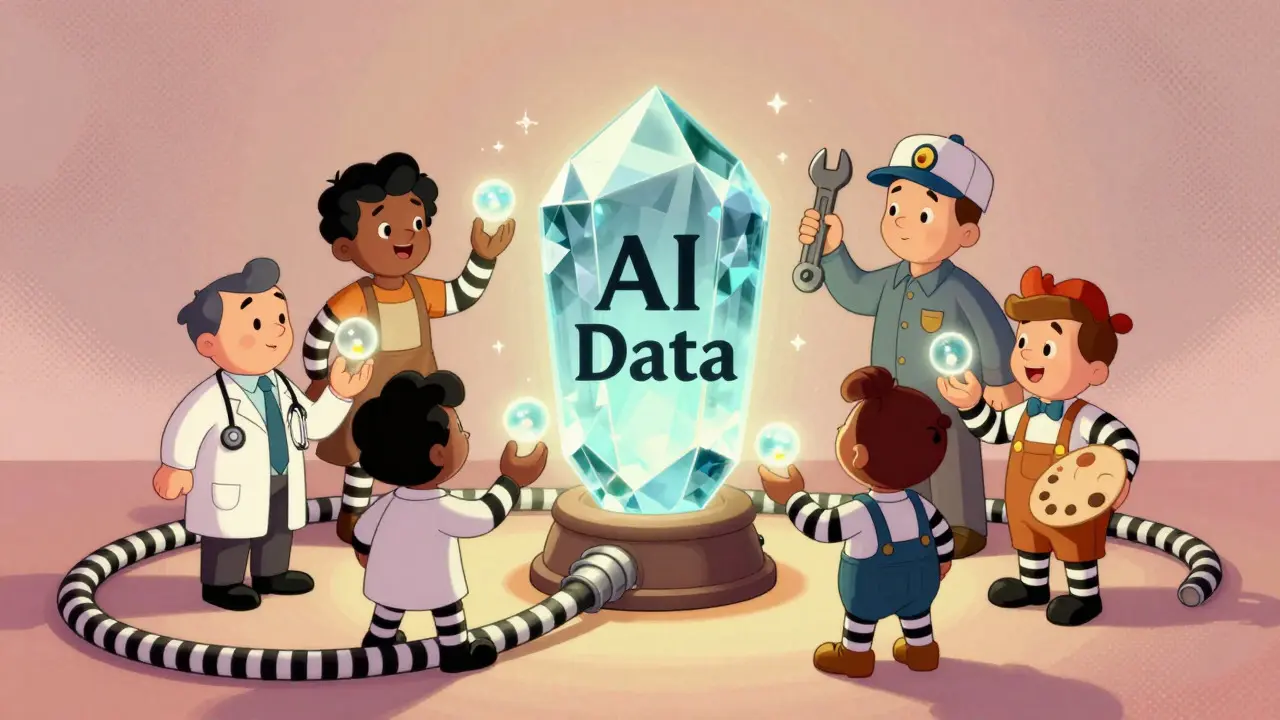
Artificial intelligence models are only as good as the data they are trained on. For years, this data came from centralized tech giants or low-paid gig workers on fragmented platforms. Sapien is a decentralized protocol that changes this dynamic by turning crowdsourced human expertise into verifiable, high-quality training data for AI systems. Instead of relying on opaque corporate pipelines, Sapien uses blockchain incentives to connect millions of contributors-doctors, engineers, artists, and students-with enterprises needing trusted data.
If you have seen the ticker SAPIEN popping up on charts, you might be wondering what drives its value. It isn't just another meme coin. It is a utility token powering a specific infrastructure: an open network where human knowledge is sourced at scale and validated through an on-chain Proof of Quality system. This guide breaks down how the protocol works, the role of the token, and why it matters in the current AI landscape.
How Sapien Solves the AI Data Problem
The biggest bottleneck in advanced AI development is not compute power; it is clean, accurate data. Large language models and computer vision systems require massive datasets labeled with precision. Traditionally, companies hired internal teams or used services like Amazon Mechanical Turk. The problem? Quality control is hard to enforce, and workers often lack skin in the game.
Sapien addresses this by creating a decentralized Web3 data foundry. Here is the core workflow:
- Mission Assignment: Enterprises post tasks such as labeling images, verifying text outputs, or responding to complex prompts.
- Human Contribution: Contributors worldwide complete these microtasks using their specific expertise.
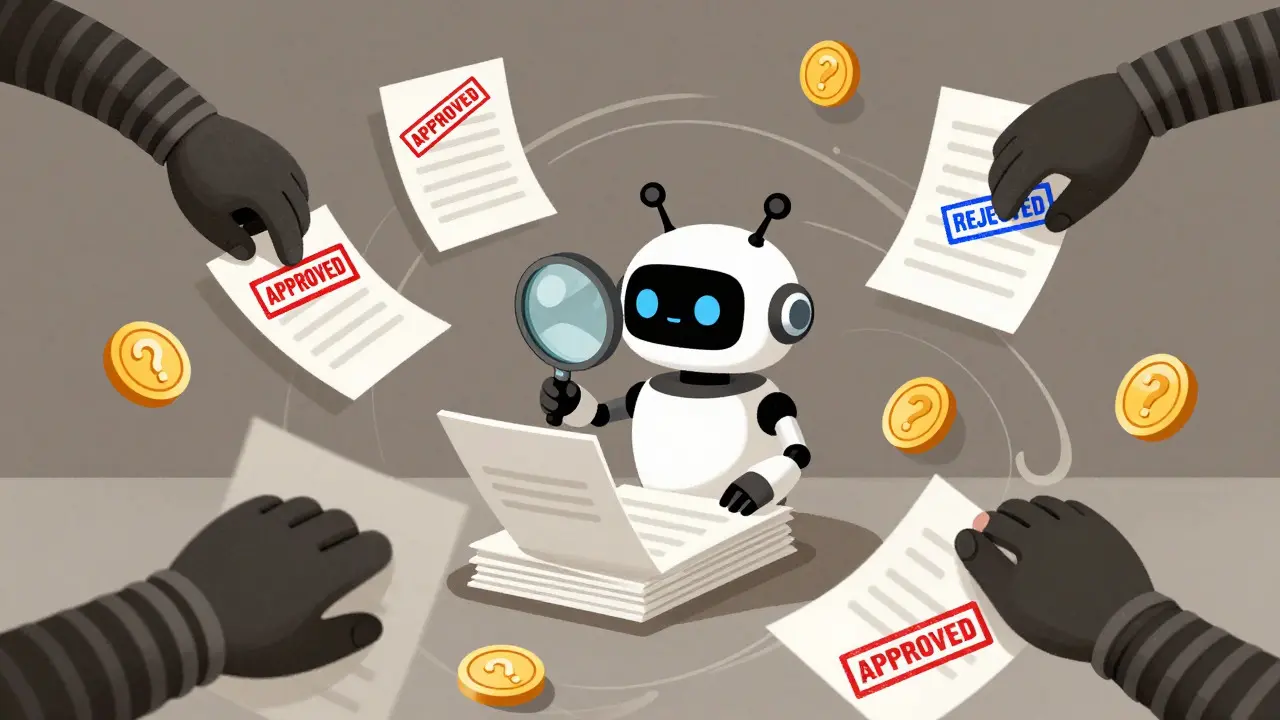
- Peer Validation: Other users review the work. This peer-to-peer check ensures accuracy before the data is finalized.
- On-Chain Verification: Validated data is recorded on the blockchain, creating a permanent proof of quality.
This structure transforms fragmented online gig work into a sustainable, reputation-based profession. You aren't just clicking buttons for pennies; you are building a verified track record of expertise that can unlock higher-value tasks over time.
The Role of the SAPIEN Token
The SAPIEN token is the fuel that keeps this engine running. It is an ERC-20 asset deployed on the Base network, a Layer-2 scaling solution built on Ethereum. Being on Base means transactions are fast and fees are negligible compared to the main Ethereum chain, which is crucial for a platform handling millions of micro-transactions.
Here is exactly what you use the token for:
- Staking for Access: To participate in high-value missions, you must stake SAPIEN tokens. This signals your commitment to quality.
- Earning Rewards: When you complete tasks accurately and receive positive peer validation, you earn more SAPIEN tokens.
- Slashing Mechanisms: If you submit low-quality work or spam, the protocol slashes (confiscates) a portion of your staked tokens. This aligns incentives perfectly-bad work costs you money.
- Reputation Building: Your activity builds a reputation score. Higher reputation unlocks better tasks and potentially higher rewards.
This closed-loop incentive system mitigates common crowdsourcing issues like adversarial data poisoning or lazy labeling. Because your financial stake is tied to your output quality, the data produced is inherently more reliable for AI developers.
Tokenomics: Supply and Distribution
Understanding the economics of a crypto project is vital before investing or participating. Sapien has a transparent and fixed supply model designed to prevent inflationary pressure over time.
| Attribute | Value |
|---|---|
| Total Max Supply | 1,000,000,000 (1 Billion) |
| Circulating Supply | ~250,000,000 (25%) |
| Blockchain | Base (Ethereum L2) |
| Token Standard | ERC-20 |
As of mid-2026, approximately 25% of the total supply is in circulation. The remaining tokens are likely reserved for future ecosystem growth, team vesting, or treasury management, though specific allocation details beyond the cap are not heavily publicized in initial listings. The hard cap of 1 billion tokens creates scarcity, assuming demand for AI data services continues to grow.
Market Performance and Trading
SAPIEN is actively traded on major cryptocurrency exchanges including Binance, KuCoin, and Crypto.com. Like most assets in the AI and data sectors, it experiences volatility driven by broader market trends and developments in the artificial intelligence industry.
In August 2026, prices have fluctuated between $0.07 and $0.12 depending on the exchange and liquidity conditions. Daily trading volumes regularly exceed $1.5 million, indicating strong retail interest. Keep in mind that price discrepancies exist between trackers due to different circulating supply calculations. Always check the live order book on your preferred exchange rather than relying solely on aggregated average prices.
For traders, SAPIEN falls under the "Data Management and AI" sector. Its performance often correlates with other AI-focused tokens, but its unique position as a data infrastructure play rather than a model-building tool gives it distinct risk/reward characteristics.

Getting Started with Sapien
If you want to contribute data or invest in the protocol, here is the practical path forward:
- Set Up a Wallet: Since SAPIEN lives on Base, you need a Web3-compatible wallet that supports Ethereum Layer-2 networks. MetaMask or Coinbase Wallet are standard choices.
- Acquire SAPIEN: Buy the token on a centralized exchange like Binance or KuCoin. Transfer it to your self-custody wallet if you plan to stake directly on the protocol.
- Connect to Sapien.io: Visit the official platform and connect your wallet. You will see available missions based on your current reputation level.
- Stake Tokens: Lock up a small amount of SAPIEN to access tasks. Start with lower-stakes missions to build your reputation score safely.
- Complete Missions: Perform tasks like labeling or verification carefully. Remember, poor quality leads to slashing.
The learning curve is moderate. You don't need coding skills, but you do need attention to detail and an understanding of basic Web3 mechanics like gas fees (which are tiny on Base) and transaction signing.
Future Outlook: DAO Governance
Sapien is not static. The long-term roadmap includes a transition toward Decentralized Autonomous Organization (DAO) governance. This means token holders will eventually vote on key protocol parameters, such as reward rates, slashing thresholds, and treasury spending.
This shift from centralized development to community-led governance is a critical milestone for any Web3 project. It reduces counterparty risk and ensures the protocol evolves according to the needs of both data providers and AI enterprises. As the network expands to include even more contributors across 100+ countries, the robustness of this governance model will determine Sapien's longevity.
Is Sapien a safe investment?
Like all cryptocurrencies, SAPIEN carries risk. Its value depends on the adoption of its data protocol by AI companies and the continued relevance of human-in-the-loop training data. While the technology is innovative, crypto markets are volatile. Always do your own research and never invest more than you can afford to lose.
What is the Proof of Quality system?
Proof of Quality is Sapien’s on-chain mechanism for validating data. Instead of trusting a single central authority, multiple contributors review and verify each other’s work. Correct validations are rewarded, and errors are penalized via token slashing, ensuring high accuracy for AI training sets.
Can I use Sapien without technical skills?
Yes. The contributor side of Sapien is designed for humans, not just developers. Tasks involve labeling, writing, or verifying information. However, you do need to set up a crypto wallet and understand how to stake tokens, which requires some basic digital literacy.
Why is Sapien built on Base?
Base is an Ethereum Layer-2 network known for low transaction fees and high speed. Since Sapien processes millions of micro-tasks and payments, a cheap and fast blockchain is essential. Ethereum mainnet would be too expensive for this use case.
Who are the competitors to Sapien?
Sapien competes in the decentralized AI data space. Similar projects include other data-centric tokens and traditional crowdsourcing platforms like Scale AI (though Scale is centralized). Sapien differentiates itself through its on-chain reputation system and slashing mechanisms.
Comments (12)
Harman Singh
August 11, 2026 AT 20:03
so basically another way for big tech to exploit poor people? i mean sure its 'decentralized' but who really benefits here? the doctors and engineers or the guys selling the tokens? feels like a scam wrapped in buzzwords. why should i trust this when amazon mturk is already terrible?
Qolbina Islami
August 12, 2026 AT 02:18
THIS IS EXACTLY WHAT WE NEED!!! Finally, Americans (and others) can get paid for their actual brain power instead of just scrolling TikTok! The US leads in AI, so why not lead in data too?! Make America Data Again! Who cares if it's on Base network as long as it works FAST and pays WELL!!
Paul Smith
August 13, 2026 AT 11:45
Hey everyone! 👋 I've been looking into this Sapien thing lately because my cousin is a doctor and he mentioned how tedious labeling medical images is. 😷 It actually sounds pretty cool that you can earn crypto for doing tasks that require real expertise. 🧠💸 Has anyone tried staking yet? I'm thinking of dipping my toes in since the fees on Base are super low. 🚀 Let me know what you think! ✨
Carl Michaud
August 14, 2026 AT 22:05
The entire premise is fundamentally flawed. You're assuming that 'peer validation' prevents adversarial attacks, which is naive at best. In game theory, without a centralized arbiter with absolute authority, you inevitably reach a Nash equilibrium where collusive rings form to slash honest participants. This isn't a protocol; it's a Ponzi scheme disguised as a DAO. The tokenomics are designed to incentivize early adopters to dump on latecomers once the liquidity dries up. Wake up, sheeple.
amy miranda
August 14, 2026 AT 23:55
I find it morally repugnant that we are turning human knowledge into a commodity to be slashed and traded like livestock. The article speaks of 'reputation' as if a blockchain timestamp can capture the nuance of human dignity. It is a grotesque simplification of intellectual labor. We are reducing centuries of academic rigor to a binary 'valid/invalid' check by strangers who may have no context whatsoever. It is efficient, yes, but efficiency has never been synonymous with justice. One must ask: at what cost do we optimize our truth?
Rita Dutta
August 16, 2026 AT 06:51
oh honey, u clearly dont understand the metaphysical implications of decentralized truth. see, sapien isnt just about data, its about the collective consciousness manifesting through code. when u stake ur tokens, u r literally betting on the integrity of the hive mind. its karmic accounting! if u do bad work, u lose coins bc the universe demands balance. its not 'morally repugnant', its just evolution. stop being so linear with ur thinking lol.
Matt Kay
August 17, 2026 AT 01:12
looks like hype. prob gonna rug.
Dave Kjendal
August 18, 2026 AT 08:37
it is what it is. most of these projects fail within a year. the idea that peer review solves quality control is cute but ultimately naive. humans are lazy and greedy. give them an incentive to cheat and they will find a way. the slashing mechanism only punishes the slow, not the smart cheaters. typical web3 nonsense.
Kat Bennett
August 18, 2026 AT 14:43
I've been following the development of AI data protocols for quite some time now, and while there are certainly valid criticisms regarding the potential for collusion and the ethical implications of monetizing human cognition, one cannot ignore the sheer scale of the problem that Sapien attempts to address. Traditional crowdsourcing platforms have long suffered from inconsistent quality metrics and a lack of transparency in how worker contributions are valued, often leading to a race to the bottom in terms of compensation. By introducing a staking mechanism tied directly to reputation, Sapien creates a feedback loop that theoretically aligns the interests of the contributor with the needs of the enterprise, ensuring that high-quality data is rewarded rather than merely tolerated. Of course, the success of such a system hinges entirely on the robustness of its governance model and the willingness of users to engage in good faith, which remains to be seen as the platform scales beyond its initial user base.
Rodmun Tarnowski
August 19, 2026 AT 15:33
This is truly an exciting development for the industry!!! The integration of Proof of Quality is a brilliant solution to the longstanding issue of data integrity!!! I am very optimistic about the future of SAPIEN!!! It represents a significant step forward in democratizing access to AI training resources!!! Everyone should pay attention to this project!!!
Matthew Smith
August 21, 2026 AT 05:57
the moral imperative is clear yet ignored. we trade privacy for convenience again. the token is just a leash. you think you are free because you are 'decentralized' but you are bound by the algorithm. the elite still win. always. simple truth.
Joy Kwant
August 21, 2026 AT 17:35
i feel like nobody is talking about the emotional toll of constant validation. imagine having your worth determined by a stranger's click. it's exhausting just reading about it. why do we need more systems that make us compete against each other for scraps? it drains the soul. i just want to work in peace without a blockchain watching my every move.