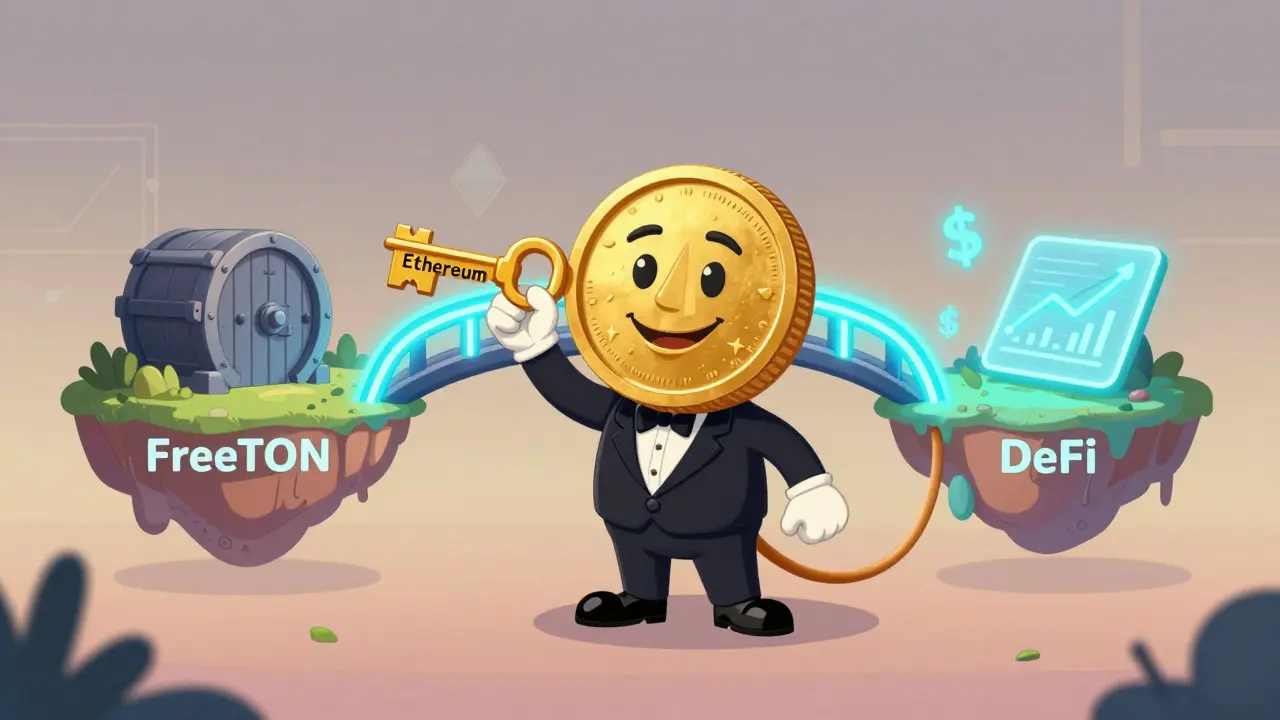
You’ve probably heard of Wrapped TON, but if you’re scratching your head about what it actually does, you aren’t alone. In the messy world of crypto, tokens often get stuck on one blockchain, unable to interact with apps on another. That’s where wrapped tokens come in. They act like a universal translator, letting assets move between different digital ledgers.
Specifically, Wrapped TON (wTON) is a token that represents native TON Crystal on the Ethereum blockchain. It allows holders of TON to use their assets in Ethereum’s massive decentralized finance (DeFi) ecosystem without selling them first. Think of it as putting your cash into a secure vault in New York so you can spend an equivalent amount at a store in London instantly.
The Origin Story: From Telegram to FreeTON
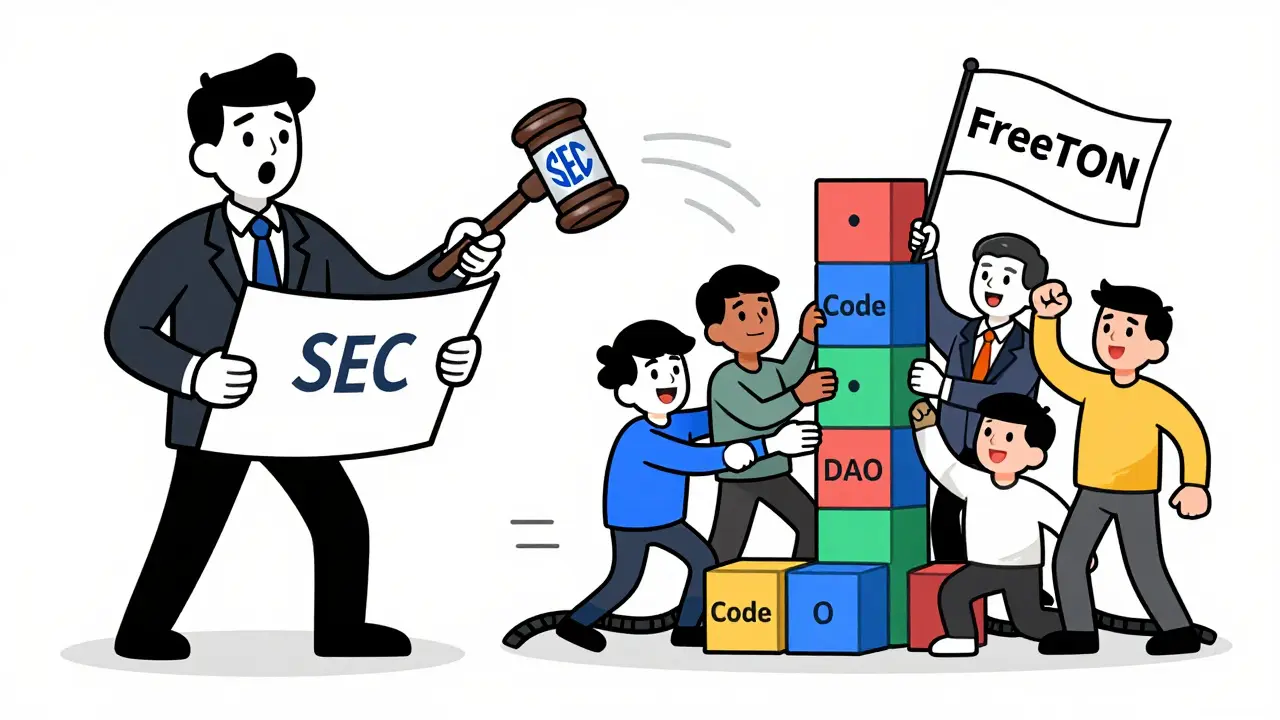
To understand wTON, you have to look back at where TON came from. Originally, Telegram was the messaging app that initiated the TON blockchain project. They built it to be fast and scalable. But in May 2020, regulatory pressure from the SEC forced Telegram to abandon the project entirely.
Instead of dying, the community stepped up. A group called FreeTON emerged as the community-driven DAO that revived the TON blockchain after Telegram's exit. Operated by TON Labs, they kept the code alive and continued development. This split created a complex landscape. There is now "Toncoin" (often associated with the newer, independent Open Network implementation) and "TON Crystal," which is the native token of the FreeTON network. wTON is specifically tied to this FreeTON lineage.
How Does Wrapping Actually Work?
The magic of wTON lies in a mechanism called a cross-chain bridge is a protocol that connects two separate blockchains to allow asset transfer. Here is the step-by-step process:
- Locking: You send your native TON Crystal tokens to a smart contract on the FreeTON network. These tokens are locked away securely.
- Minting: Once the lock is confirmed, the bridge mints an equal amount of wTON on the Ethereum network. If you sent 10 TON, you get 10 wTON.
- Usage: You can now use these wTON tokens on Ethereum. You might swap them for ETH on Uniswap, lend them out for interest, or provide liquidity.
- Burning: When you want your original TON back, you send the wTON to a burn address on Ethereum. The bridge destroys the wTON and unlocks your original TON Crystal on the FreeTON side.
This happens almost instantly and with minimal fees. The key thing to remember is that wTON is an IOU. It is not the "real" TON in the sense that it lives on a different chain, but it is backed 1:1 by real TON sitting in a vault.
Why Do You Need wTON?
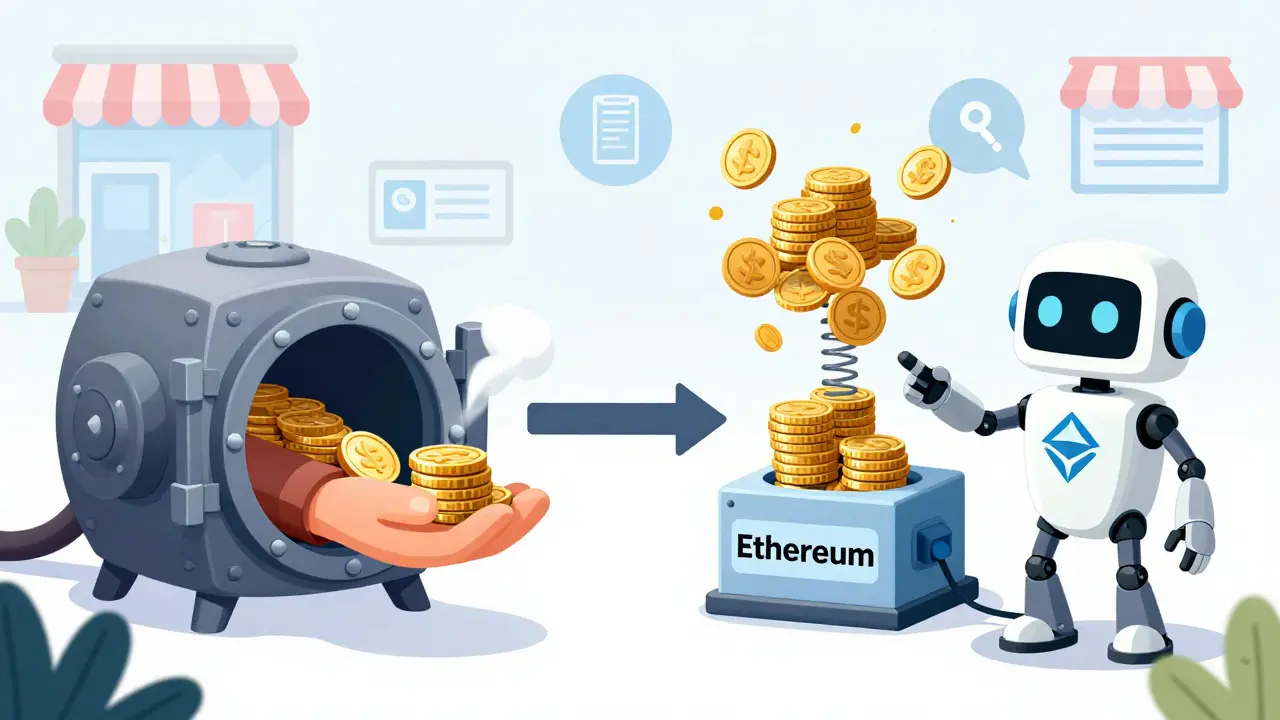
If TON has its own blockchain, why bother wrapping it? The answer is liquidity refers to how easily an asset can be bought or sold without affecting its price. Ethereum is still the king of DeFi. Most major protocols, lending platforms, and exchanges operate primarily there.
By having wTON, FreeTON users gain access to:
- Uniswap: One of the largest decentralized exchanges in the world.
- Lending Protocols: Platforms like Aave or Compound where you can earn yield on your idle assets.
- Broader Market Access: Traders who only watch Ethereum charts can now trade TON exposure without leaving their favorite wallets.
Without wTON, TON holders would be isolated within the FreeTON ecosystem, missing out on the billions of dollars flowing through Ethereum’s financial markets.
| Feature | Native TON Crystal | Wrapped TON (wTON) |
|---|---|---|
| Home Blockchain | FreeTON Network | Ethereum |
| Primary Use Case | Gas fees, staking, governance on FreeTON | Trading and DeFi on Ethereum |
| Transaction Speed | Very High (Sharding enabled) | Dependent on Ethereum speed |
| Fee Structure | Low native fees | Ethereum gas fees apply |
| Backing | None (It is the base asset) | 1:1 backed by locked TON Crystal |
Technical Specs: What Powers FreeTON?
While wTON lives on Ethereum, its value is derived from the strength of the underlying FreeTON network. FreeTON isn’t just a copy of Ethereum; it uses advanced architecture designed for massive scale.
The network uses sharding is a technique that splits database storage and processing across multiple servers to increase throughput. This allows the blockchain to dynamically split into smaller chains (workchains) when load increases and merge them back when it decreases. Theoretically, this setup could handle millions of transactions per second.
Additionally, FreeTON supports development in C, C++, and Solidity. This flexibility means developers familiar with traditional programming or Ethereum can build apps here. The consensus mechanism is Proof-of-Stake, where validators secure the network and earn rewards. However, remember that when you are using wTON on Ethereum, you are subject to Ethereum’s rules, speeds, and costs, not FreeTON’s high-speed sharding.
Risks and Considerations
Crypto bridges are convenient, but they aren’t risk-free. Before locking your TON to create wTON, consider these factors:
- Smart Contract Risk: The bridge relies on code. If there is a bug or a hack in the bridge contract, your locked TON could be at risk. Always check the security audits of the bridge you are using.
- Ethereum Gas Fees: Using wTON on Ethereum means paying Ethereum gas fees. During busy times, these can be expensive, potentially eating into your profits if you are moving small amounts.
- Liquidity Depth: While wTON gives you access to Ethereum, it may not have the same trading volume as top-tier tokens like USDT or WETH. Large trades might cause slippage.
- Ecosystem Fragmentation: The history of TON is complicated. With Toncoin, TON Crystal, and various forks, ensure you are interacting with the correct FreeTON bridge and not confusing it with other TON implementations.
The Future of wTON
The goal of projects like FreeTON is to become a "super server" for the internet-decentralized, fast, and accessible to everyone. wTON is a strategic piece of this puzzle. By integrating with Ethereum, FreeTON ensures it doesn’t exist in a vacuum. It stays relevant to the broader crypto economy.
As the FreeTON DeFi Alliance continues to build tools like TON Swap, the hope is that the native ecosystem becomes robust enough that users don’t *need* to wrap their tokens as often. But until then, wTON remains the vital link connecting high-performance blockchain tech with the deep financial pools of Ethereum.
Is wTON the same as Toncoin?
No. Toncoin usually refers to the token on the independent Open Network blockchain. wTON is a wrapped version of TON Crystal, which is the native token of the FreeTON network. They are related historically but operate on different technical implementations and ecosystems.
Can I convert wTON back to TON anytime?
Yes. You can unwrap wTON by burning it on the Ethereum network through the bridge interface. The equivalent amount of TON Crystal will be unlocked and sent to your wallet on the FreeTON network.
Where can I buy wTON?
You can acquire wTON by bridging your existing TON Crystal via the official FreeTON-Ethereum bridge. Alternatively, some decentralized exchanges on Ethereum, such as Uniswap, may list wTON pairs, allowing you to swap ETH for wTON directly.
Does holding wTON give me voting rights on FreeTON?
Generally, no. Governance rights typically belong to holders of the native TON Crystal on the FreeTON network. Since wTON is locked in a bridge contract on Ethereum, it cannot participate in on-chain governance votes unless specific mechanisms are introduced later.
Why did Telegram abandon the TON project?
In May 2020, the U.S. Securities and Exchange Commission (SEC) sued Telegram, claiming the Gram tokens were unregistered securities. Facing legal hurdles and potential bans, Telegram decided to shut down the project and refund investors, leading to the rise of community-led projects like FreeTON.