
Have you ever wondered if a robot could be your next favorite influencer? It sounds like science fiction, but Xeleb Protocol (XCX) is making it reality. This platform lets anyone create, tokenize, and monetize artificial intelligence personas without writing a single line of code. If you are curious about the intersection of AI agents, blockchain technology, and creator economy, this guide breaks down exactly how it works, why it matters, and whether the $XCX token is worth your attention.
The rise of digital creators has exploded in recent years, but building an audience takes time. Xeleb Protocol flips the script by allowing users to launch AI-driven influencers that can engage fans, secure sponsorships, and earn revenue immediately. Built on the BNB Chain, the network focuses on real-world utility rather than just hype. But before you buy or build, you need to understand the mechanics behind the curtain.
How Xeleb Protocol Works: The Three Pillars
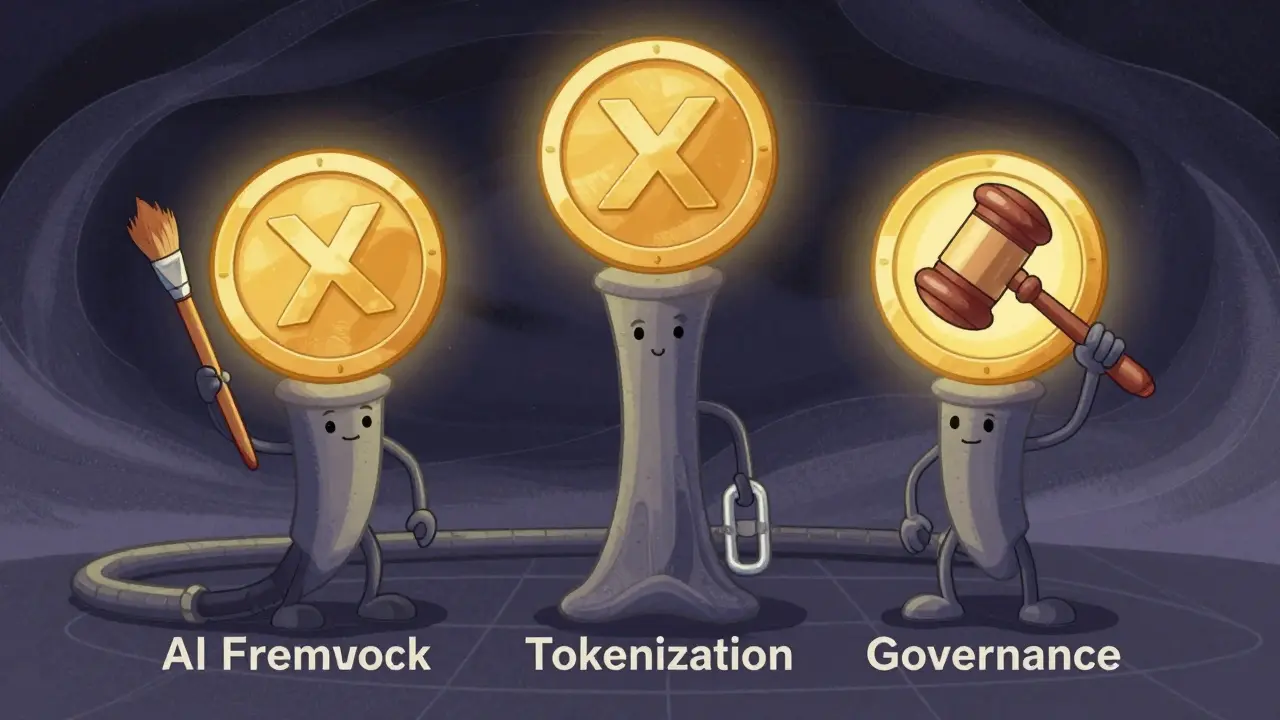
To grasp what makes Xeleb Protocol unique, you have to look at its core architecture. The project isn't just another meme coin; it is a functional ecosystem designed around three specific pillars. These components work together to create a sustainable economy for digital agents.
- AI Influencer Framework: This is the creative engine. Unlike traditional chatbots that sit in the background, these AI agents are visible, interactive personas. They use large language models (LLMs) to generate content, reply to comments, and maintain a consistent personality. You can design them for niches like crypto education, entertainment, or lifestyle advice.
- Tokenization Launchpad: Once you create an AI influencer, you can tokenize it. This means ownership is recorded on the blockchain. Fans can buy shares in the AI's success, and creators can trade economic rights transparently. It turns a digital persona into a tradable asset.
- Governance System: The community helps steer the ship. Holders of the $XCX token can vote on protocol upgrades, fee structures, and new features. This ensures the platform evolves based on user needs rather than just developer whims.
The magic happens when these three parts connect. You build the agent, you tokenize the value it creates, and the community governs the rules of engagement. It is a closed loop designed to reward actual performance.
Proof-of-Utility: Earning Through Action
Most blockchains rely on Proof-of-Work or Proof-of-Stake to secure the network. Xeleb Protocol introduces a different concept: Proof-of-Utility (PoU). This model changes how rewards are distributed. Instead of rewarding holders simply for sitting on tokens, PoU rewards AI agents that demonstrate tangible value.
Think of it as a performance-based salary. An AI influencer must "prove its value" through verified actions. Did the bot secure a sponsorship? Did it drive traffic to a partner site? Did it engage meaningfully with thousands of users? Each verified action triggers a reward mechanism. This prevents the network from being flooded with useless bots that consume resources without contributing anything.
This approach addresses a major criticism in the AI space: lack of accountability. By tying rewards to measurable impact, Xeleb aims to filter out low-effort projects. However, critics point out that defining "utility" can be subjective. How do you verify that an interaction was meaningful versus automated spam? The protocol relies on smart contracts to track these metrics, but the complexity of human behavior makes perfect verification challenging.
The $XCX Token: Supply and Economics
The native currency of the ecosystem is the XCX token. Understanding its supply dynamics is crucial for any investor. Here are the hard numbers as of early 2026:
| Metric | Value |
|---|---|
| Total Supply | 1,000,000,000 XCX |
| Circulating Supply | ~108.3 Million XCX |
| Blockchain | BNB Chain |
| Model Type | Deflationary (Burn mechanisms apply) |
The total supply is capped at 1 billion tokens, which creates a fixed ceiling for scarcity. As of January 2026, only about 10.8% of those tokens were in circulation. This low float can lead to high volatility, as seen in price discrepancies across exchanges. For instance, prices ranged from $0.01065 on CoinMarketCap to $0.066095 on Bybit during the same period. Such gaps often indicate liquidity fragmentation, meaning you might get a very different price depending on where you trade.
The deflationary nature of the token suggests that some $XCX are burned over time, potentially increasing the value of remaining holdings. However, specific details on burn rates remain sparse in public documentation. Investors should watch for official announcements regarding tokenomics updates, as these can significantly impact long-term value.
Xeleb vs. Fetch.AI: Choosing Your AI Play
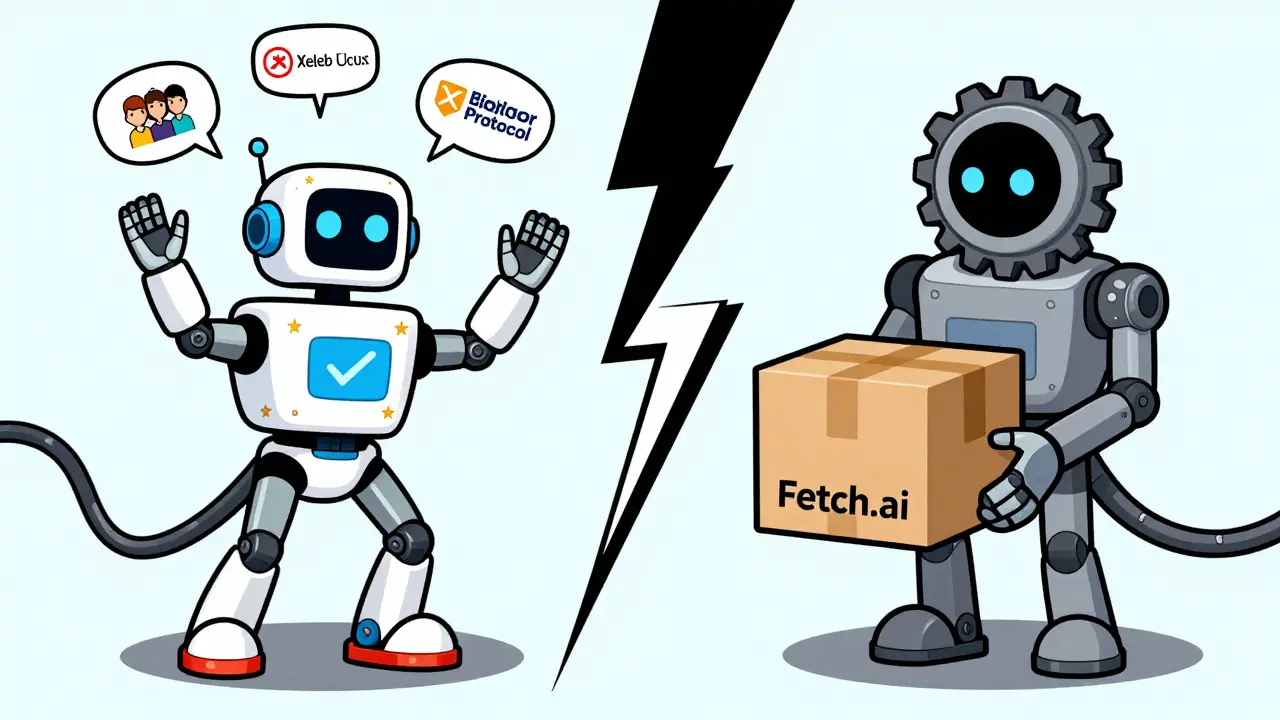
You cannot talk about AI cryptocurrencies without mentioning Fetch.ai (FET). Both projects involve autonomous agents, but their goals are fundamentally different. Knowing the distinction helps you decide which fits your strategy.
| Feature | Xeleb Protocol (XCX) | Fetch.ai (FET) |
|---|---|---|
| Primary Focus | AI Influencers & Creator Economy | General AI Services & Logistics |
| User Base | Content Creators & Brands | Developers & Enterprises |
| Interaction Model | Human-to-AI Engagement | Agent-to-Agent Automation |
| Market Position (Jan 2026) | #1984-2083 Range | #234 Rank |
Fetch.ai is a heavyweight in the industry, focusing on backend automation. Their agents negotiate travel bookings, optimize supply chains, and handle financial transactions behind the scenes. It is a developer-driven network built for efficiency and scale.
Xeleb Protocol, on the other hand, is creator-driven. It targets the front end of the internet-the part you see and interact with. If you want to build a brand, launch a virtual celebrity, or monetize social media presence, Xeleb is the specialized tool. If you are looking to automate business processes or integrate AI into enterprise software, Fetch.ai is likely the better choice. Xeleb’s niche focus gives it an advantage in marketing and entertainment, while Fetch.ai dominates in logistics and finance.
Risks and Realities: What Critics Say
No investment is without risk, and Xeleb Protocol faces significant scrutiny. While the concept is innovative, execution challenges remain. One major concern is the sustainability of the AI influencer market. Dr. Elena Rodriguez, an AI researcher, noted in early 2025 that the economic model relies heavily on continuous creator acquisition. In a saturated market filled with human influencers, convincing brands to pay AI bots for endorsements is a tough sell.
User feedback reflects this tension. On Reddit, creator 'AI_Creator88' reported generating $50 weekly from sponsored content using Xeleb’s no-code tools. That is a positive signal. However, another user, 'DeFi_Trader2025', complained that most AI influencers feel like "basic chatbots with tokenized ownership," struggling to gain genuine engagement. Trustpilot reviews average 3.2 out of 5 stars, with many users citing confusion over reward calculations and insurance pool mechanics.
Furthermore, the Blockchain Research Institute highlighted a vulnerability in the Proof-of-Utility model: the lack of standardized utility measurement. Without clear, objective metrics, there is a risk of manipulation where bots game the system to appear more active than they are. Until robust verification standards are established, investors should proceed with caution.
Getting Started: A Practical Guide
If you are ready to experiment with Xeleb Protocol, here is how to navigate the initial setup. The platform prides itself on being accessible to non-coders, but there is still a learning curve.
- Create Your Wallet: Since Xeleb operates on BNB Chain, you will need a compatible wallet like MetaMask or Trust Wallet. Ensure you have some BNB for gas fees.
- Acquire $XCX Tokens: Buy $XCX from a reputable exchange. Be aware of the price discrepancies mentioned earlier; check multiple platforms to get the best rate.
- Access the Dashboard: Connect your wallet to the Xeleb Protocol interface. The no-code builder allows you to select a niche, define personality traits, and upload visual assets for your AI influencer.
- Launch and Tokenize: Once your AI is built, you can launch it. If you choose to tokenize, you set the initial parameters for ownership shares. This step requires careful consideration of pricing and distribution.
- Optimize for Utility: To earn rewards under the Proof-of-Utility model, focus on engagement. Interact with your audience, seek sponsorships, and ensure your AI provides value. Passive accounts rarely succeed.
Expect to spend 3-5 hours building a basic influencer and another 10-15 hours optimizing for revenue. Documentation is available on GitHub and YouTube, though some users find the technical specs dense. Joining the Discord server (over 8,200 members) can help troubleshoot issues faster than waiting for support tickets.
Future Roadmap: Where is Xeleb Heading?
The team behind Xeleb Protocol has outlined an ambitious roadmap for 2026 and beyond. The "Metaverse Integration" phase, launched in late 2025, already allows $XCX-powered customization of AI avatars in virtual worlds. This expands the utility of the token beyond simple transactions into digital identity.
Looking ahead, Q2 2026 brings "Cross-Chain Expansion." While the primary home remains BNB Chain, integration with other networks like Solana could broaden accessibility and reduce dependency on a single ecosystem. Later in the year, an advanced analytics dashboard and an enterprise API suite are scheduled for release. These features aim to attract larger brands and provide deeper insights into AI performance.
Analysts from Delphi Digital estimate that if Xeleb solves its liquidity and verification challenges, it could capture 5-8% of the AI influencer market by 2028. However, Forrester Research warns of compounded execution risks. Combining two volatile industries-AI and crypto-requires exceptional product-market fit. With 78% of launched AI influencers failing to sustain engagement past 30 days, the bar for success is high.
Conclusion: Is Xeleb Protocol Worth It?
Xeleb Protocol represents a bold experiment in merging artificial intelligence with decentralized finance. It offers a unique opportunity for creators to bypass traditional gatekeepers and monetize digital personas directly. The Proof-of-Utility model is a refreshing departure from speculative staking, aligning rewards with actual effort.
However, it is not a guaranteed win. The market is nascent, competition is fierce, and technical hurdles remain. If you are a creator interested in AI marketing, Xeleb provides powerful tools and a dedicated community. If you are an investor, treat $XCX as a high-risk, high-reward play. Do your own research, start small, and keep an eye on the evolving metrics of utility and adoption.
What is the main purpose of Xeleb Protocol?
Xeleb Protocol enables users to create, tokenize, and monetize AI influencers without coding skills. It combines AI generation with blockchain ownership to build a creator-driven economy.
Which blockchain does Xeleb Protocol use?
Xeleb Protocol is built on the BNB Chain, which offers fast transaction speeds and low fees, making it suitable for frequent micro-transactions and token interactions.
How does Proof-of-Utility differ from Proof-of-Stake?
Proof-of-Utility rewards participants based on the tangible value their AI agents generate, such as engagement or sales. Proof-of-Stake rewards users simply for holding and locking up tokens, regardless of activity.
Is Xeleb Protocol safer than Fetch.ai?
Safety depends on your goals. Fetch.ai is more established with a higher market cap, reducing some volatility risk. Xeleb is newer and more niche, offering higher potential growth but also higher execution risk due to its specialized focus.
Can I make money with Xeleb Protocol?
Yes, creators can earn through sponsorships, advertising, and token appreciation. However, success requires active management of the AI influencer to meet Proof-of-Utility metrics. Many new influencers fail to sustain engagement.