
Most of us are used to buying Bitcoin or Ethereum. We go to a centralized exchange, link our bank account, and trade. But what if you need to swap US Dollars for Euros, Yen, or Pounds without touching a traditional bank? That is where Xave Finance comes in. It is not your typical crypto exchange. It does not let you buy meme coins or trade volatile altcoins. Instead, it focuses on one specific job: enabling foreign exchange (FX) transactions using stablecoins across different blockchains.
If you have been looking at Xave Finance recently, you probably noticed it operates differently than giants like Coinbase or Kraken. Xave is a decentralized exchange (DEX). This means there is no company holding your money. You connect your own wallet, and the code handles the trade. The big promise here is efficiency. Xave claims its unique 'FXPool' technology offers 20 times better capital efficiency than standard automated market makers (AMMs). For traders and liquidity providers, that sounds like free money. But before you bridge your funds over, we need to look closer at how it works, who it is for, and whether the risks outweigh the rewards.
What Exactly Is Xave Finance?
To understand Xave, you first have to forget what a normal crypto exchange looks like. When you use Binance or Coinbase, they act as intermediaries. They hold your assets, match buyers with sellers, and charge fees. Xave is built on the concept of Decentralized Finance (DeFi). It sits directly on the blockchain.
Xave Finance is a specialized decentralized platform designed for cross-currency stablecoin swaps within the Real-World Asset (RWA) ecosystem. Its primary goal is to solve a major headache in the crypto world: liquidity fragmentation. Right now, if you want to swap a US Dollar-pegged stablecoin (like USDC) for a Euro-pegged stablecoin (like EURC), you often have to go through multiple hops, losing value at each step due to poor liquidity pools.
Xave addresses this by creating dedicated pools for these FX pairs. It targets users who need to move value between global currencies quickly and cheaply, bypassing the slow wires and high fees of traditional banking infrastructure. It is part of the growing trend of tokenizing real-world assets, a sector Bloomberg Intelligence projects could reach $16 trillion by 2030. Xave provides the plumbing for these transactions.
How the FXPool Technology Works
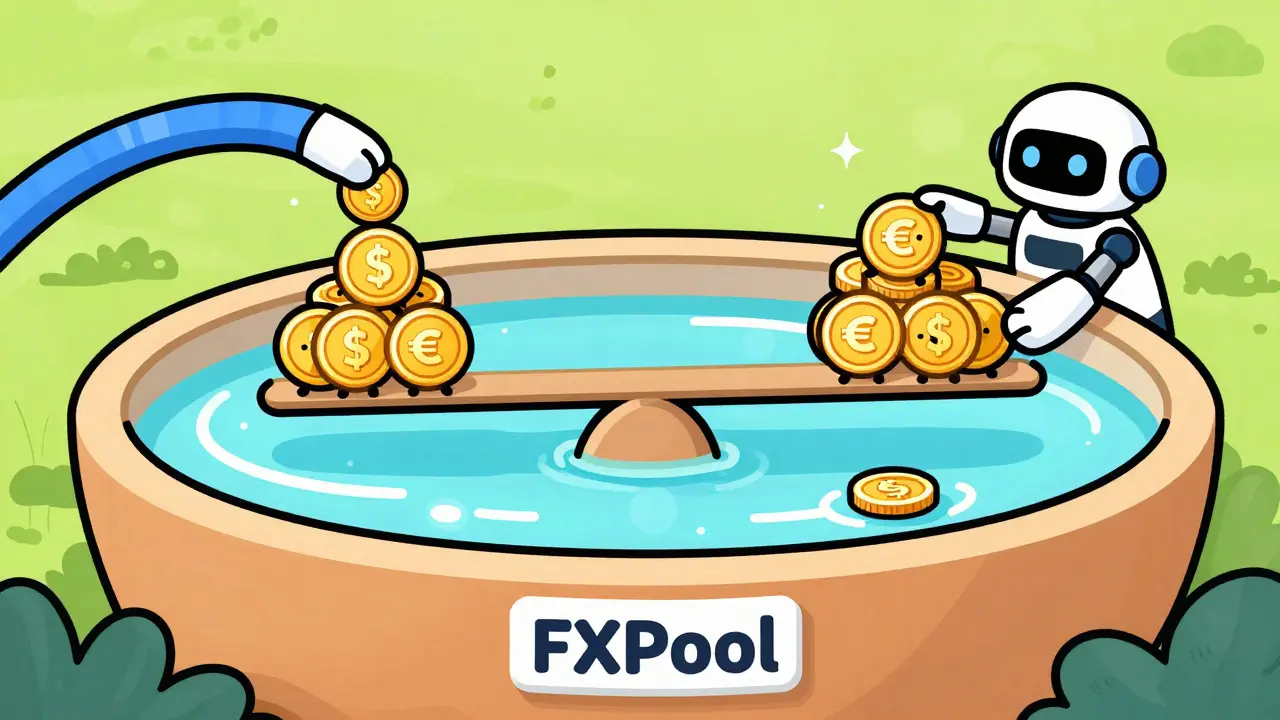
The core innovation behind Xave is something called FXPool. Most decentralized exchanges, like Uniswap, use a simple mathematical formula called the constant product formula ($x * y = k$). This works fine for trading similar assets, but it is inefficient for stablecoins because their prices should stay nearly identical. If you try to swap large amounts of USDC for DAI on a standard AMM, you suffer from significant slippage (price impact).
Xave changes the math. According to their official documentation released in late 2025, the FXPool uses real-time price oracles to ensure accurate foreign exchange rates. More importantly, it employs unique trading incentives that automatically rebalance liquidity. In plain English, this means the system encourages liquidity providers to keep both sides of the pool balanced without them having to manually manage it.
Why does this matter? Standard AMMs require you to lock up equal value of both tokens. If you provide liquidity for USD/EUR, you need half your money in USD and half in EUR. If the exchange rate shifts, you lose money on one side. Xave’s model claims to reduce the capital required to maintain these pools by 20 times. This makes it much more attractive for institutional players and serious DeFi users who want to earn yield on stablecoins without tying up massive amounts of capital.
Xave Finance vs. Centralized Exchanges
You might be wondering why you wouldn’t just use a centralized exchange (CEX) like Kraken or Coinbase for currency conversion. After all, those platforms are familiar, insured, and easy to use. Let’s compare the two approaches.
| Feature | Xave Finance (DEX) | Coinbase / Kraken (CEX) |
|---|---|---|
| Custody | Non-custodial (You hold keys) | Custodial (Exchange holds keys) |
| Primary Use Case | Stablecoin FX swaps, RWA markets | Buying/selling broad crypto assets |
| Fees | Variable (Gas + Protocol fee) | Fixed spread + Trading fee (0%-3.99%) |
| Accessibility | Global (No KYC required) | Restricted (Strict KYC/AML) |
| Security Model | Smart Contract Audits | Insurance & Cold Storage |
| Supported Networks | Ethereum, Polygon, Avalanche, Arbitrum | Internal Ledger (Off-chain until withdrawal) |
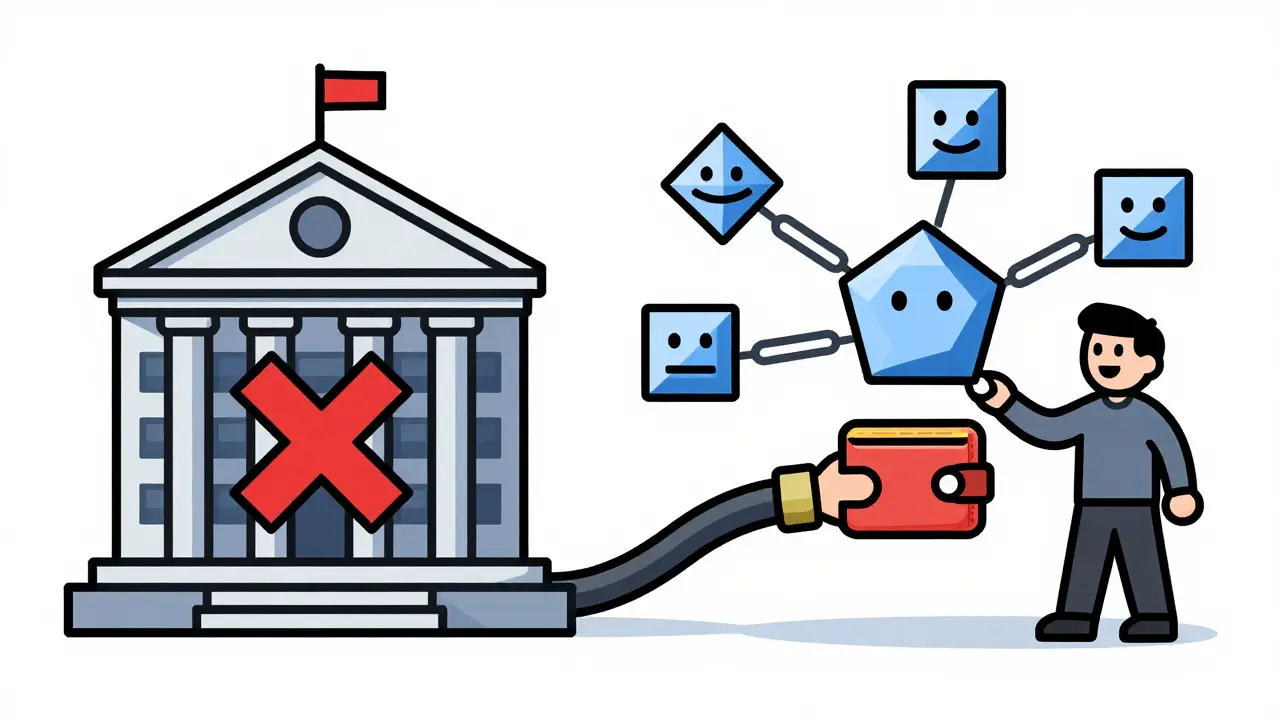
The biggest difference is control. With Coinbase or Kraken, you trust the company not to hack, freeze, or go bankrupt. With Xave, you trust the code. If the smart contract has a bug, your funds are gone, and there is no customer support line to call. However, Xave offers access to non-USD stablecoin pairs that many centralized exchanges ignore or offer with terrible spreads. If you are a business in Europe needing to settle payments in crypto-denominated Euros, Xave provides a direct path that Coinbase does not.
Multi-Chain Availability and Gas Fees
Xave does not live on just one blockchain. It is deployed across four major networks:
- Ethereum Mainnet: The most secure but most expensive option.
- Polygon: Fast and very cheap, ideal for smaller transactions.
- Avalanche: High throughput with low costs.
- Arbitrum: A popular Layer 2 solution for Ethereum scaling.
This multi-chain approach is crucial for user experience. In October 2025, average gas fees on Ethereum were around $1.27 per transaction, while Polygon hovered near $0.03. If you are swapping small amounts of stablecoins, doing so on Ethereum mainnet would eat up your profits. Xave allows you to choose the chain that fits your budget. However, this also adds complexity. You need to manage wallets on different networks and pay attention to which chain your assets are on before swapping.
Security Risks and Audit Status
This is the most critical section for any DeFi review. Security in decentralized finance is not guaranteed by insurance; it is guaranteed by code quality and audits. Established exchanges like Kraken boast decades of uptime and zero hacks. They keep 95% of funds in cold storage.
Xave, being a newer protocol focused on a niche market, faces different challenges. As of late 2025, detailed public audit reports from top-tier firms like CertiK or OpenZeppelin were not prominently featured in mainstream reviews. This is a red flag for risk-averse investors. While the team claims robust security measures, the absence of widely recognized third-party verification means you are taking on higher counterparty risk compared to using a regulated entity.
Furthermore, the broader DeFi landscape is under scrutiny. Reports from Cryptolegal.uk indicated that 37% of crypto scams in Q3 2025 involved fraudulent DeFi platforms. Regulatory bodies like the SEC are increasingly watching protocols that facilitate cross-border financial flows. Users must weigh the convenience of permissionless trading against the potential regulatory uncertainty surrounding platforms like Xave.
Who Should Use Xave Finance?
Xave is not for everyone. If you are a beginner who just wants to buy Bitcoin and hold it, stick with Coinbase or Kraken. Their interfaces are simpler, and they offer educational resources and customer support.
Xave is designed for:
- International Businesses: Companies that need to convert fiat-backed stablecoins (e.g., USDC to GBPC) quickly without relying on SWIFT transfers.
- DeFi Liquidity Providers: Sophisticated users who want to earn yield by providing liquidity to FX pairs with higher capital efficiency.
- RWA Traders: Participants in the Real-World Asset tokenization space who need seamless currency conversion for underlying asset settlements.
You need to be comfortable using self-custody wallets like MetaMask or Rabby Wallet. You need to understand gas fees, slippage, and the irreversible nature of blockchain transactions. There is no "undo" button on Xave.
Conclusion: Is Xave Worth the Risk?
Xave Finance fills a genuine gap in the crypto ecosystem. The demand for efficient, non-USD stablecoin liquidity is real, especially as the tokenization of real-world assets grows. Its FXPool technology offers a compelling alternative to inefficient standard AMMs, potentially saving users and providers significant capital.
However, novelty comes with risk. The lack of extensive user reviews, limited public audit transparency, and the inherent volatility of DeFi protocols mean you should proceed with caution. Start small. Test the waters on Polygon or Arbitrum where fees are low. Verify the current status of their smart contract audits directly on their official channels before committing significant capital. Xave is a powerful tool for the right user, but it is not a replacement for the safety net provided by established centralized exchanges.
Is Xave Finance a centralized or decentralized exchange?
Xave Finance is a decentralized exchange (DEX). It operates via smart contracts on multiple blockchains, meaning users retain custody of their funds through their own wallets rather than depositing them into a central company.
Which blockchains does Xave Finance support?
As of 2025, Xave Finance operates on Ethereum Mainnet, Polygon, Avalanche, and Arbitrum. This multi-chain presence allows users to choose networks based on speed and gas fee preferences.
What is the FXPool mechanism?
FXPool is Xave's proprietary liquidity architecture. Unlike standard Automated Market Makers (AMMs) that require equal value in both tokens, FXPool uses real-time oracles and rebalancing incentives to improve capital efficiency, claiming up to 20x better efficiency for stablecoin pairs.
Are there trading fees on Xave Finance?
While specific fee percentages were not detailed in early 2025 reports, users will incur blockchain gas fees for transactions. Additionally, DeFi protocols typically charge a small protocol fee or take a cut from liquidity provider rewards, but these are generally lower than the spreads found on centralized exchanges.
Is Xave Finance safe for beginners?
Xave is likely not suitable for complete beginners. It requires knowledge of self-custody wallets, multi-chain management, and DeFi risks. Beginners may find centralized exchanges like Coinbase or Kraken safer and easier to navigate due to customer support and recovery options.
Can I buy Bitcoin on Xave Finance?
No. Xave Finance specializes in foreign exchange pairs involving stablecoins (like USDC, EURC, etc.). It is not designed for trading volatile cryptocurrencies like Bitcoin or Ethereum against each other.