Innterim Crypto Bridge: Your Guide to Crypto, Blockchains, and Web3
When you're trying to make sense of Crypto, digital assets built on decentralized networks that operate without banks or central control. Also known as cryptocurrency, it's not just about Bitcoin anymore—it's about smart contracts, staking, and real-world finance tools like Proof of Stake, a consensus method that replaces energy-hungry mining with token-based validation, used by Ethereum, Solana, and others, and blockchain, a public, tamper-proof ledger that records every transaction across a network of computers.
Most people get lost in hype, but here we focus on what’s real: which tokens still have utility, which exchanges actually work, and which airdrops are scams. You’ll find deep dives into how China bans crypto entirely, why Qatar blocks banks from touching it, and how the SEC’s $4.68 billion crackdown changed the game. We cover dead coins like CADINU and MOLK so you don’t waste time, and explain complex stuff like mempool congestion and slashing risks in plain language.
Whether you're checking if a new token is legit, trying to secure your wallet, or just wondering why your transaction is stuck, this collection gives you the facts—no fluff, no guesswork. What you read here isn’t theory. It’s what’s happening right now.
Carl Johnson (CJ) coin is a meme cryptocurrency tied to GTA: San Andreas, with no utility or team. It's highly volatile, low-liquidity, and carries extreme risk. Only for speculative gamblers.
Baby Ethereum (BABYETH) is a dead meme coin with no team, no utility, and zero trading activity as of 2026. Learn why it’s not worth buying and how it fits into the broader pattern of failed crypto scams.
18 Jan
2026
Geeq (GEEQ) is a blockchain platform using Proof of Honesty to achieve 99% Byzantine Fault Tolerance with near-zero transaction fees. Learn how it works, its tokenomics, real-world use cases, and whether it's worth attention in 2026.
As of 2026, there is no FLTY airdrop on CoinMarketCap. Fluity Protocol is still in early development with no token trading or distribution plan. Beware of fake airdrop scams claiming otherwise.

The Brokoli Network (BRKL) airdrop ended in 2021. Learn what happened, why the token crashed, and why no new airdrop is coming. Get the full truth about BRKL distribution and current value.
XOXNO is a Web3 platform token powering DeFi and NFT services on MultiversX and SUI blockchains. With 90% of NFT volume on MultiversX and a unique siloed lending system, it's a niche leader-not a broad-market coin.
Blockchain copyright registration gives creators instant, tamper-proof proof of ownership for digital works. It's fast, cheap, and growing in use-but it doesn't replace official government registration. Here's how it works and why you should still file with the U.S. Copyright Office.
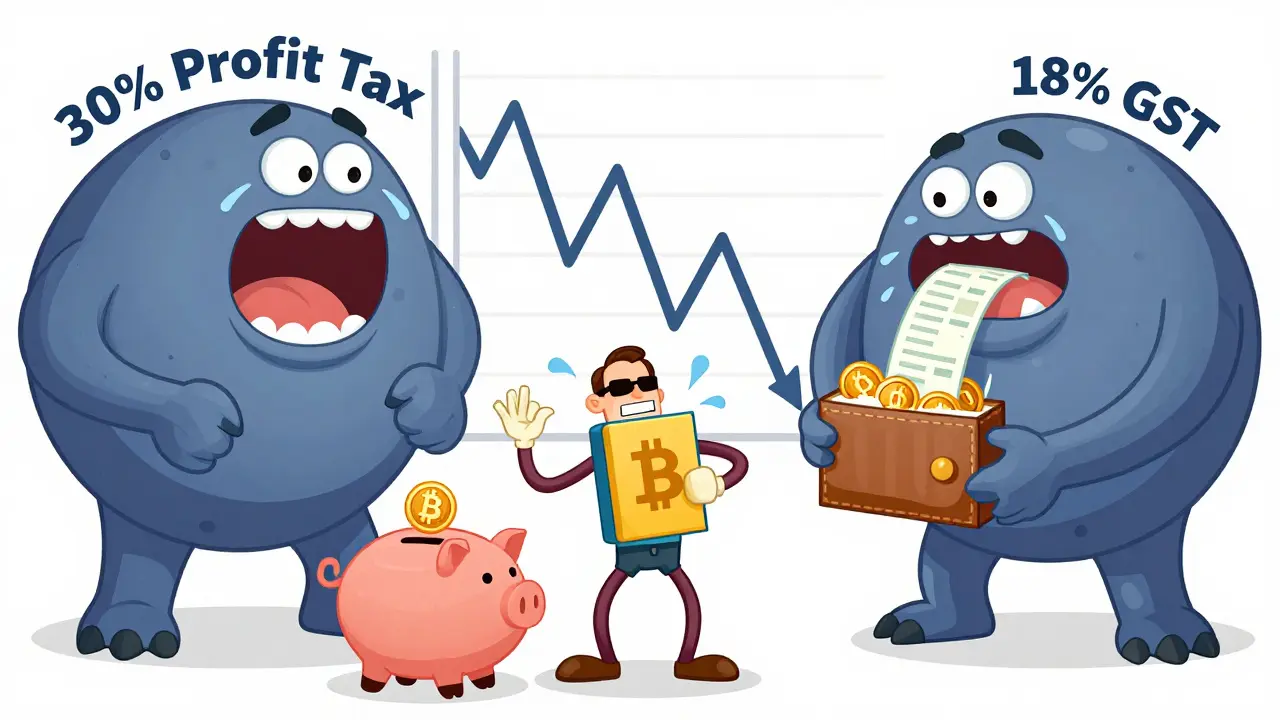
India's 30% crypto tax hits Bitcoin traders with no loss offsetting, 1% TDS, and 18% GST on fees. Here's how it works, who it hurts, and what to do in 2026.

Discover the best liquidity mining opportunities in 2026 across top DeFi platforms like Uniswap, Curve Finance, and SushiSwap. Learn where to earn steady yields, avoid common risks, and start safely with stablecoin pools.
Property tokenization turns real estate into digital assets on blockchain, enabling fractional ownership, instant trading, and automated income. Learn how it works, who's using it, and why it's set to reshape real estate by 2030.

The Artify X CoinMarketCap airdrop offered up to 500 ART tokens to 2,000 winners, but it had no connection to Gamerse. Learn the real steps to qualify, why ART and AFY tokens differ, and whether this project has any future.
Sishi Finance (SISHI) airdrops are still active but offer near-zero value. With trading volume at zero and price down 99.99% from its peak, these tokens are unlikely to recover. Learn why joining isn't worth your time.